Bonne année et bonne santé

Phase two of our tripartite winter holiday: New Year’s in Strasbourg.

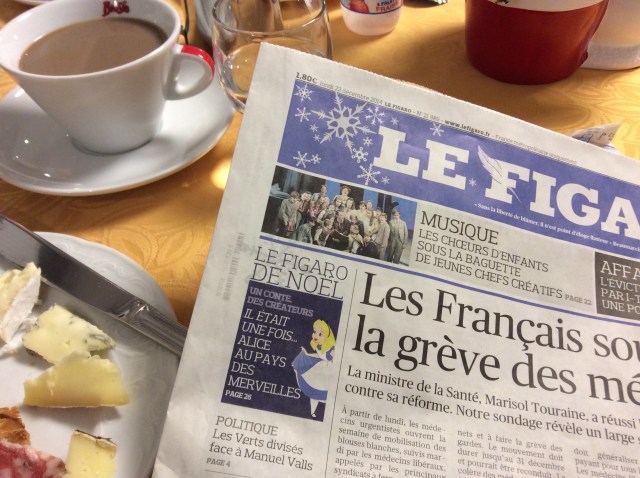
IMG_0309

The weather was cold and there was snow on the ground.

IMG_0337

We sampled the things that France is famous for: great food, shopping, art

This slideshow requires JavaScript.

The shopping district was beautifully decorated and the Christmas markets were still on until Twelfth Night.

This slideshow requires JavaScript.

The Cathedral of Our Lady of Strasbourg celebrates its 1000th anniversary in 2015.  For four centuries it was the tallest building in the world.

This slideshow requires JavaScript.

My favorite thing in Strasbourg was the astronomical clock in the cathedral. Figures move, a rooster crows; it’s quite wonderful.

This slideshow requires JavaScript.

The owner of our comfortable AirBnB likes to cook, so that meant we had all the tools we needed to prepare a New Year’s Eve feast.

This slideshow requires JavaScript.

The next day we skyped the rest of the kids who were gathered in Oregon to wish them all a happy new year.

This slideshow requires JavaScript.


Posted in Elsewhere, Family, Food | Tagged , , , , , | Leave a comment

Joyeux Noël

From Dubai, Alekka and I flew to the Frankfurt airport where Andreas soon joined us from Cairo. We picked up our rental car and made a run for the French border.

We got to Mulhouse in time to visit the Christmas market (vin chaud!) followed by a delicious French dinner (is there any other kind?) By the end of breakfast the next morning we were all thoroughly Francofied. Or Francophiled, anyway.

IMG_1014

On the road again after breakfast, we arrived in Avignon later than anticipated. We had some trouble connecting with our Airbnb host but when we eventually got in touch we were given a warm welcome.

This slideshow requires JavaScript.

The cozy apartment inside the medieval city walls was perfect for our little Christmas.

This slideshow requires JavaScript.

Avignon puts on an enchantingly magical holiday parade that winds through the markets and neighborhoods

This slideshow requires JavaScript.

The Provence region has a tradition of “santons”, collectible figurines used in miniature creches in churches and homes.

You can buy santons and all kinds of other things in the Christmas markets that stay open until the new year.

This slideshow requires JavaScript.

We visited a few of the popular tourist sights, like the Pope’s palace

and the famous bridge:

Sur le Pont d’Avignon
On y danse, On y danse
Sur le Pont d’Avignon
On y danse tous en rond

Of course, this being France, much of the week centered around food.

IMG_0176

We made this at home.

We were just a few blocks from the big indoor food market Les Halles where we spent a lot of time shopping for ingredients and even more time just gawking.

This slideshow requires JavaScript.


Alas, the time went by too quickly. Next stop: Strasbourg


Posted in Elsewhere, Family, Food | Tagged , , | Leave a comment

Shop till you drop

We planned an ambitious holiday break this year. Three weeks, three continents! Dubai (technically Asia) for two days, followed by two weeks in France, and finishing up with a 10-day tour of southern Ethiopia.

Alekka and I booked a room close to the mammoth Mall of the Emirates in Dubai. From this nearby base, we could make multiple forays to the mall for Christmas presents and other stuff to fill the almost-empty suitcases we’d brought.

Alekka’s boyfriend was in town to visit his family, so he and Alekka met up and left me to do some power-shopping on my own.

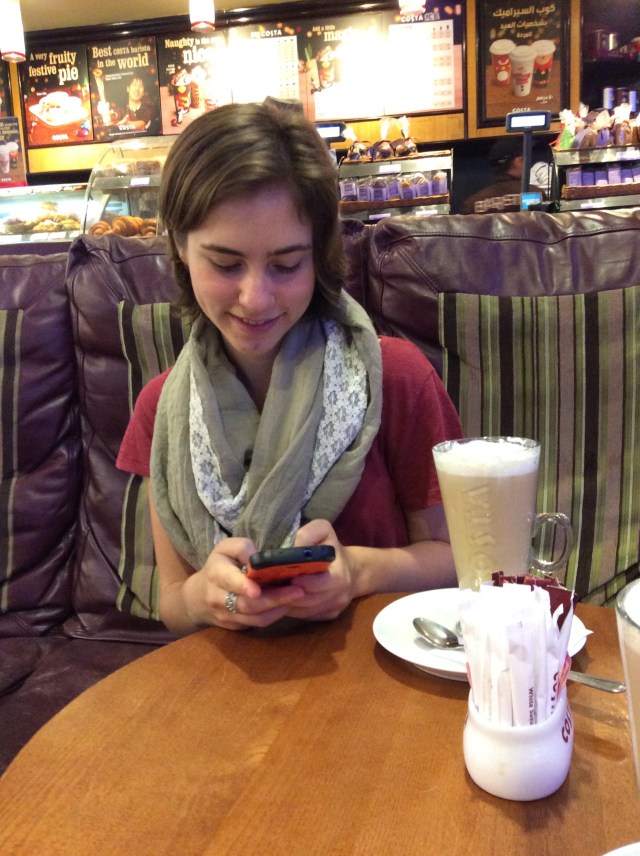
IMG_0973

Synchronizing schedules at Starbucks

I replaced the camera that had been limping along since I took it to the Danekil Depression at spring break; the volcano dust is what did it in, I think.  My new one is a step up so hopefully you’ll be seeing some better photos. I got some electronic items not available in Ethiopia, clothes for myself, a haircut. And Christmas presents, of course. But I spent a lot of time just gawking. Dubai has mastered the mall concept. And considering it’s a Muslim country, they’ve really got Christmas shopping down.

This slideshow requires JavaScript.


Posted in Elsewhere | Tagged , | Leave a comment

The 1.6 days of Christmas

Last December I posted a Christmas tree retrospective. The 2013 entry in that lineup was our lavender bush, which I neglected to put back out on the porch before departing for our Berlin/Barcelona winter holiday family extravaganza. The housekeeper watered it, but the poor thing was all sticks and sachet stuffing by the time we got back in January.

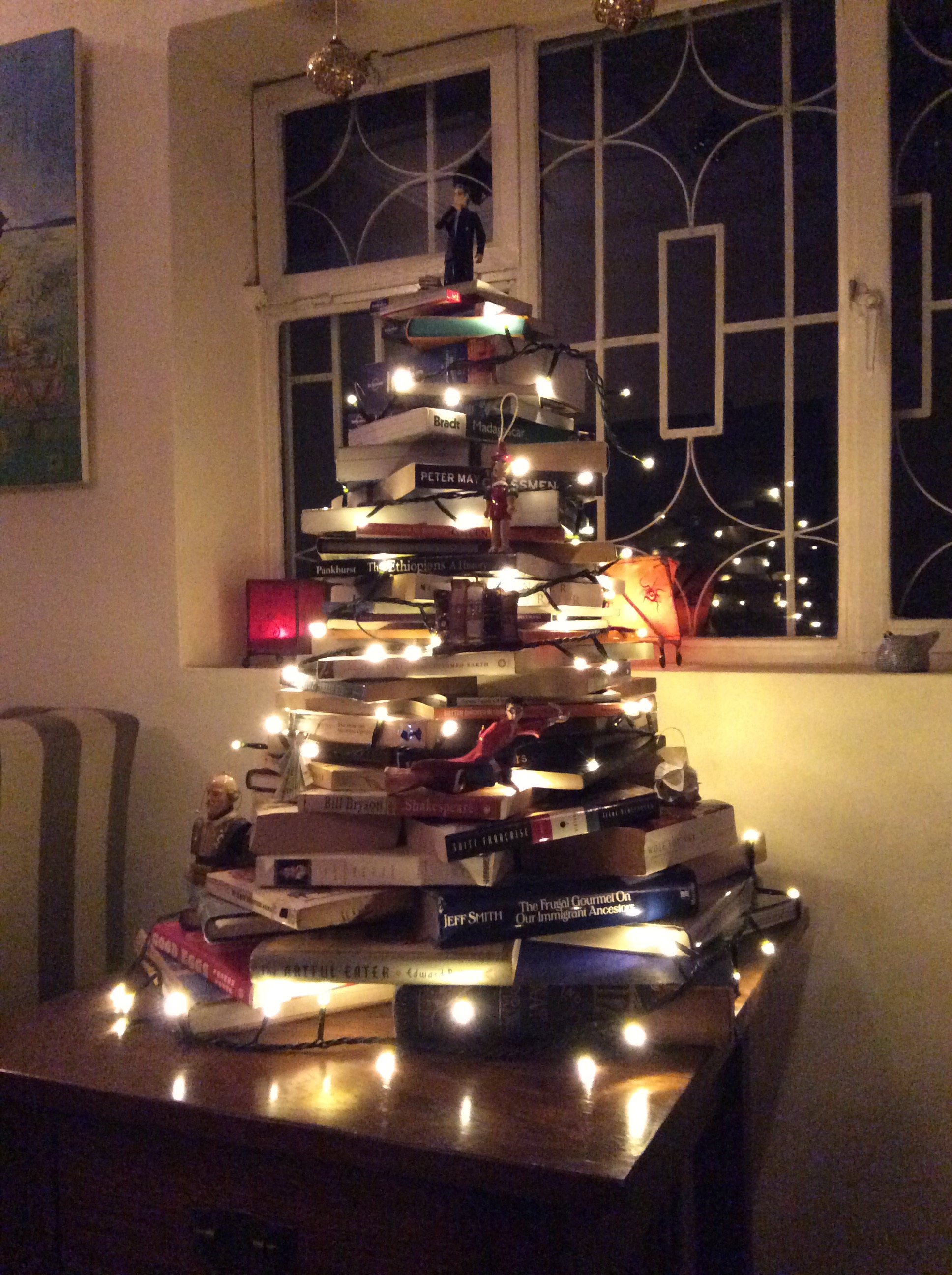
I didn’t feel like killing any plants this year so I took up an idea a friend sent me and made a book tree. I decorated it with the surprisingly robust assortment of book-related ornaments I have with me in Addis, topping it off with my Nancy Pearl librarian action figure (with magic shushing action!). That left several empty bookshelves to put the rest of my Christmas decorations on.

IMG_0953

Alekka and I have only a short time left in which to enjoy our Addis holiday decor. The 1.6 days of music on my Christmas iTunes playlist is just enough to last us until we take off for our 2014 holiday expedition to Dubai, France, and southern Ethiopia.  Three continents in three weeks! I’ll be posting pictures.

Posted in Books, Expat experience, Home life | Tagged , , | 5 Comments

Cookies loved and lost

I invited some ladies who bake over to my house last Sunday for a cookie exchange. We drank mulled wine on the front porch in the afternoon sun. December in Ethiopia is very pleasant, just like all the other months in Ethiopia.

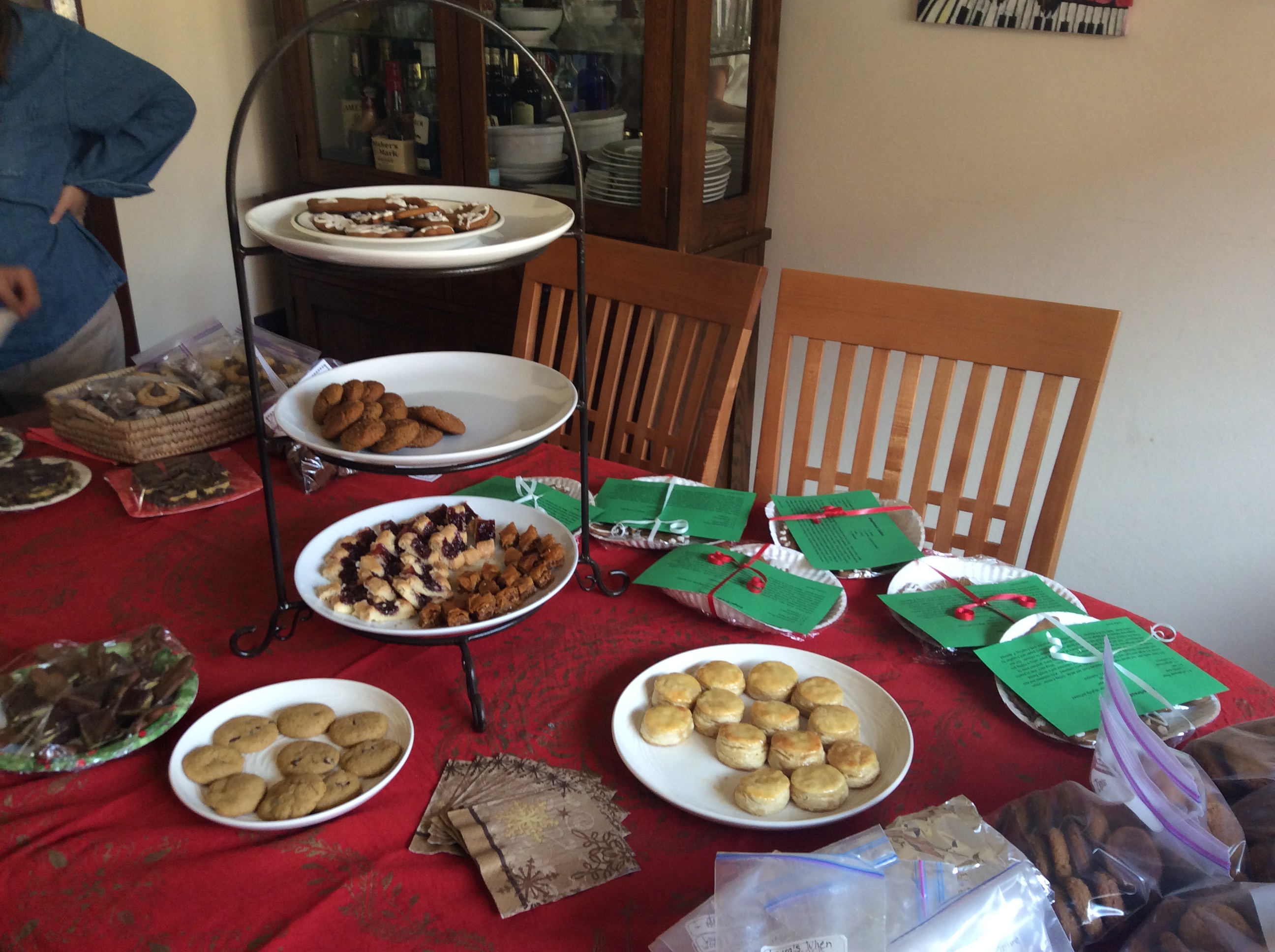
Each person made cookies for everyone else to take home. We oohed and aahed at the spiced and sugared creations. We shared our recipes and tasted a few samples.

IMG_0942

After everyone left, Alekka and I arranged our share of the gingerbread animals, peanut butter kisses, baklava, jammy ribbon cakes, and lemon balls on big plates. There were lots and lots of cookies.

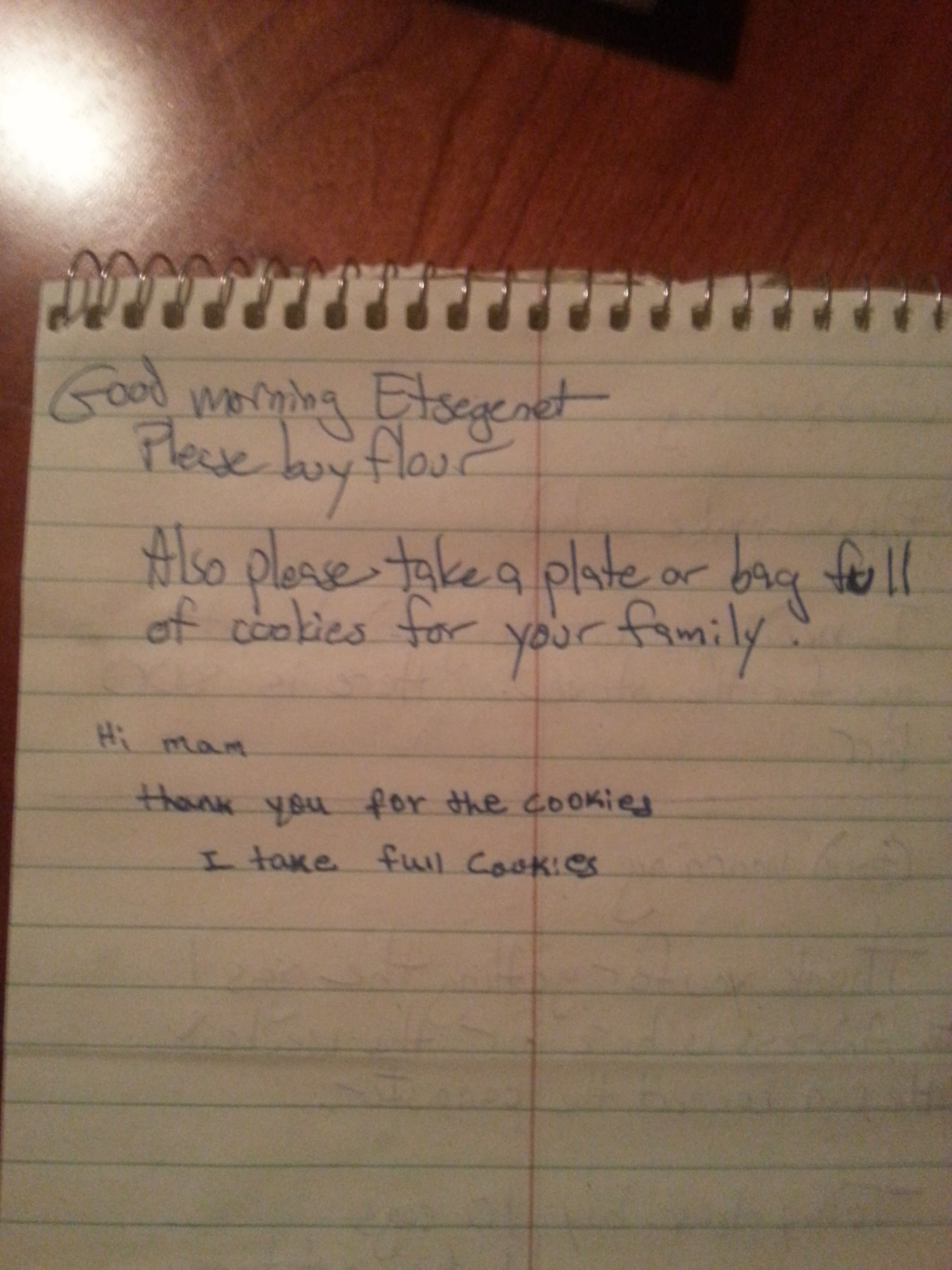
Although I am sure we could have managed if we had to, there were certainly more treats there than two people ought to eat. The next morning I left a note for the housekeeper to take some home to her family.

When Alekka and I got home from school, there was not a gingersnap or a Nanaimo bar in sight. In disbelief, we checked inside every cupboard in the house.

“And the one speck of food that he left in the house
Was a crumb that was even too small for a mouse.”

one speck

Then I saw the note.

cookie note

It was one of those Amelia Bedelia second-language moments that we occasionally have, especially when communicating via notepad without any contextual cues. The word “full” sometimes does mean “all.”

But that’s OK.  Etsegenet is a great housekeeper, and I am sure those cookies are a rare treat for her kids. And I have the recipes now, so I can just make more!

Posted in Addis Ababa, Ethiopia, Expat experience, Food | Tagged , , | 2 Comments

UCAS for Dummies (and Americans… not saying they are the same thing)

This is a very long post about how to apply to a UK college, a topic of immediate concern around our house. If this subject interests you, read on; if not, I won’t be insulted if you choose to skip it.

A mom’s senior year, round five. I guess it’s round six if you count my own senior year, but looking back on it, that one was so stress-free in comparison that it’s almost not worth mentioning. Somewhere around April I took the SAT. Then with my ball-point pen I filled out a single-page application form for exactly one university, put it in an envelope and stuck a stamp on it. I dropped a note in my counselor’s mail cubby requesting a transcript, and that was it. I’m pretty sure my folks never saw my application. As any parent of a recent college-bound student will tell you, it’s quite a different game these days.

Each of our four older children has had a unique set of interests, talents, and qualifications that affected his or her college choices and procedure. All in all there were application forms online and on paper, interviews by phone and in person, auditions, visits, essays, scholarship forms and letters, SATs, ACTs, APs,  OSACs, FAFSAs, and I can’t remember what all else.

But to change it up even more, our fifth and last child is following through with her long-held dream of attending college in the UK. Alekka started talking about British universities in grade 7, but at the time I assumed it was just another manifestation of the anglophilia that grips certain slightly nerdy denizens of Hedrick Middle School. I expected it to fade away along with Quidditch, the dead parrot, and Doctor Who companion clothing (actually that last one never went away… I guess I should have realized sooner she was serious).

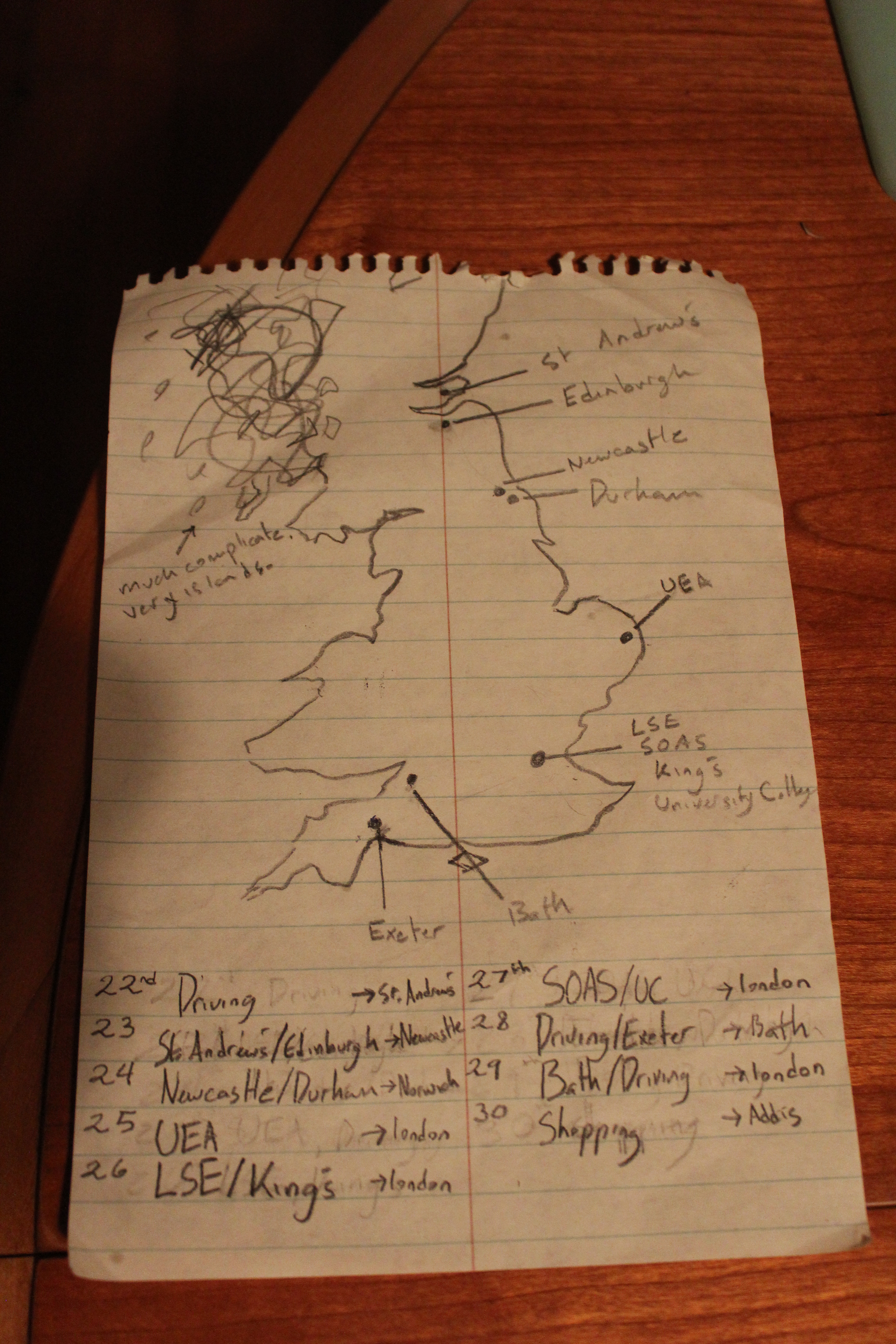
IMG_6089

Alekka’s college visit itinerary

All UK universities use the country’s on-line college application system, the Universities and Colleges Admissions Service (UCAS for short). Prospective students fill out a form that asks for basic personal information, schools attended, and demographic details. There is a space for “qualifications” where you can add in all the stuff that UCAS doesn’t require but that you want to tell them about (in Alekka’s case, her very respectable SAT scores, for example). Then it gets harder.

You can give the name of one academic referee only. This could be a teacher you’ve especially impressed, but at our school most students ask the high school counselor to write the letter. The counselor asks for input from all your teachers, and then compiles the recommendations into one document.

Next are grades. The grade information you report depends on what kind of high school you attend and the type of diploma it offers. If you’re at a British school, you have scores from A-level courses (kind of like AP classes) that you have completed and other predicted scores from the courses you are currently enrolled in. Scotland has another, different, system. If you are applying from an American style school, you would enter your gpa.

Alekka does not have a gpa, as she is earning an IB diploma. It would take another whole post to explain IBDP (and I will do so sometime soon), but the important thing is that the students’ scores are assigned mainly by outside assessors, and those scores don’t come out until July. So what happens is that your classroom teachers submit predicted scores based on your progress and trajectory, and these “predicteds” are what go on your application form. The most important numbers for the colleges are your total predicted score out of the 45 possible points, and also your individual predicted scores in the three classes that you have chosen to take at “higher level” – similar to honors classes. You have to earn at least 24 points althogether to graduate with an IB diploma, and most good colleges require 32-34 for you to be considered for admission. Oxford and Cambridge, the most selective of UK schools, require at least 40-41. Very few students earn the top score of 45. More about those scores in a moment.

Next you have to write the “personal statement,” a 4000-character, 47-line essay. The personal statement is where you describe everything you’ve done to prepare yourself for your particular course of study. Unlike an American college essay, there is no prompt. This is a big difference between applying to a US school and a UK school. In the US, your college essay is where you try to show your positive personal qualities (perseverance, creativity, passion, etc.) but most American schools don’t expect you to know much about your future course of study, or even what you expect to major in. When you apply to a UK school you are applying not only to the school but to a specific major. In the UCAS personal statement, you write in detail about why you have chosen this specific course of study, how your high school classes have prepared you, any paid or volunteer work you’ve done in this area, and the relevant reading you’ve done.

In the US a motivated student who has the time and patience can apply to 20 or 30 universities, and some students do. My sons Nik and Kosta applied to somewhere around 10 or 12 each. With UCAS a prospective college student can apply to no more than five schools. If you apply to different majors (“courses”) at the same school those count as separate applications out of your five. And because you can write only one personal statement, you need to choose colleges that offer similar courses. For example, you don’t want to apply to do Geography at York, History at Bath, and English Lit at Bristol because you would not be able to write a personal statement that covers all that academic territory. Last spring we took Alekka to visit a number of schools in the UK which helped narrow her list down to five schools offering courses in International Development Studies (or something very much like it). She had an ecstatically nerdy moment when we visited Durham on the day they were doing a Hogwarts banquet, but unfortunately the closest course they have is Geography, so Durham didn’t make Alekka’s short list.

Oxford and Cambridge are like Harvard and Yale in the US in that they are very famous and extremely selective. As top tier superbrand schools, they have added a couple of extra hurdles that students have to jump. If you are applying to an Oxbridge college (and you can only apply to either Oxford or Cambridge, not both) you have to submit your UCAS in October, well ahead of the normal January 15 deadline. You also have to take the Oxbridge entrance exam (multiple choice plus an essay). If you pass this first level of acceptance you are asked to appear for a face-to-face interview; two ICS seniors are away this week for those interviews. Although Alekka loved our visit to Cambridge, alas like Durham they don’t offer an undergraduate Development course so she did not apply (their Masters course is highly regarded, though, so who knows… maybe in a few years).

So, finally you submit your UCAS form, and they send an email saying they got it, as do the individual schools you listed.
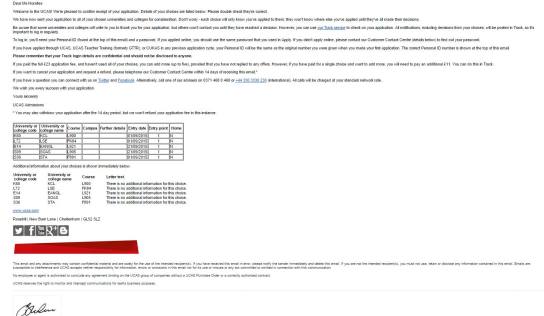
ucas final app

Now what? Many schools have rolling admissions so it’s possible to get acceptance letters (emails, actually) even before the January application deadline. You might get periodical updates from your schools letting you know how much longer you might have to wait to get an answer. If you are accepted, usually it is a conditional offer: for IBDP students like Alekka, it is normal for the school to set a minimum total score and also required marks for your three higher level classes. There is no senioritis allowed for IBDP students. You have to hit those marks on your final exams to be admitted – this is in contrast to American colleges, where once you are accepted, you have to really mess up to have that acceptance rescinded.

You’ve only applied to five schools… what if they ALL reject you? They have until May to notify you, but the good news is that if before March you have been rejected by all your choices, you can pick one more to apply to. (Suggestion: pick one with very low requirements). The catch is that if they accept you, then you must accept them. You’re in, you’re done.

If on the other hand you get a number of offers (hurray for you, nice job!), then in May you must narrow your choices down to two. Your first choice will probably be the one with higher requirements (this is called your “firm” choice), and you will choose a second as a backup (your “insurance” choice). If your final grades/scores in July meet the conditional requirements set by the first school, then you must accept that offer. If you don’t hit those marks, then hopefully you will meet the requirements of the second school.

Now if somehow you blow those final exams and don’t meet the requirements of either of your two schools, you do have one last chance. This is called Clearance, which sounds like the bargain basement or English landlords kicking Scottish farmers off their crofts, with perhaps a bit of the Hunger Games thrown in. Despite the name, I have heard from some people who speak from experience that it can actually be quite wonderful. This is when all the schools that still have unfilled slots (because their accepted students didn’t make the grade at exams, or decided to go elsewhere) start to fill those places from the pool of unaccepted students. It’s kind of a crap shoot, but you might end up at a great school you hadn’t even considered.

Other options: take a gap year, get some volunteer or work experience and apply next year. Or get a job.

Happily, Alekka got her first acceptance notice eight hours after her application was in. Whew. Then she got a second one about a week later. Barring some unforeseen academic disaster, she’ll be attending college in the UK next year. Now the trick is to keep her focused on homework when she’s wanting to check UCAS every fifteen minutes about her other three applications.
Posted in Elsewhere, Family | Tagged , , , , , , , | 1 Comment

Lights out

Alekka filming a cooking video at home on “how to bake bread” for her Spanish class.


Papi, encender el generador!

Yup, this is pretty much how the baking has been going lately.

Posted in Addis Ababa, Family, Food, Home life | Tagged , | 1 Comment

Lest we forget

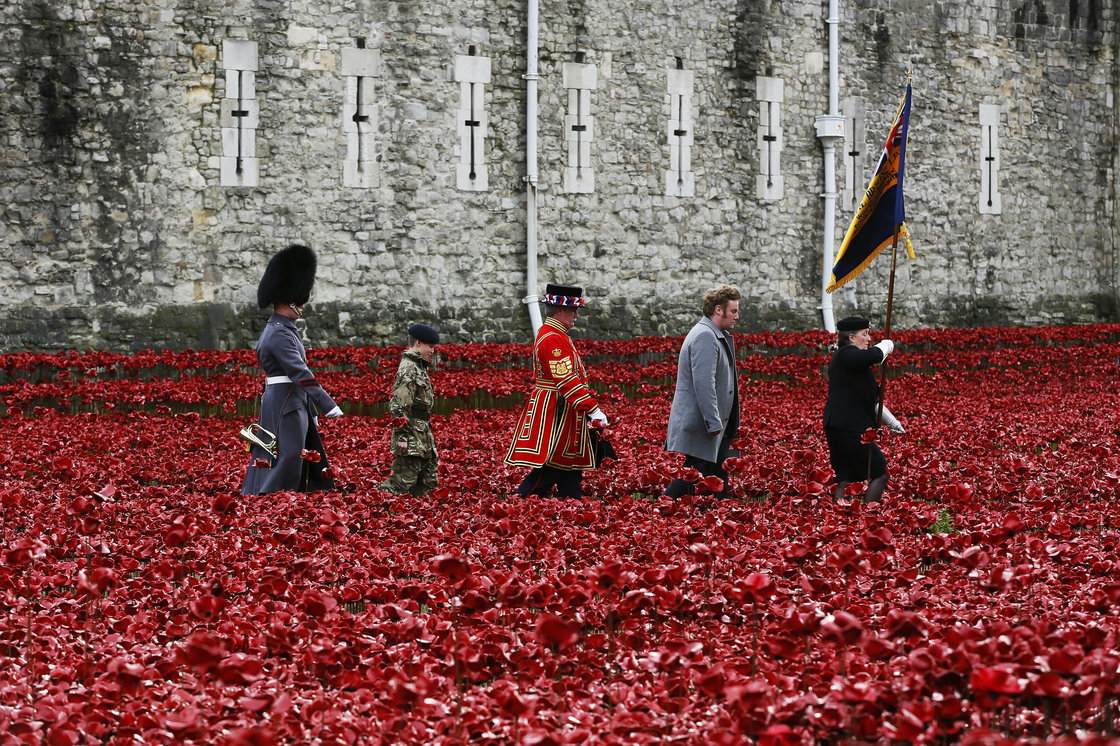
Virtually every village in Britain, no matter how small, has a World War I memorial monument in the town center which once a year on Remembrance Day is decorated with wreaths of red poppies.

sea of poppies

In big cities, too. This installation at the Tower of London by artist Paul Cummins, titled “Blood Swept Lands and Seas of Red,” features 888,246 ceramic poppies, – one for each of the British and Colonial soldiers killed in the war. photo: http://www.npr.org/blogs/thetwo-way/2014/11/11/363286759/on-armistice-day-in-u-k-a-sea-of-red-poppies-remembers-the-fallen

In the UK you can can buy poppies in the days leading up to Remembrance Day in shops or from people on the street – the money you pay for them goes to decorate graves and monuments to fallen soldiers.

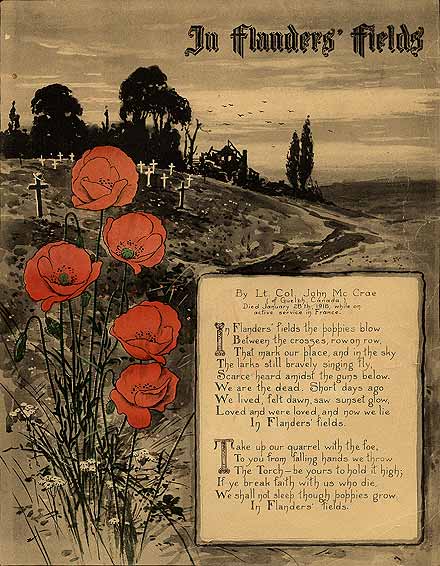
The tradition started soon after the end of the Great War and took hold in Britain and the commonwealth countries. It was inspired by a poem, “In Flanders’ Fields,” by Canadian soldier Lt. Col. John MacCrae:

inflanders fields best

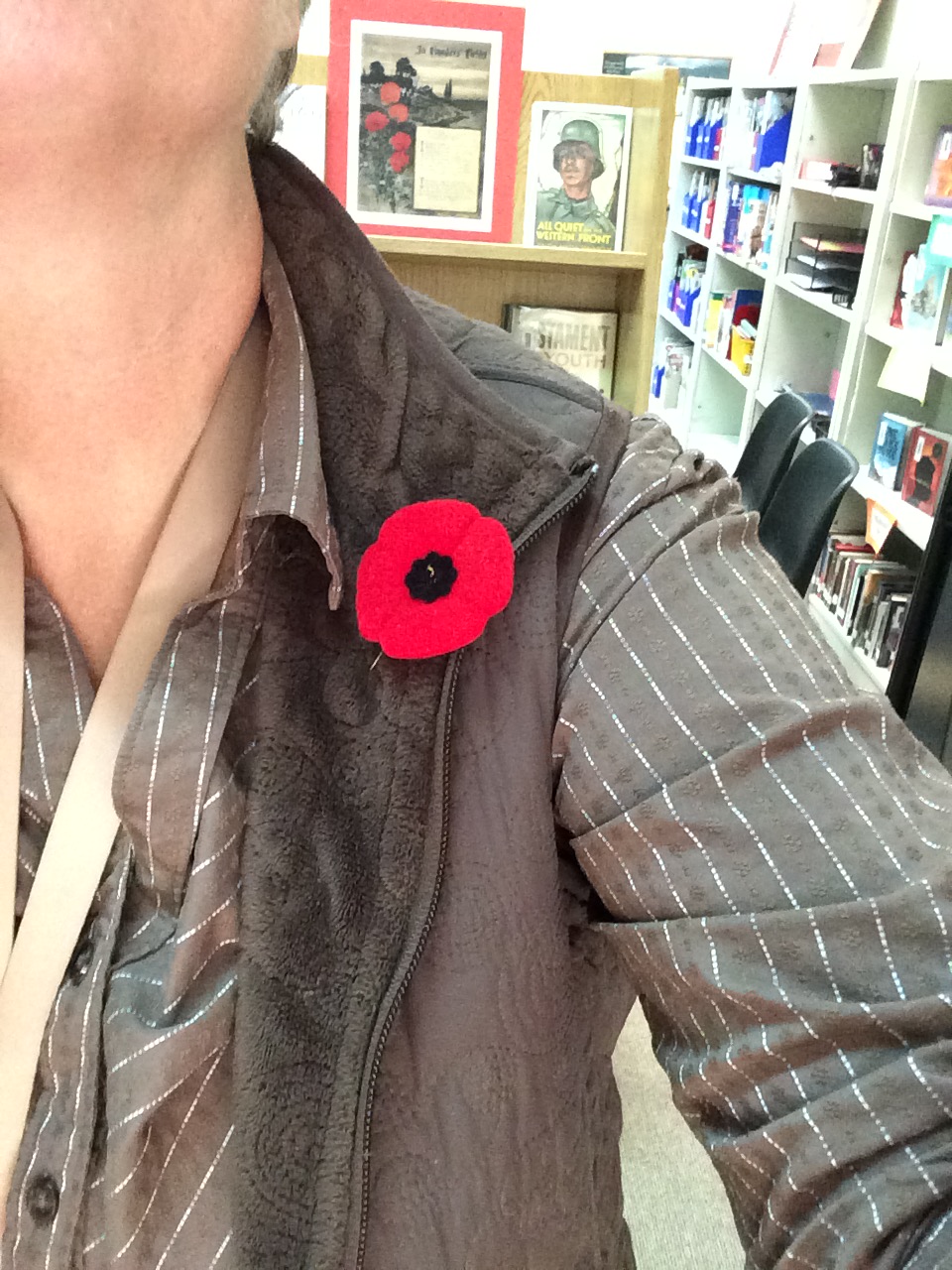
Here at our school, the British and Canadian embassies provide boxes of fabric poppies that teachers and visitors can buy at the reception desk for a small donation. This week many of my ICS colleagues, especially the British, Canadian, and Australian ones, are sporting these poppies on their lapels.

IMG_0831

This year marks the hundredth anniversary of the start of that war and today is the 96th anniversary of its official end. To me it seems almost impossible that it was so long ago, I guess because both of my own grandfathers served with the US Army in France. Let me tell you a little bit about them.

This is my father’s father, Edward Ramon MacIver.

ER MacIver WWI

Grandpa was born in San Francisco in 1888 and grew up in the French-speaking community that existed there in those days. He was almost 30 years old when the US joined the conflict in Europe. Grandpa was a sergeant in the army quartermaster corps, which meant he procured and distributed supplies to the troops. His facility with French was useful in his assignment. He remained in France with the army for another year after the war ended to oversee the sale of the war horses.

‘Permission to speak, sir?’ Sergeant Thunder ventured.
 
‘Carry on, Sergeant.’
 
‘It’s about the ‘orses, sir,’ Sergeant Thunder said. ‘I think the men would like to know what’s going to ‘appen with the ‘orses. Will they be with us on the same ship, sir? Or will they be coming along later?’
 
Major Martin shifted his feet and looked down at his boots. He spoke softly as if he did not want to be heard. ‘No, Sergeant,’ he said. ‘I’m afraid the horses won’t he coming with us at all.’ There was an audible muttering of protest from the parading soldiers.
 
‘You mean, sir,’ said the Sergeant. ‘You meant that they’ll be coming on a later ship?’
 
‘No, Sergeant,’ Said the Major, slapping his side with his swagger stick, ‘I don’t mean that. I mean exactly what I said. I meant they will not be coming with us at all. The horses will be staying in France.’
 
         (from War Horse by Michael Morpurgo, chapter 19; the London play based on the book is wonderful)


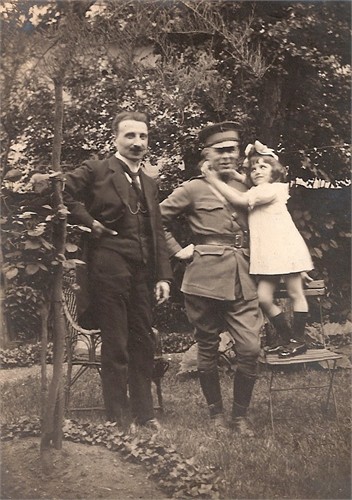
Most of those brave animals went to butchers and glue factories. Nevertheless, Grandpa often spoke nostalgically about his years in France and he stayed in touch with the family he’d been billeted with in Le Mans.

Grandpa and Rousseaus

Written on the back: France 1919. Mr. Rousseau and daughter Lucianne and myself. People with whom I was billeted. 16 Bis Rue La Roche; Le Mans, Sarthe; France.

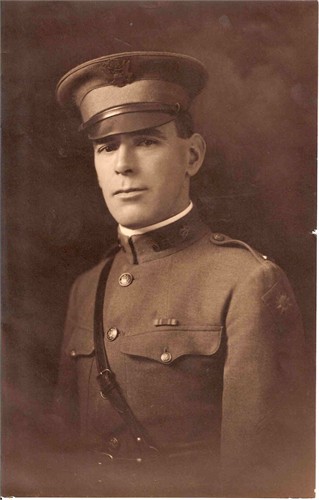
My maternal grandfather, Robert Alan Woodyard, was born in West Virginia in 1893; as a little boy he moved out west with his father where he grew up on a farm in Sunnyside, Washington. He had just graduated from “U-dub” when he signed up for the army and was made a 2nd lieutenant in the 91st “Wild West” division.

Robert Woodyard

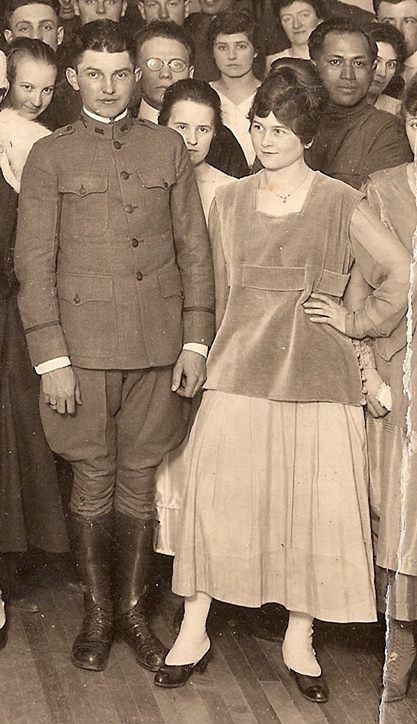
His regiment, the 361st, trained at Fort Lewis near Tacoma WA, and it was at a dance nearby that he met my grandmother.

dammie & granddaddy dance

Bob Woodyard and Ruth Ashby on the night they met, 1917

My grandmother used to tell us she’d gone to that dance with a young man from Tacoma, who was upset when she traded him in for the soldier. He said, “You just like him because he’s wearing a uniform.” “If you were any kind of man, you’d be wearing one, too,” she answered. The next time she saw that fellow, he was wearing a uniform. But he didn’t win my grandma back.

Granddaddy didn’t talk about his war experiences, at least not with his family. I know from written accounts of the 361st that he was in the trenches in some of the worst campaigns at the end of the war, including the Argonne; he was promoted to 1st lieutenant and he was the only officer in his company who returned home alive and uninjured. One of Granddaddy’s fellow officers in the 91st was future Chief Justice of the Supreme Court Earl Warren; they became lifelong friends (there’s a photo of them somewhere…  one day I’ll dig it out of the archives and insert it here).

Posted in Family | Tagged , , | 1 Comment

Camo chameleon, Madagascar part 3

There are about 150 species of chameleons in the world, and half of them live in Madagascar. But they are hard to see. They do that color-changing thing, and they blend in with the scenery. The camouflage trick is very effective.

Miraculously, the guides and drivers on my trip had no trouble finding them at all. We’d be driving along when the driver would suddenly stop and say something in Malagasy. “Chameleon,” interprets the guide. “Where?” I ask. “There in that tree” she says. We get out of the car. “See, up by that branch that goes off to the left, next to where that dark leaf is.”  We get closer. “Um, where exactly?” Half the time guide or the driver would have to poke the little guy with a stick to make it move before I could locate it.

A lot of Malagasy people are afraid of chameleons. Yes, they are perfectly harmless, but that’s how it is. One of my drivers could spot one in a tree at 40 mph but wouldn’t walk within 15 feet of it.

Here are some photos. Some are easy to see, some not so. See if you can find ’em all.

This slideshow requires JavaScript.

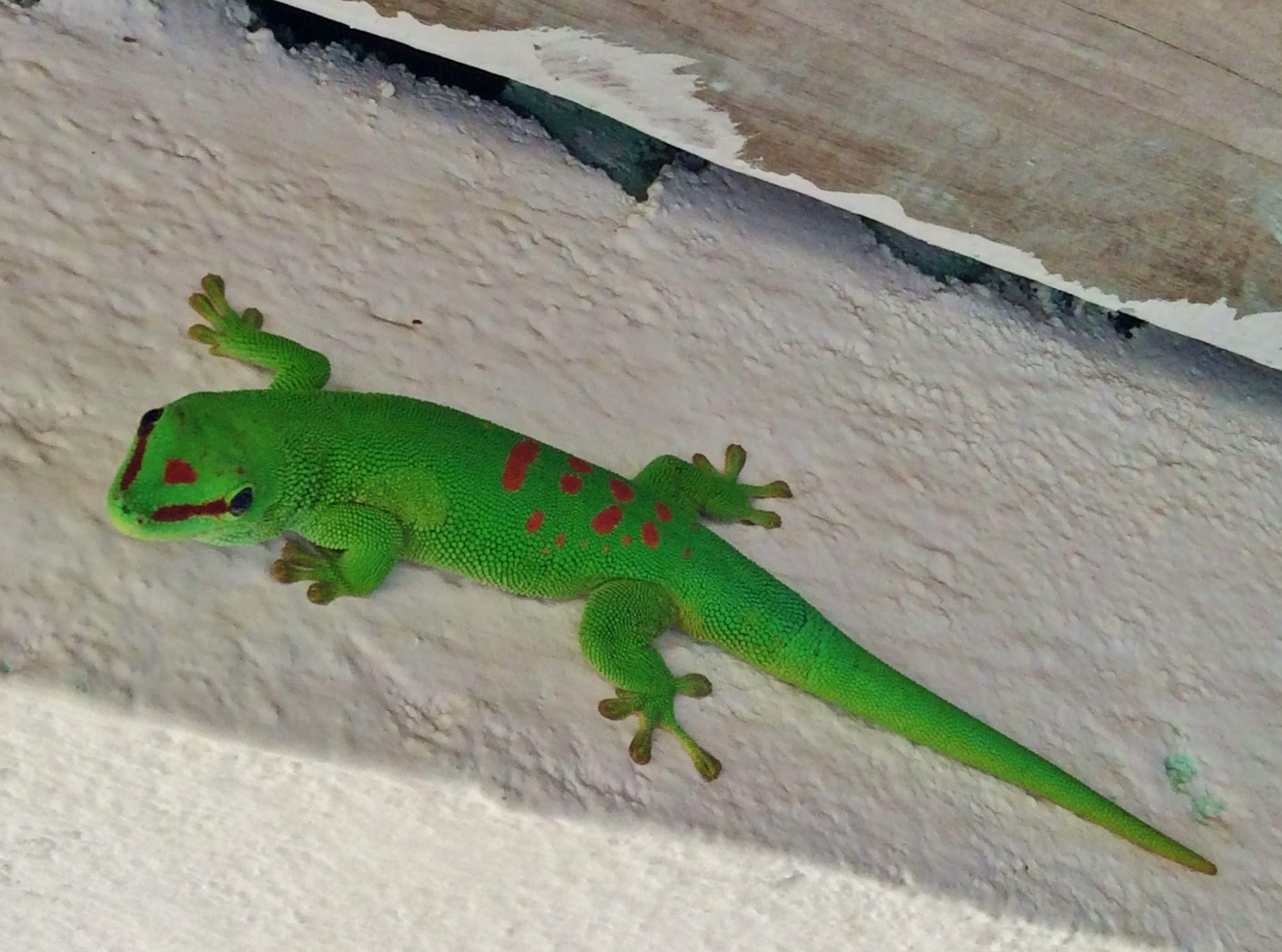
On the other hand, you can’t miss the geckos.

IMG_0473

Posted in Around Africa, Flora and fauna, Islands | Tagged , , | Leave a comment

Nosy Be and beyond, Madagascar part 2

In Madagascar, even the islands have islands. It’s very meta. I love islands. This is my kind of place.

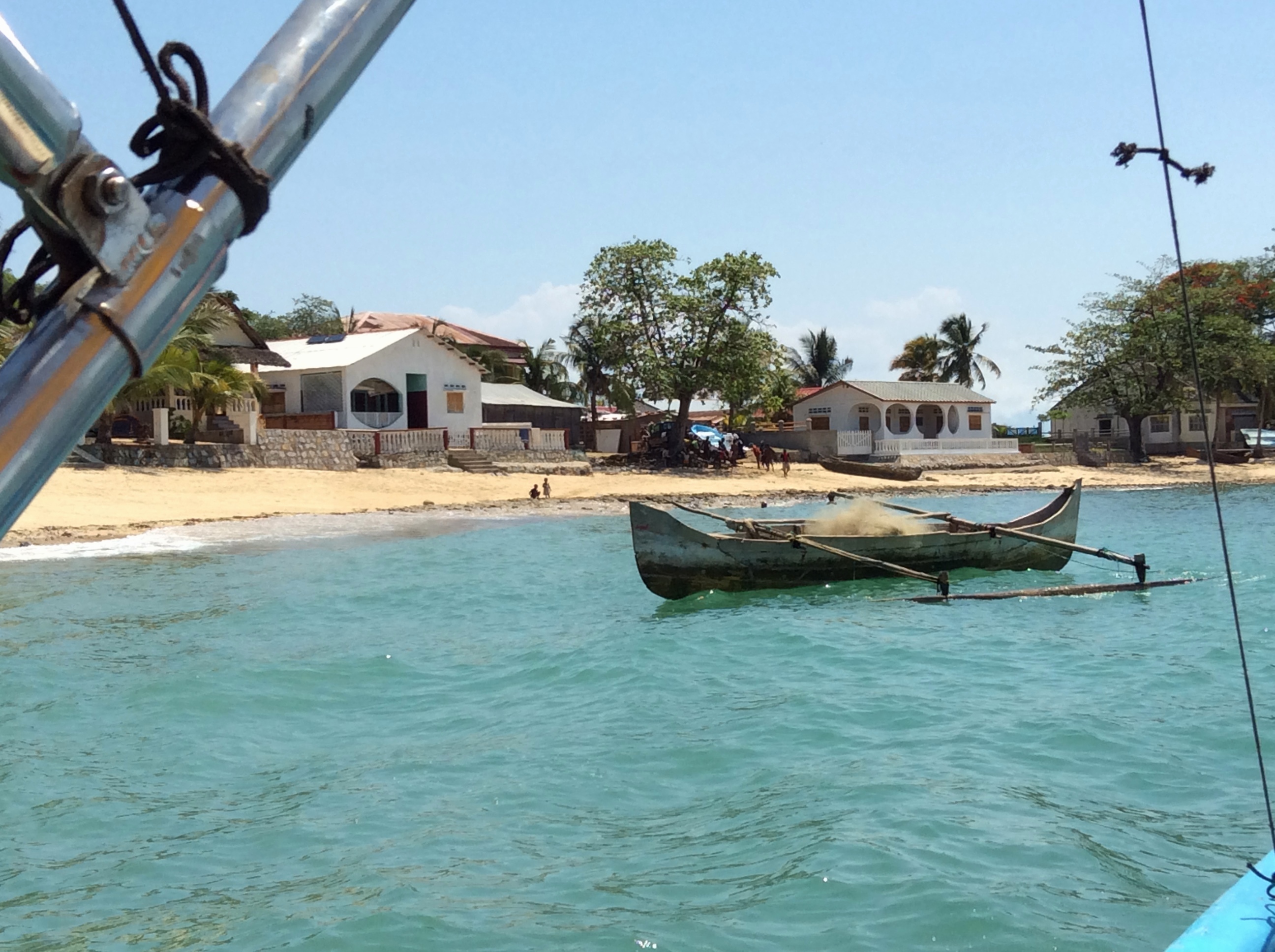
A small motorboat took me on the 40 minute journey from Ankify to the island of Nosy Be (it means the Big Island).

IMG_0608

On the way we stopped at this very small island to pick up a passenger.

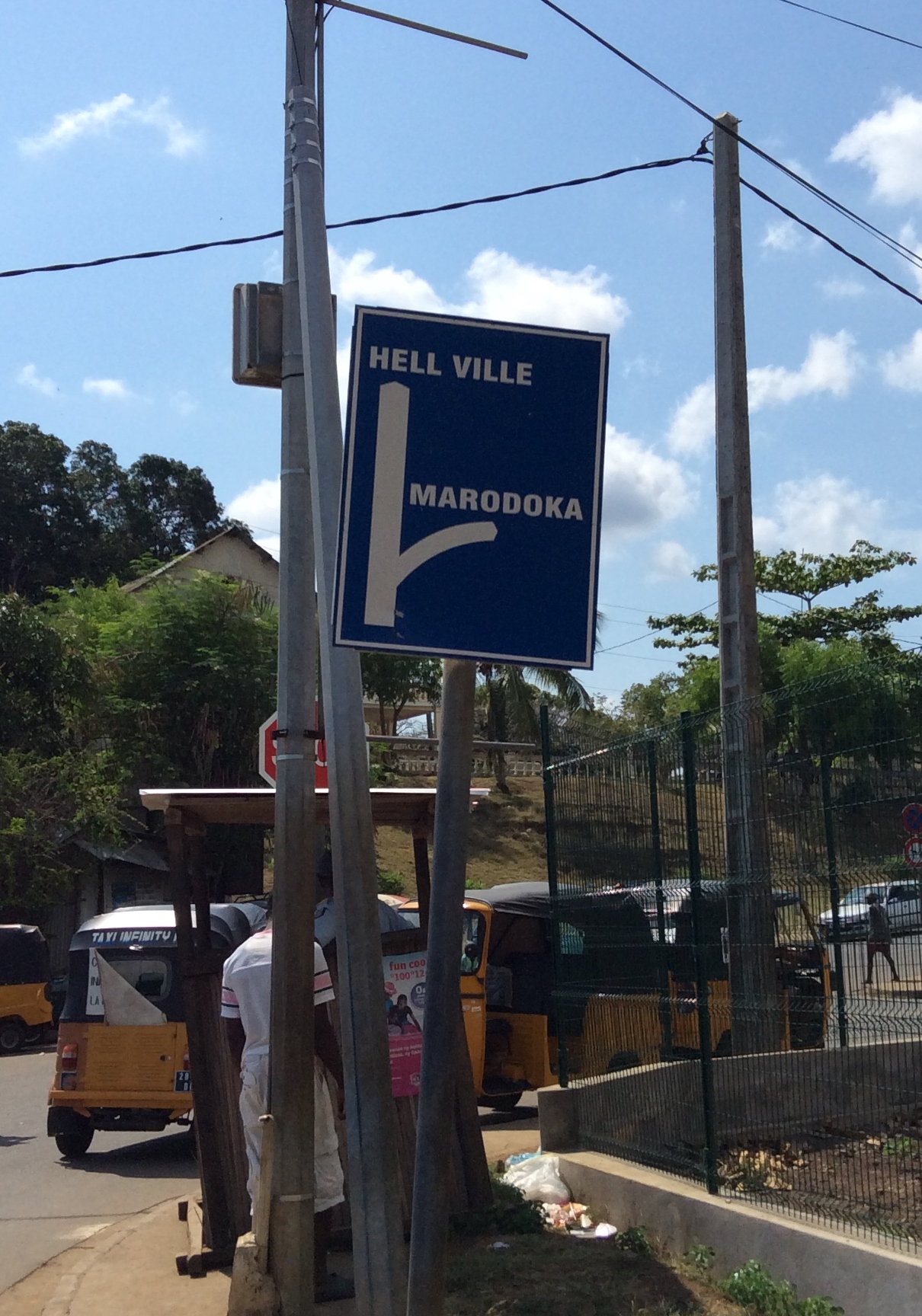
A new driver met me at the port town of Hell-ville.

IMG_0614

Where the road is paved not only with good intentions, but actual asphalt!

My hotel here turned out to be a beautiful beach resort on the north end of the island, away from the crowds in town (Nosy Be’s beaches make it a very popular destination, especially for French and Italian visitors.)

This slideshow requires JavaScript.

The next day was a group excursion to two even smaller islands, which turned out to be quite fun.

Our first stop was Nosy Komba, aka Lemur Island. This is where I would stay if I were to come back again. There is a busy fishing village with some rentable bungalows and restaurants – but no electricity or Internet. A local guide will walk you up to the “lemur park” which isn’t really a park, more like an area where they feed the lemurs to attract them for the tourists. On the way up the guide bought bananas for us to feed the lemurs with. I wasn’t going to – I’m sure it’s bad for the lemurs – but, well, the guide put a banana in my hand and I did it anyway. There are tortoises, snakes and chameleons here as well, which the local people catch and then periodically release when they catch new ones.


This slideshow requires JavaScript.

Our last stop was Nosy Tanikely (the Small Island). This uninhabited island has a brilliant white sandy beach and crystal clear water. I went snorkeling and saw all kinds of colorful fishes as well as a variety of clams and many types of coral. In the afternoon the tour operator fixed us a delicious seafood lunch. Then more snorkeling before we reluctantly began the journey back to our hotels, sunburned but happy.

This slideshow requires JavaScript.

Posted in Around Africa, Islands | Tagged , , , , | 3 Comments