High school prom plans are often complicated, but perhaps even more so when you are an international student. Alekka’s British boyfriend graduated from ICS last year; this year he is enrolled at a university in London. Although he’s on spring break now, he wasn’t available to take Alekka to the prom because (beyond the budget considerations) he is vacationing in Sri Lanka with his parents, who, incidentally, have moved to Dubai. So another young man from Alekka’s circle of friends, a very nice fellow from Japan, offered to be her escort for the evening. He emailed Alekka’s boyfriend to ask for his blessing, which I thought was awfully cute.
Alekka and her date
ICS has a policy of including parents in the prom. Most American parents I know here think that this is borderline creepy when they first hear about it, but a lot of ICS families (and students) are attached to the tradition of prom as a family affair.
As in the US, many girls spend the day getting their hair and makeup done. Alekka is sporting a short hairstyle these days, so she skipped the salon beauty treatment with her girlfriends and got ready at home.
The theme of this year’s prom was Mardi Gras
The evening started with a pre-prom cocktail party and photo session at the home of one of Alekka’s friends. Her crowd were all invited along with their parents.
This slideshow requires JavaScript.
This year the prom was held at the Sheraton, Addis’s most elegant hotel. One of the kids rented a gargantuan Hummer limousine so ICS seniors could arrive in style. Alekka and friends were invited to ride from the cocktail party to the hotel in this monster vehicle but the limo couldn’t make it to the house – the streets in that neighborhood are too narrow and corners too tight. So one of the dads ferried them to the main road to get picked up. The old folks carpooled to the Sheraton in time to see the kids arrive on the red carpet.
This slideshow requires JavaScript.
The family festivities involved a fancy buffet dinner, more photos, some brief words from the administration, a slide show of the students then and now, a celebratory cake, and a mother/son, father/daughter opening dance.
This slideshow requires JavaScript.
Then – and this is always the tricky part – the parents were told it was time for them to move on so that the students could have their own dance party. In past years, some families didn’t take the hint and continued to sit around sipping their Cokes and Ambos, which really put a damper on the evening. But this year we were good little parents, shuffling off to the bar at an appropriately early hour to talk about our kids and how much we will miss them next year.
Most travelers fly to Harar from Addis, but I happen to enjoy a good road trip. You see so much more that way. Here are some pictures I took out the window on the way back.
The old walled city of Harar was founded sometime between the 7th and 11th centuries and quickly grew to be an important Arab trading post. It is sometimes called the fourth holy city of Islam, after Mecca, Medina, and Jerusalem; it has 82 mosques, three of which date from the 10th century.
You can see part of the 16th-century wall just behind the trees.
Harar was first an independent sultanate, then an emirate, for hundreds of years. For a decade in the late 1800s the area was under Egyptian rule before being incorporated into Menelik II’s expanding Ethiopian empire in 1887.
Harar is colorful and lively. It has quite a different feel from Addis Ababa. The clothing, architecture, decoration, and way of life are much more Arabic.
This slideshow requires JavaScript.
The French poet Rimbaud lived in Harar during the Egyptian occupation. He worked there as a coffee trader, having given up the poetry business some years before. At the Arthur Rimbaud Cultural Center we saw many photos he took of life in the city – he was the first person to photograph Harar.
This slideshow requires JavaScript.
One popular attraction in Harar is the hyena man. After sunset, he calls the wild hyenas to him and feeds them raw meat. He invites onlookers to join him – which of course we did.
My son Kosta came to visit us in Ethiopia last week. It was his spring break – he’s a graduate student at University of Wisconsin – but unfortunately not ours. I think we managed to keep him entertained pretty well despite work/school time constraints. I took a couple of personal days to extend the first weekend and hired a driver to take the two of us on a road trip to eastern Ethiopia.
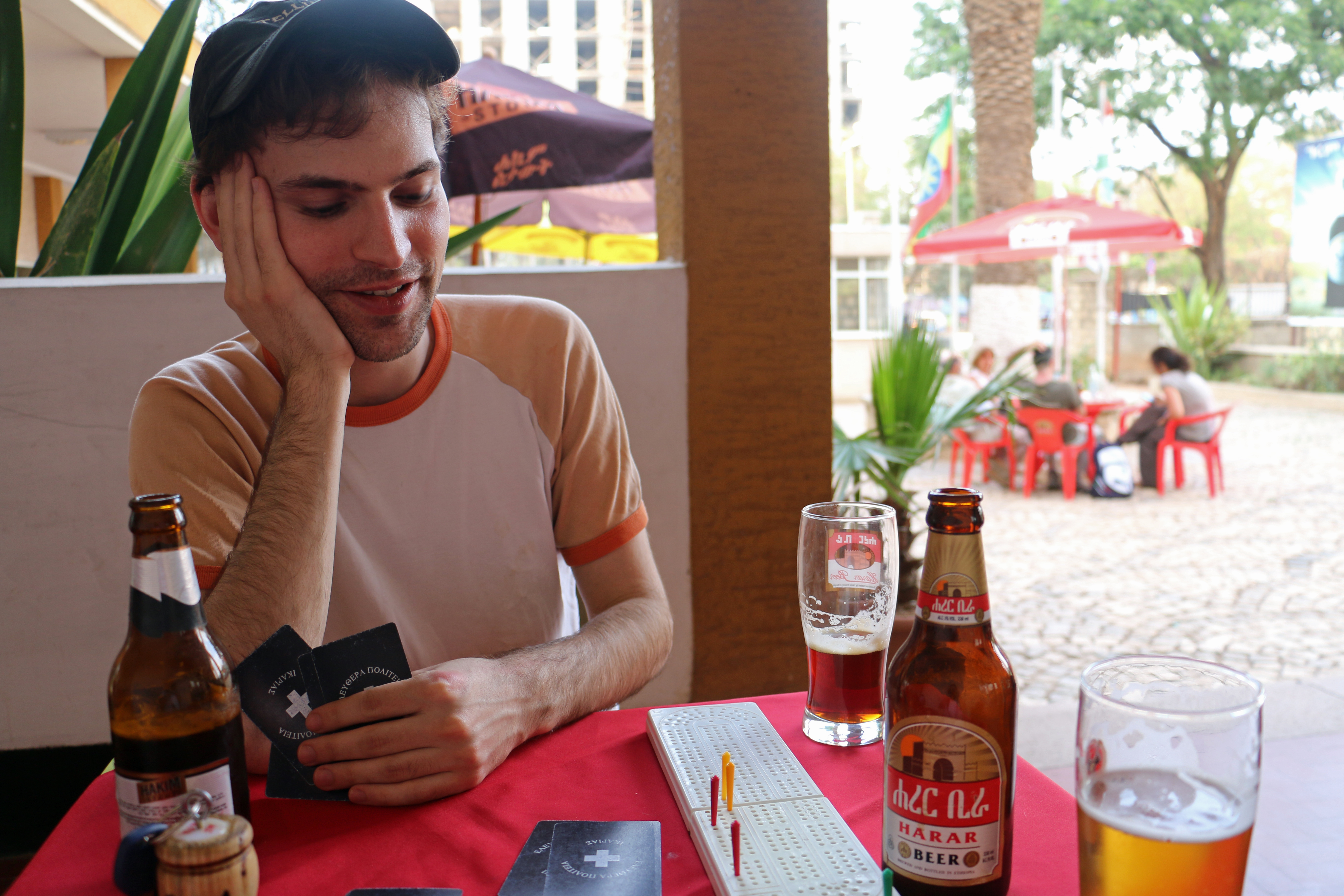
Time to relax with my boy
We stayed the first night in the city of Dire Dawa. This town’s main claim to fame (actually its reason for existence) is that it was the initial endpoint of a railway running from the port at Djibouti into Ethiopia. The railway was later extended to Addis but it was never profitable. It was abandoned for a while but just a few years ago the government repaired the tracks and started running a few cargo trains between Djibouti and Dire Dawa.
This slideshow requires JavaScript.
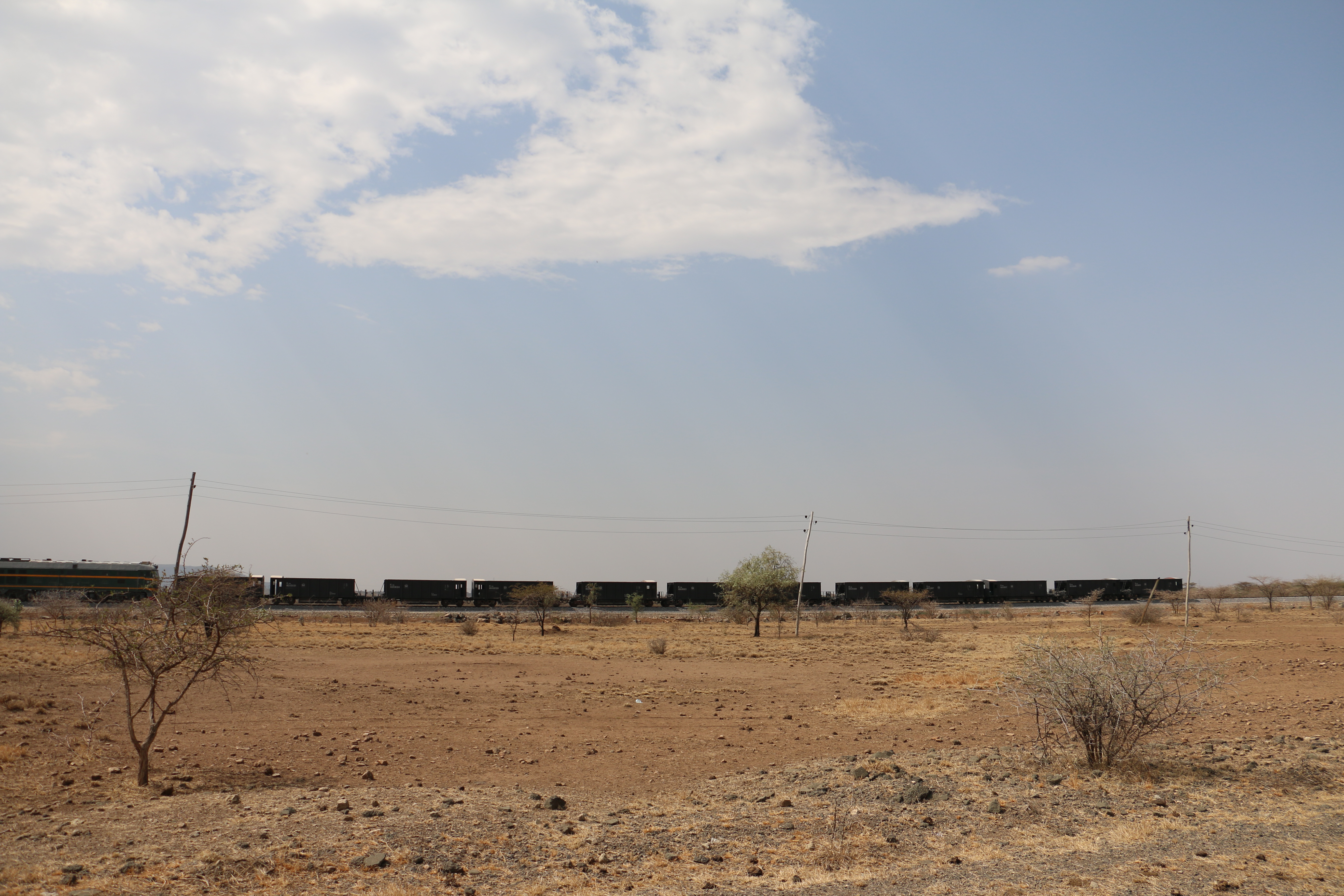
Right now Ethiopia is building a brand new railway that will connect Djibouti to Addis. The last portion, the Addis end, is still under construction, but on our trip we saw a train coming from Djibouti on the new tracks.
Dire Dawa used to have a significant Greek population. Our guide told us there are only two(!) Greeks left in the city, but they still operate a church and a school.
We also visited a market where the sellers are all women.
This slideshow requires JavaScript.
Then it was back into the vehicle and on to to Harar – photos tomorrow.
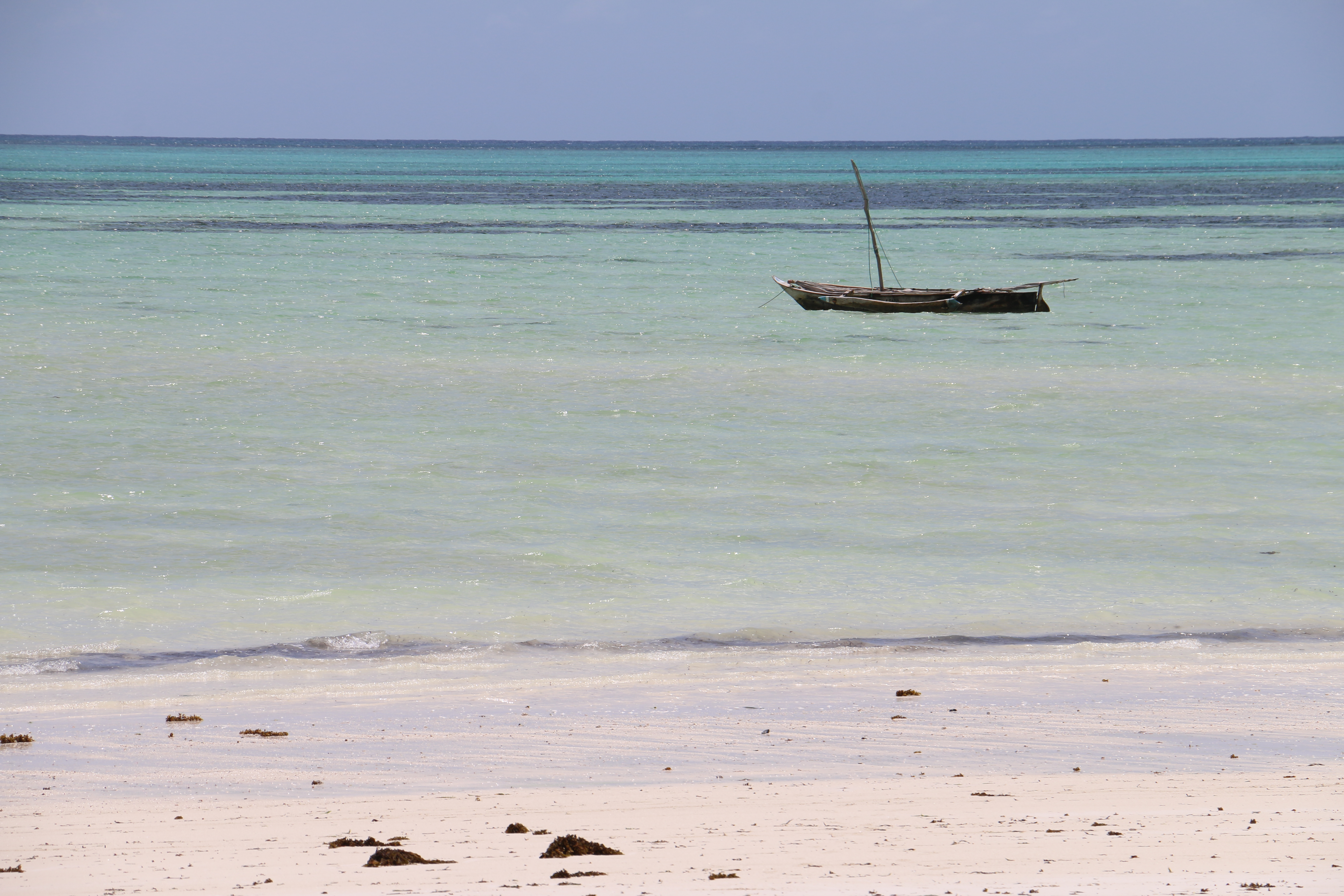
I spent the last part of my spring break week in exotic Zanzibar.
Zanzibar is what put the “zan” in Tanzania when the nations of Zanzibar and Tanganyika united in 1964. Zanzibar is an archipelago of two large and several small islands. Although people sometimes refer to the biggest island as Zanzibar, its proper name is Unguja. That’s where we went.
My daughter Alekka and three of my ICS teacher friends were already at the guesthouse at Paje Beach when I arrived late Wednesday night.
This slideshow requires JavaScript.
We spent the next few days swimming, eating, drinking, sunning, and snorkeling.
This slideshow requires JavaScript.
We did manage to fit in a little bit of proper sightseeing at a spice plantation.
This slideshow requires JavaScript.
We also spent some time in Stone Town, the main (only) city on the island. Stone Town was site of an Arab fort since at least 1700. It became a thriving center for both the spice trade and the slave trade in the 19th century.
This slideshow requires JavaScript.
Favorite fun fact about Stone Town: Freddie Mercury was born here.
On my fourth day in Tanzania we visited Ngorongoro Crater. It’s a sort of garden of Eden for wild animals – a volcanic caldera with a small lake at its center.
This slideshow requires JavaScript.
At the end of the day we drove back toward Arusha, where I would be flying out the next afternoon.
There was time that final morning for one last game drive in Tarangire National Park. So many elephants!
It’s a long drive to the center of the Serengeti. We arrived at our lodgings around sunset.
The place appeared on my itinerary as “Kati Kati tented camp” but it was certainly the most elegant camp I have stayed in. And the mess hall had the best pumpkin soup I’ve had anywhere, tents or no tents.
This slideshow requires JavaScript.
The next morning we were up early for a game drive. Serengeti means “endless plain,” and it is easy to see how it gets its name. It’s the model for those scenes in The Lion King with the stampeding wildebeests and lions perched on rocky outcroppings.
This slideshow requires JavaScript.
We encountered one old lion resting by a wildebeest he’d killed. He had already eaten his fill and was saving the rest for later. For a time he found the shade of our vehicle more appealing than the hot sun, but when he saw the vultures landing on his wildebeest he went racing back to snap his jaws at them.
I went on safari in Tanzania over spring break. It was a solo trip because Alekka had to stay home and study (IB is a bear, if I haven’t already mentioned it). I booked a custom safari through a tour operator called Shadows of Africa, whom I highly recommend. I visited four national parks as well as Oldupai Gorge and a Maasai village. I am going to divide my pictures up into three posts so I don’t give you eyestrain.
My driver/guide Timothy picked me up at the Kilimanjaro airport and took us directly to Lake Manyara National Park for a game drive.
This slideshow requires JavaScript.
The next day we drove to the Serengeti. On the way we stopped at Oldupai Gorge, which many of us learned as Olduvai Gorge because someone got the name wrong somewhere along the way. There is a small museum there built by Mary Leakey. They had a picture of Tim White, my Anthro 1 professor at U.C. Berkeley! I used to want to be a archaeologist. It really was quite thrilling to see this place in person.
This slideshow requires JavaScript.
We also stopped at a Maasai boma (village). Although I was the only visitor at the time, it was a sort of touristy experience. The people came out their houses and did a dance, and there was a huge assortment of beaded jewelry on display for sale attached to the inner fencing where the Maasai keep their animals at night. It was the kind of choreographed thing I don’t usually go in for, but then again, when am I going to get another chance to visit a Maasai boma? It was interesting.
The second round of pictures from our tour of the Omo region.
Karo
The Karo people are known for their elaborate body painting. As far as I could determine, the people in my photos are using traditional decoration patterns done with chalk and ochre; however, pre-tourism Karo only painted themselves for special occasions, and children would not be decorated. There were also some people whom I did not photograph who were using non-traditional colors and accessories meant to appeal to visiting photographers. There are about 1,000 people in the tribe. The river in the background of some of these pictures is the Omo.
This slideshow requires JavaScript.
Dimeka market
This is the market for the Hamar people that is held in the town of Dimeka. We ate lunch, then looked around and bargained for a few items. Afterwards we stopped in a coffee shop for some little cups of Ethiopian coffee.
This slideshow requires JavaScript.
Key Afer market
This large market attracts buyers and sellers from several different Lower Omo tribes including the Hamar, Ari, Tsemaye, and Bana. We visited the animal corral, shared a gourd full of home brew in a t’ella bet, and negotiated for some Hamar jewelry and clothing.
This slideshow requires JavaScript.
Mursi
You will have seen pictures of the Mursi before; the women of this tribe wear large wooden or ceramic lip plates that have made them the subject of thousands of photos. This is a group whose culture is especially under pressure from many sides. They are semi-nomadic but now live in a national park. The land they traditionally use for cultivation and pasturing is being irrigated for sugar cane, and young Mursi men are recruited to work for wages at the sugar factory. We were told no photos when we arrived at the village, but the chief changed his mind after some of the women and children met us. It is very clear that the photo business affects the way the Mursi interact with tourists – almost as if they are competing to see who can create the most outrageous ornaments out of gourds, horns, and seashells for camera-crazy foreigners. This made me uncomfortable but I took pictures of them with these items because this is how the Mursi live now.
This slideshow requires JavaScript.
Konso
The Konso are a large tribe of settled agriculturalists whose terraced towns and farmlands are a recognized UNESCO World Heritage site. The organization of the place reflects a particularly complex social structure. A Konso man led us on a tour of his town. The Konso make stone stele (I read that they are the last tribe in Africa to still do this) that are an important part of the age cohort ceremonies, and they also carve wooden figures to honor the dead and to commemorate famous deeds.
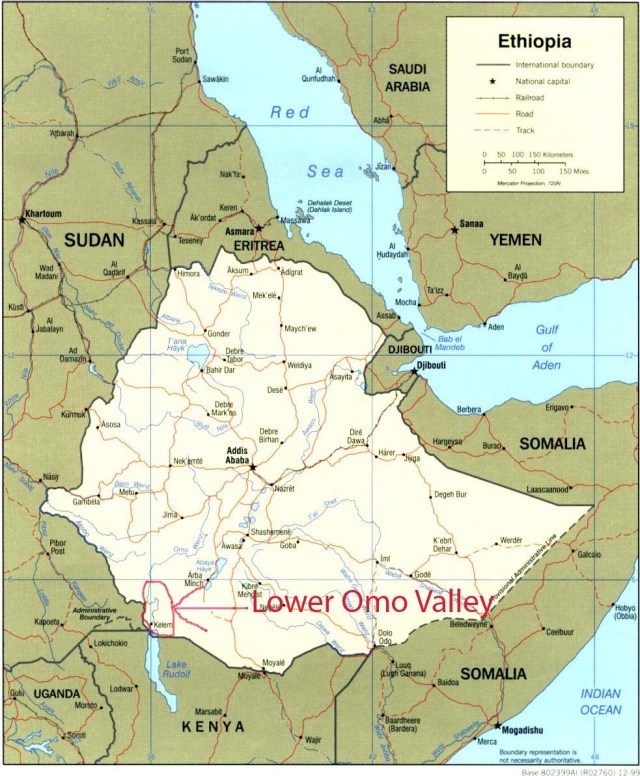
We regrouped in Addis, unpacked and repacked our bags, and the next morning started out on the final segment of our holiday itinerary: a 7-day visit to the tribes in Ethiopia’s remote Lower Omo Valley region.
For many people, a trip of this kind is ethically problematic. While it is fascinating to observe firsthand cultures so markedly different from our own, what is the effect of tourism on them? Is it beneficial or is it exploitative? We are cautioned not to make the trip if we have any type of communicable disease, even a cold, as the tribal people don’t have resistance to our germs. That’s fairly easy to manage, but what about the cultural impact? Westerners go to see these tribes because they are different, but the more westerners interact with them, the less different they will be. The most isolated of the groups might see 1000 foreigners a year; others who live close to towns, like the Dorze and the Konso, get many times that number.
The village chief usually collects a fee for the visit. Certainly this money improves the lives of the villagers, but how do we know for sure that our guides are paying a fair price? Often individuals charge 5 or 10 birr (25 or 50 cents) to have their photos taken. This seems like a reasonable exchange, but the monetization of photography has unfortunately turned village life into a sideshow for some groups when cameras are present – we witnessed this ourselves when we visited the Karo and the Mursi. Villagers ask us for candy, medicine, or clothes (which we don’t give, but others might). What impact does this have on their health and their society? If the tribe becomes dependent on tourism, does that help or harm the efforts to preserve their culture?
I have a good friend here who says he will never go – he calls it “the human zoo.” And I agree that the apparent inequality of the experience is discomfiting. For me, though, having majored in cultural anthropology, the opportunity to meet people I had only read about in monographs was irresistible. I think it’s a given that the way of life of these tribes will be very much changed in a few short years, and I am here now. I can only say that we were friendly and respectful and tried to do no harm in an attempt to make our inevitable imprint as positive as possible. In the end it was probably the most incredible experience I’ve had in Africa so far (and I have had a few).
I’ll divide my photos I took into several slide shows over two posts featuring the tribes and markets, and a third post for some of the other things we saw and did in the Omo Valley.
Dorze
Located just outside of the city of Arba Minch, the Dorze are a much-visited tribe of shepherds and weavers who are making the most of tourism. A Dorze man gave us a tour of the village: we saw inside a traditional elephant-shaped home, a woman demonstrated how to make kocho cakes from false banana, we saw the tourist lodge operated by the village, we sampled traditional food and alcohol, and we toured the weaving factory (with roof provided by an Irish NGO) where Andreas bought Alekka a scarf. It was a heavily mediated experience which made it unclear whether we were seeing how the Dorze actually live now or whether we were touring a living history museum, but either way it was worth the stop.
This slideshow requires JavaScript.
Erbore
It was market day for this small tribe of pastoralists. We visited the market first; several young people asked to have their photos taken but did not ask for money. Then we were invited (I presume our guide offered remuneration, but I didn’t witness the exchange) to a family home. We had a good time “talking” and laughing with the man and wife and their kids (much sign language involved). The woman shared some fresh brewed buno, prepared by boiling the coffee husks left over after coffee beans are sent to the city. It was a pale liquid with the the husks still in it that tasted more like herbal tea than coffee.
This slideshow requires JavaScript.
Tsemaye
This visit was a little awkward. There weren’t many adults at home in the small village because most of them were away at a market. We saw two young men return from fishing, and a man knocking pods out of a tree for his goats. There were quite a few young children around who were curious but shy. Our guide asked a woman if we could see inside her house; she said yes but after we were inside she seemed uncomfortable and we didn’t stay long. We talked with our guide about it afterwards and he said that this village has not had many outside visitors and they are not used to being the object of curiosity.
This slideshow requires JavaScript.
Hamar
We noticed the Hamar in all the markets, where the women’s distinctive clothing and hairstyle and also their confident bearing make them easily identifiable. In the Hamar village we met several people, visited a family in their house, and saw the animal corrals.
This slideshow requires JavaScript.
Our guide learned that there was going to be a Hamar dance that evening and he got permission for us to attend. We arrived at sunset at a small clearing outside a village. Men and women took turns dancing (the men’s dance involved much jumping, the women’s more complicated steps) while others watched and clapped.
This slideshow requires JavaScript.
Next to the dance area there was a large shelter where women were grinding grain and singing.
This slideshow requires JavaScript.
Both men and women have decorative scars on their faces and arms, but in the photos you can see that most adult women also have heavy scarring from wounds on their backs. This happens at the bull-jumping ceremony, which is the Hamar coming of age ritual for young men that takes place in the summer months. The boys run naked across the dung-smeared backs of cattle lined up side by side, while the “maza” – young men who have already completed the ritual – beat the initiates’ sisters with canes. The purpose of this is to create a debt to benefit the sisters, by obligating the boys to protect them in exchange for the pain they have endured. The women are proud of these scars.
Next post: more tribes and markets from South Omo.




 Lorna of Arabia
