Night at the museums

We noticed a couple of museum workers putting together a new display at the Svrzo house last Wednesday.  They said they were preparing for the “noć muzeja .”  Andreas and I didn’t get it right away, but the French lady we were touring the house with knew exactly what they were talking about.  It seems that all over Europe there is a Saturday night in May when museums have free admission and stay open until midnight.

noc museja posterSo we set aside Saturday afternoon and evening for some intensive museum time.  We went first to the National Museum where we saw stuff left behind by Illyrians, Romans, medieval Bosnians, and Ottomans.  There is also an assortment of preserved specimens in the old-school natural history section and an outdoor botanical garden.
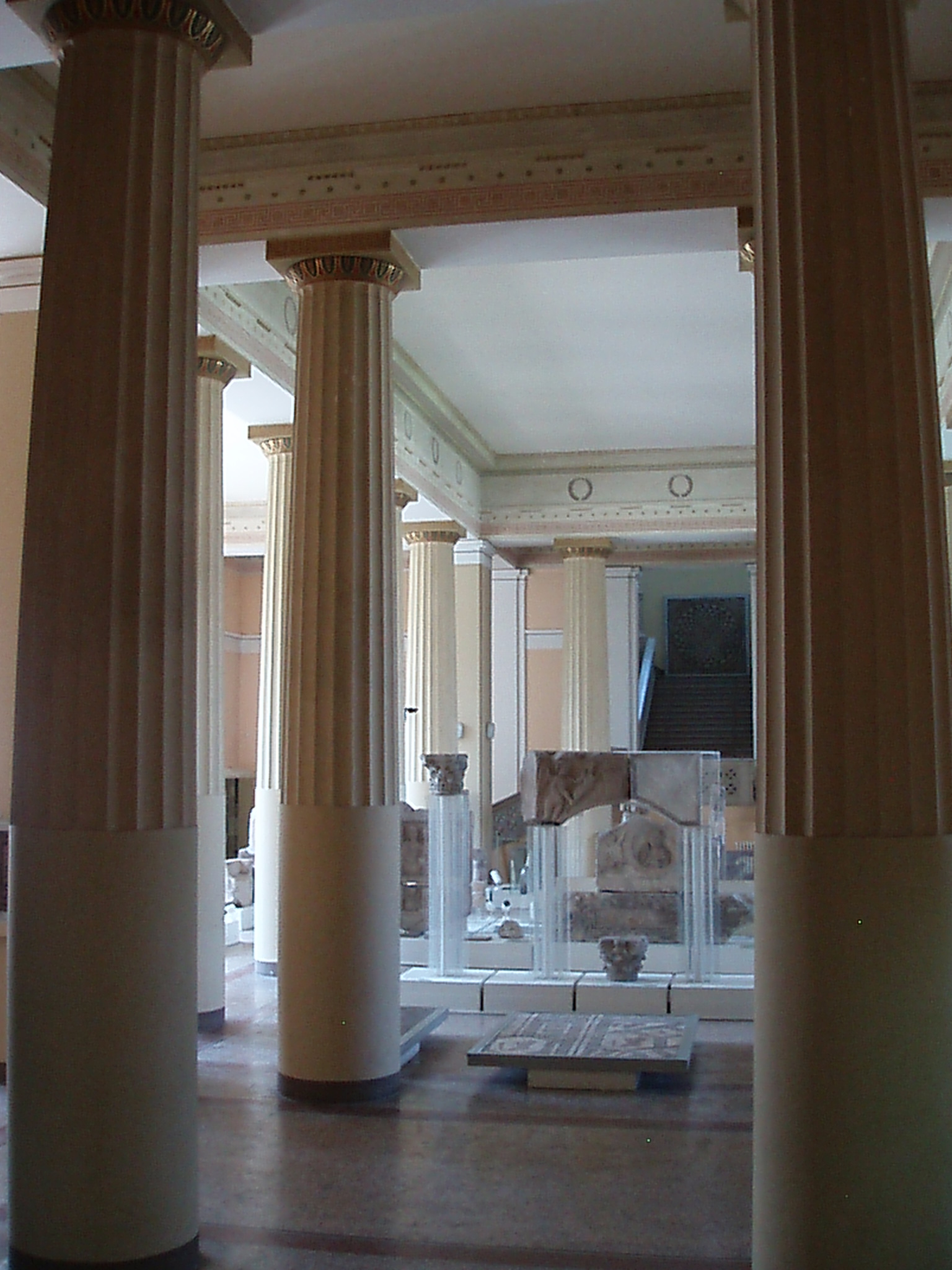
Ancient Roman artifacts from Bosnia in the National Museum

Insects of the Balkans in the National Museum

Stećak, a medieval Bosnian burial stone

After a mid-day burek and beer break, we wandered over to the National Gallery to view the World Press photo exhibit of award-winning journalistic photography.
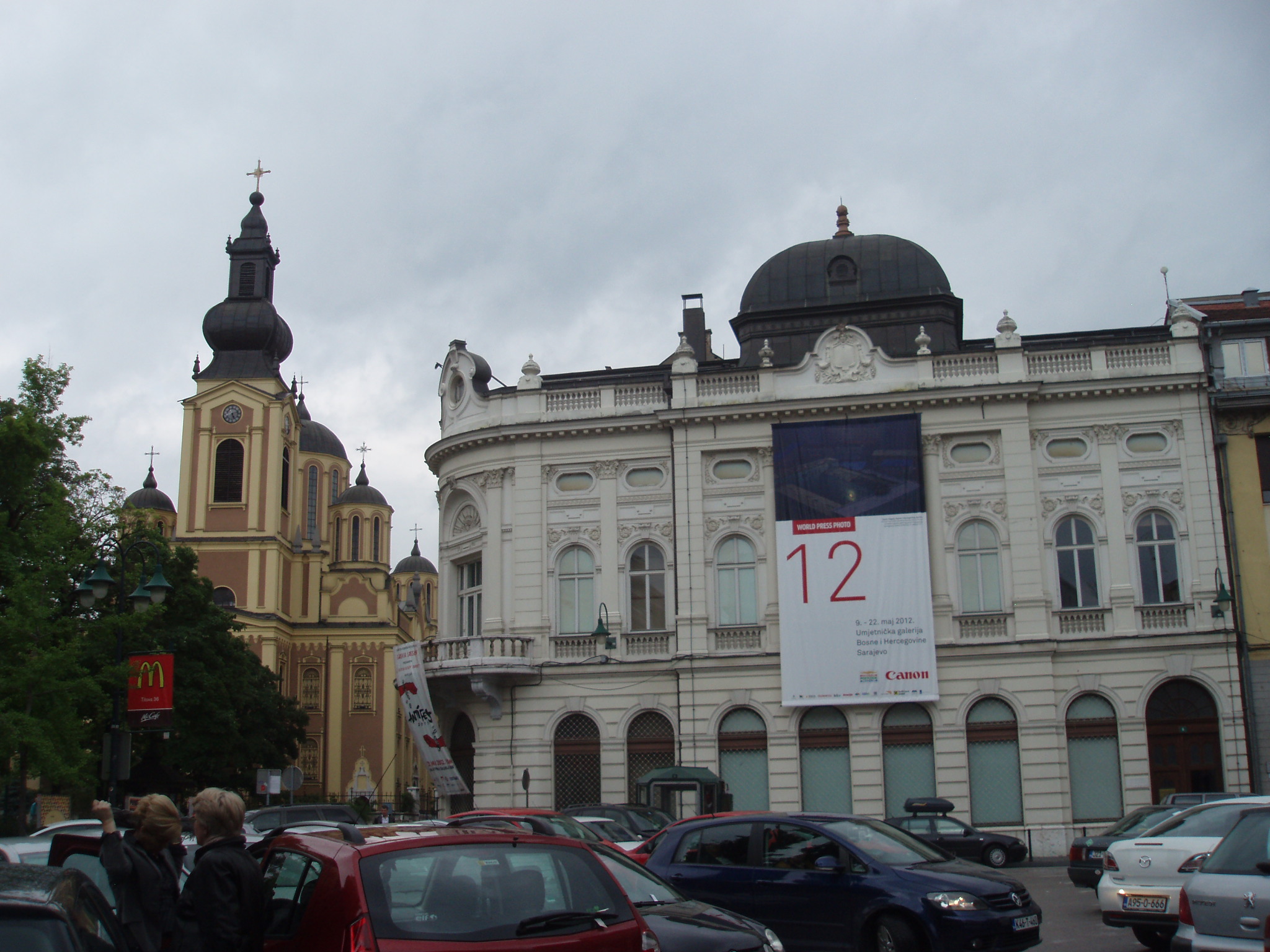
We’d planned for the Sarajevo City Museum to be the last stop on our museum crawl, but we were disappointed to learn they were not participating in the event.  Since we were already in the old city area we decided to see if there was anything going on at the old Orthodox church.  We got lucky – a special event for museum night with an east Bosnian women’s choir singing traditional music, plus some complimentary and quite passable vranac from the church wine shop.
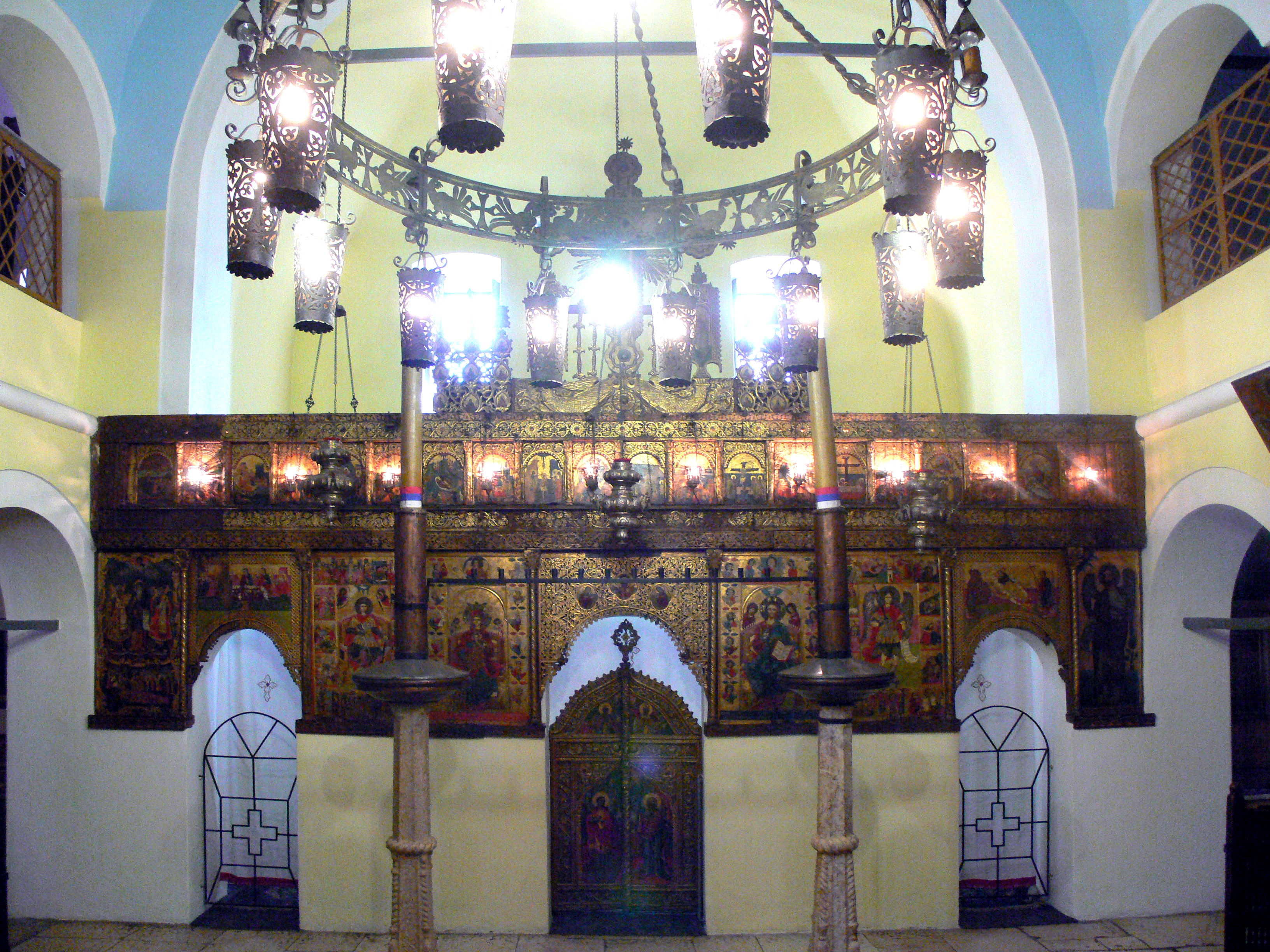
The old Orthodox church in Sarajevo was built in the 1530s.

Public museums in Bosnia are going through tough times.  The Svrzo house looked great, but the Historical Museum has no heat, the prehistoric section of the National Museum is closed because the roof is leaking, and the National Gallery has only one floor open to visitors.  The worst of it is that, incredibly, museum workers have not been paid in almost a year.  They are keeping the doors open because they believe in the importance of their work.

The decrepit Historical Museum

While we were in the National Museum we were approached by a journalist from Dnevni list, one of the big daily papers. She wanted to know what we thought of noć muzeja.  We picked up the paper on Sunday and there we were.  See us in the righthand column?

Loosely translated, the title of the article is “full one day, but empty the other 364.”
Posted in Sarajevo | Tagged , | 1 Comment

At the movies

Sarajevo is a great city for film.  One of the biggest film festivals in Europe is held here in July.  Films come to the Sarajevo film festival from all over the world, and so do the film celebrities. Brad Pitt and Angelina Jolie attended last year.

This year will be the 18th annual festival. If you do the math, you’ll realize that it started in 1995, during the seige.  It is amazing to learn how the arts continued to thrive here in those desperate times.  There was film, theater, music, visual art – all while the city was being shelled on a daily basis, and with no public water or electricity.

Unfortunately we will be leaving Bosnia before the festival. But there are plenty of film events around Sarajevo throughout the year.  In the time we’ve been here, there’s been a minifestival of American westerns, and one of 1930s musicals, and numerous others we’ve seen posters for around town.  One night we went to a showing of independent Spanish language shorts at the Spanish cultural center.  I really liked this (quite creepy) one.  Hit the red cc button to get the English captioning.

Of course, there are also mainstream Hollywood movies in Sarajevo. This afternoon Alekka and I walked over to the CinemaCity multiplex to see Osvetnici – which you probably know as The Avengers.

Fun stuff. I sure hope Mr. Stark enjoyed his shawarma when it was all over.

Posted in Sarajevo | Tagged , | Leave a comment

Memo to Americans

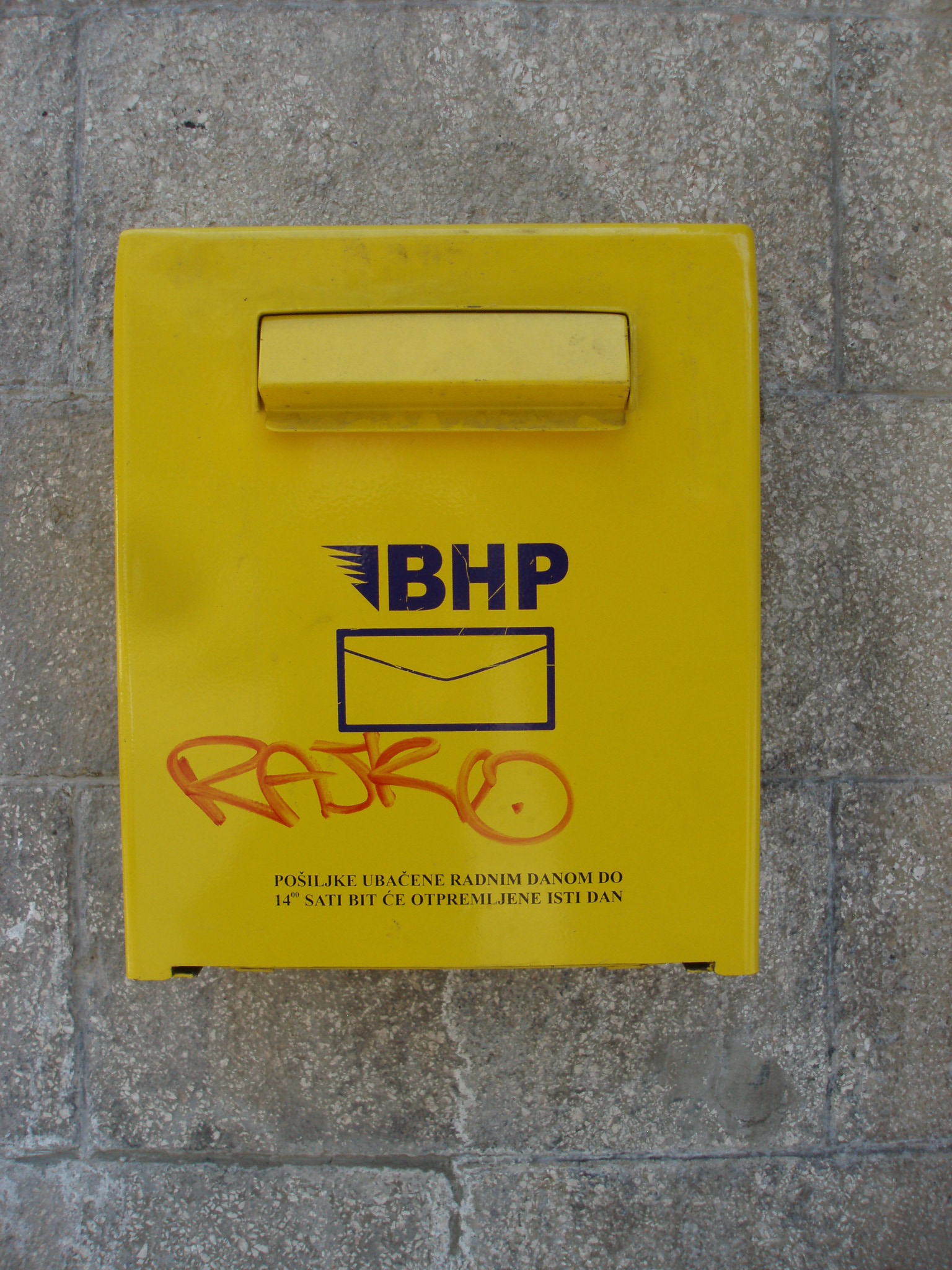
This is a mailbox.

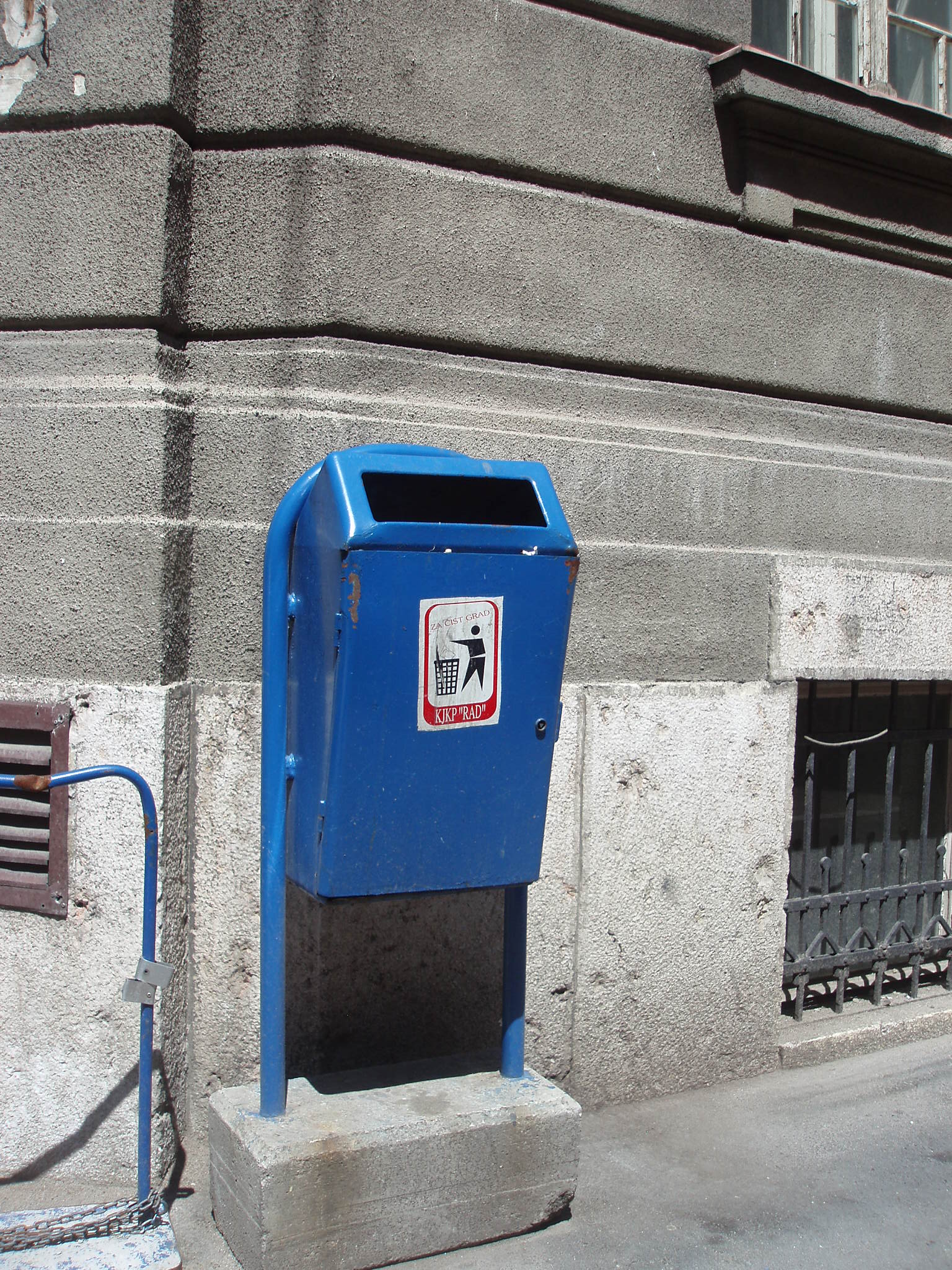
This is a trash bin.

Know the difference.

Posted in Bosnia | 1 Comment

The Svrzo House

Andreas has no classes on Wednesdays.  This gives us a chance to do the kinds of touristy things that induce massive eye-rolling when suggested to the teenager.  While the cat’s at school, the mice hit the museums.

This Wednesday we had to walk over to Stari Grad, the old city, to pay our monthly water and electric bill.  It’s a pleasant ritual. Our landlady Valida invites us to come in the middle of the day, when breakfast at her Halvat Guest House is over and the guests are all out seeing Sarajevo.  Valida serves us tea or Bosnian coffee, and we have an entertaining chat about any and everything before finally getting down to the business of bills. We can happily while away the better part of an afternoon this way.

Besides being a delightful hostess, Valida is a wonderful resource for information about the city.  We were telling her that with only a month left in Sarajevo we needed to pick up the pace of our sightseeing schedule.  She suggested that we go right away to see the Svrzo house, because it is only a few blocks from the guest house.

The Srvzo house is an immaculately preserved 18th century traditional house.  The family who built it were upper class Sarajevans, and it contains examples of the fine locally produced woodwork, textiles, and metal goods as well as imported luxuries that only the wealthy could afford such as Venetian mirrors and Persian carpets.

It’s a self-guided tour, so we were free to poke around upstairs and down, in the selamluk (the public areas of the house, where male guests were received) and the haremluk (the private family and women’s areas, from which we get our somewhat inaccurate western notion of a harem). We met an enthusiastic French literature professor on a two-day whirlwind visit to the city and had some fun interpreting the museum signage into Franglish for her.

This slideshow requires JavaScript.

Posted in Bosnia, Sarajevo | Tagged , , | 1 Comment

Cevapi

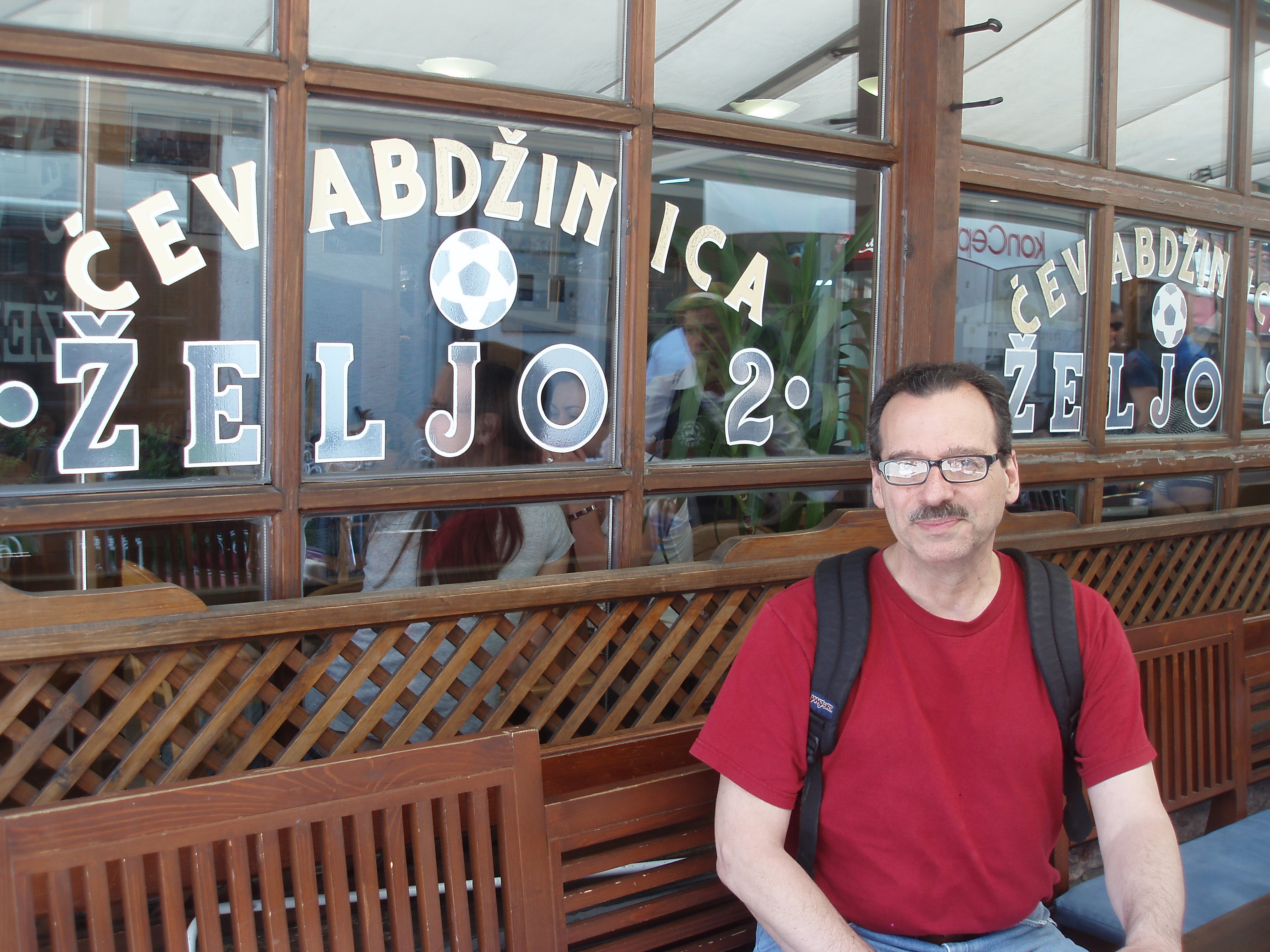
10-piece cevapcici at Zeljo 2

Cevapi, or cevapcici (the diminutive) is the unofficial national dish of Bosnia, or at least of Sarajevo. It’s more ubiquitous than the hamburger is in the US. I would be surprised if there is a restaurant in the city that does not serve them, and there are plenty of restaurants where they are just about the only thing on the menu.

The menu at Zeljo. You can get your sandwich with 5, 10, or (ouch) 15 sausages.

What are they? They’re small skinless beef or beef/lamb sausages, about the size and texture of Hormel Little Sizzlers breakfast sausages. They are fried or grilled and served inside a pocket of somun, a flat (ish) bread similar to what in the US we would call pita but which here is thicker with large holes in it. It’s kind of like a giant English muffin, but less crumbly and not sour. The dish is always served with chopped white onion and sometimes with a spicy red pepper and eggplant spread called ajvar. Usually a cevapi sandwich also comes with a dollop of kaymak inside, which is delicious enough to merit its own blog post someday soon.

There are loads of cevabdzinica restaurants, but many people think Zeljo is the best.

Posted in Bosnia, Food | Tagged , | Leave a comment

No Smoking Orchestra

We’ve had a small festival going on in our neighborhood the last couple of days. Food booths, art on display, that kind of thing. Another new outdoor café sprang up just in time in the BBI Centar mall plaza.  There seems to be no saturation point when it comes to sitting down outside with a cool drink or a kafa.

The new cafe is at the left

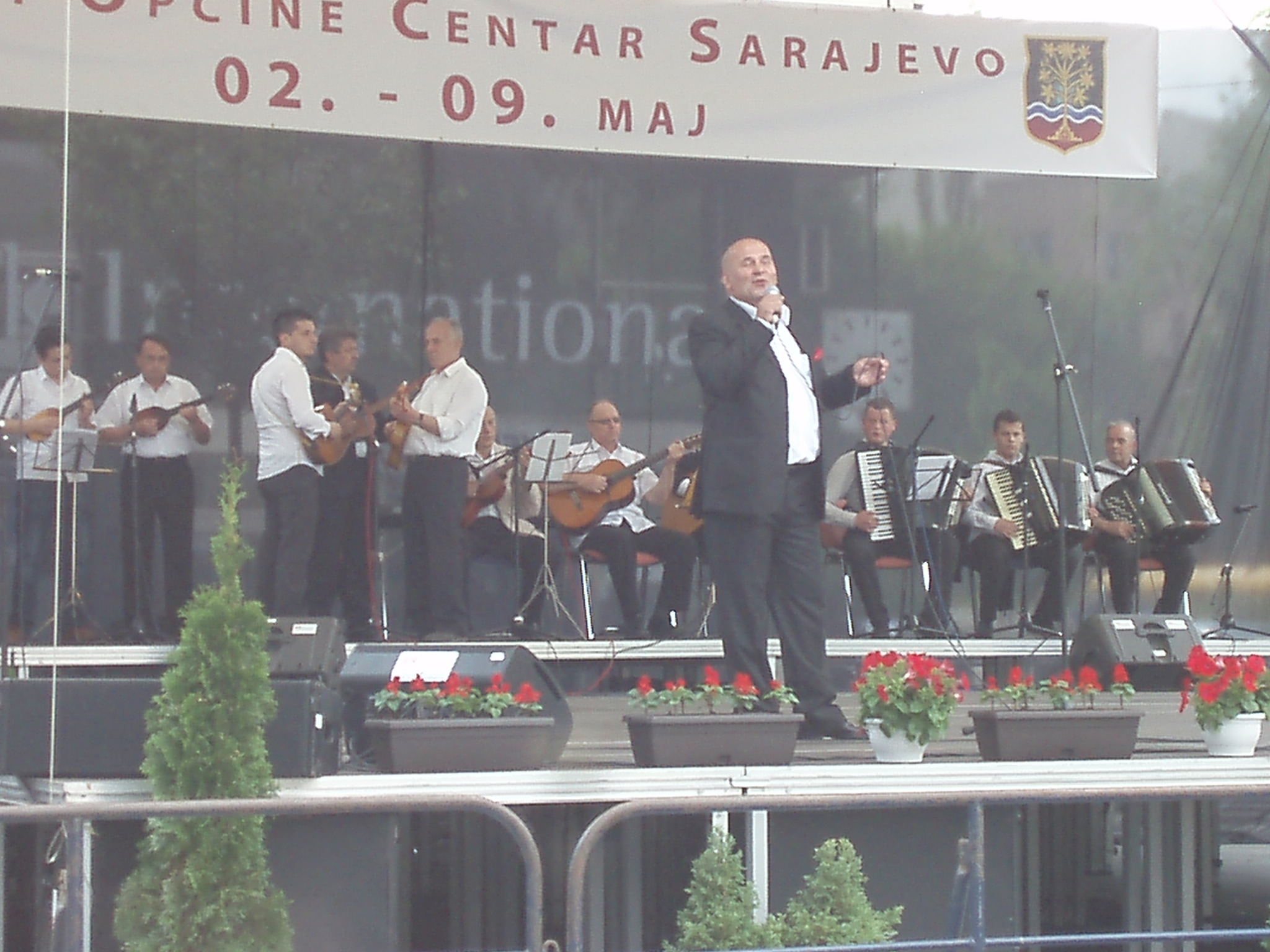
On Tuesday morning a temporary stage appeared next to the new cafe.   We walk that way frequently, and over the next couple of afternoons we got to see a lot of local performers on the platform – sevdah singers, Balkan choruses, guys with stringed instruments that look like tiny long-necked bouzoukis, other guys with accordions, kolo dancers.

Bosnian singer

Some of the local talent

It wasn’t all folk music.  There was a children’s hiphop dance team and some pop singers. A young woman in conservative Muslim dress belting out Gloria Gaynor’s “I Will Survive” presented an interesting example of how performance context can change the meaning of a song.

Andreas and I decided to come back and check out the free headline performance Wednesday night – some group called Zabranjeno Pusenje.  Sure, whatever.  We studied the poster. The photo showed six guys who looked like older rockers; we spotted the word “blues” among the jumble of letters.  Anyway, it was an excuse to sit in the café’s new wicker chairs.

Zabranjeno Pušenje

We forgot what time the show was supposed to start and got there an hour early.  We sat sipping our coffees and smirking about all the yellow-vested security officers and emergency vehicles lined up in front of CinemaCity.  All this for a neighborhood block party? Then, as 8:30 approached, the audience started showing up.  I’m not a good judge of crowd numbers, but Andreas estimated there were about 7,000 people there.

Zabranjeno Pusenje means No Smoking Orchestra.  It seems they are quite famous in Bosnia.  They got their start as a garage band in this neighborhood of Sarajevo.  They were one of Yugoslavia’s most popular acts in the 1980s.

The war broke up the band in the 90s (like it did so much else).  One of the two songwriters left for Serbia. There are now two No Smoking Orchestras – one in Belgrade and one in Sarajevo.  The band we heard was the Sarajevo manifestation.

Here are some videos made by the Sarajevo band. One critic describes their music as “Gypsy techno-rock” and that seems close enough much of the time, although the first of these three videos is a much different style. A word of warning – if you are easily offended, don’t bother with the second two.

This first song is from a soundtrack the band recorded for a film about the war titled Nafaka. The female singers are a choir called Arabeske.

This one is also from the film.

This one is pretty silly. It’s called Arizona Dream, but it’s very Bosnian.

Posted in Bosnia, Sarajevo | 1 Comment

How we got here

I think I need to explain a little further about how we got here.

As I said in an earlier post, we were attracted to Sarajevo by the low cost of living and the fast Internet connection.  That’s true, but our original plan when we left Damascus was to visit Jordan briefly, then fly to a job fair in Boston where we would secure our next year’s teaching contracts.  Then we’d be free to bask in the sunshine of Italy or southern France for a few months while teaching classes online for DCS.  Well, you know what they say about best-laid plans.

We came away from Boston without contracts (we turned down offers in Saudi Arabia and South Korea while holding out for the jackpot behind door number three; not a winning strategy at the time).  After a week each in London, Edinburgh, and Paris, we’d already made a significant dent in our savings, those cities being not exactly the bargain capitals of Europe. Skype interviews seemed to be leading nowhere and the hill town villa in Puglia was looking less attractive if our severance checks were going to have to last there through next year.

Goodbye Italy

So Andreas found a couple of websites that compare the cost of living in cities around the world:  http://www.xpatulator.com/  and http://www.numbeo.com/cost-of-living/   His research revealed great bargains to be had… in Myanmar, Paraguay, and Kazakhstan. Not on my bucket list.  I was pining for that sunny terrazza overlooking the grape orchard.  So we compromised on eastern Europe.

I’ll admit I was skeptical.  The Balkans have only recently made it onto my radar.  But remembering our New Year’s visit to the fairy-tale cities of Prague and Budapest, it seemed almost possible that Bosnia might be another well-kept secret.  So I said I’d go. If it was terrible, we would move on.

It’s not terrible, which a little more research might have told me. In fact, it’s everything we could have wished for. I have since learned that Sarajevo was on the Lonely Planet’s top ten must-see cities list in 2010.   I’ll be sad to leave this place next month, but so it goes.

Posted in Bosnia | Leave a comment

Raise the roof

This gallery contains 6 photos.

Here’s an architectural meme that made the rounds in Sarajevo about a hundred years ago. I’ll add more examples as I find them.

More Galleries | Tagged , , | 2 Comments

Bread and chocolate

Feel free to skip this post if you aren’t interested in hearing me blather on about cooking.  Bakers, stick with me.

Trying to recreate American baked goods in a foreign country can be tricky.  The ingredients are different, the tools are different.  Recipes that are a breeze back home present unexpected challenges in a new environment.

The first time I made brownies in Bosnia, I used my favorite recipe out of the New Best Recipe cookbook.  I’d had excellent results with these in Damascus – a Syrian friend of Alekka’s described them as “angels having a chocolate party in my mouth.” Gotta say, I was pretty chuffed when I heard that.

Of course, in Damascus, I had access to all that stuff I’d shipped over from the States: professional baking pans, KitchenAid mixer, a year’s supply of American baking staples.  Remember that giant stack of boxes in my living room in August? In January we gave away our ingredients to the school guards and shipped the equipment back to Medford, where the boxes are once again piled up in the living room.

Now we live in a furnished apartment in Sarajevo. When we first got here, I tried making brownies for the International Week potluck at Alekka’s school.  They weren’t terrible, but they were nowhere near angel-party level.

Dessert table at the school’s International Week potluck. Some of these brownie-baking moms have access to the US embassy commissary (sorry to say, not I). My pathetic contribution is hiding in the red basket in the back.

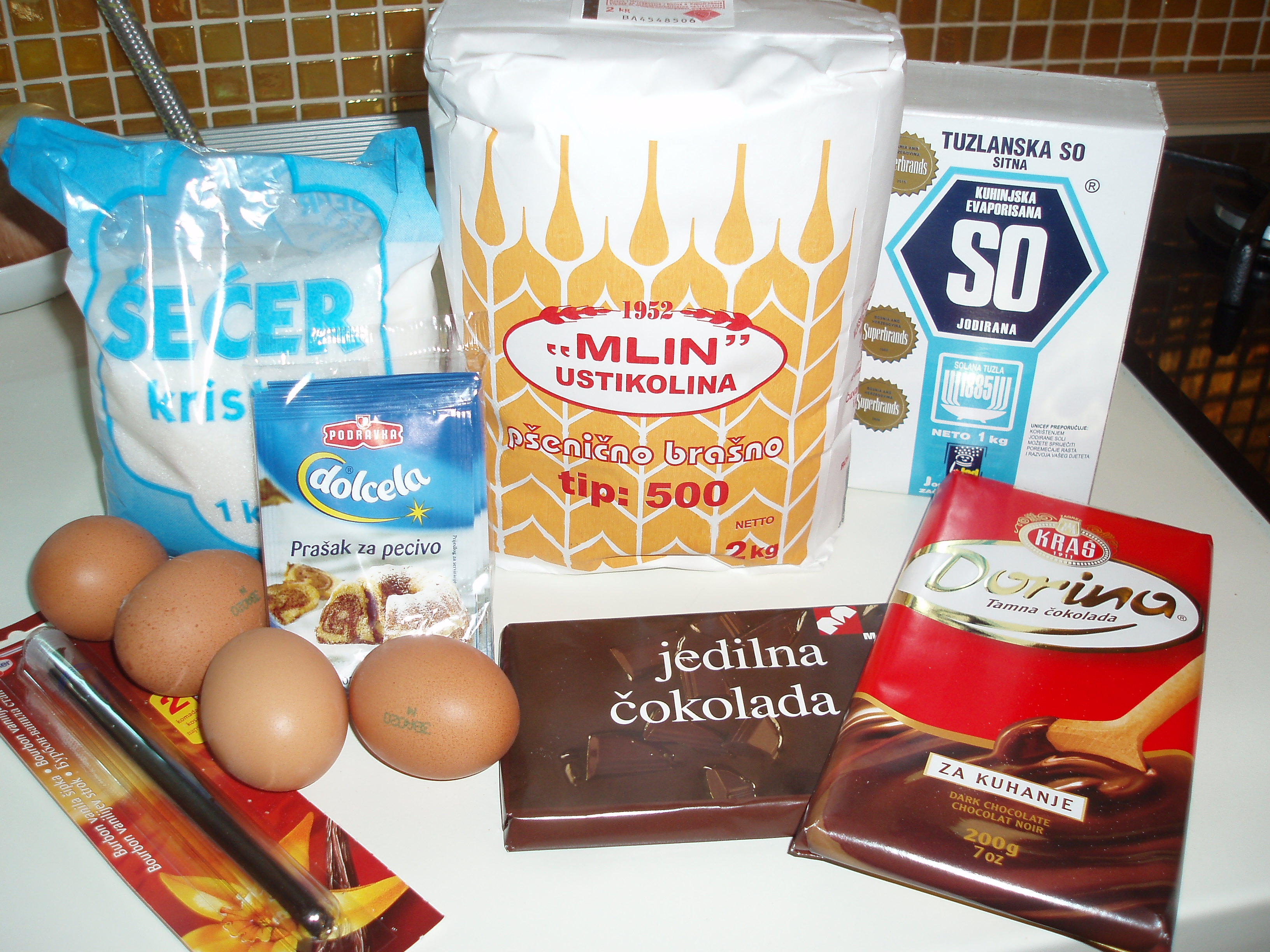
There are some difficulties that can be overcome: the eggs are smaller (use more); there is no vanilla extract (but there are vanilla beans, so make vanilla sugar); the sugar has larger crystals (live with it.)  But there are others that are more problematic.

The first big issue was the baking powder.  American expats who bake will tell you to bring your own baking powder. That’s good advice. There are two brands here: Podravka’s Dolcela and Dr. Oetker’s Backin. According to Wikipedia, Backin is the original baking powder formula, but neither brand acts the same as the stuff you get in the US.

A complicating factor is the flour, which affects the behavior of the baking powder. There is a dizzying variety of flour on offer at the grocery store here.  An entire aisle at the Konzum supermarket is given over to wheat flour, potato flour, rye flour, corn flour and more, each in varieties mysteriously labeled T-400, T-550, T-800.  Then there’s “zlatni puder” which my dictionary says means “golden powder.”  Not helpful. I am still looking for one that approximates standard American all-purpose flour.

Assembled ingredients.

But the biggest brownie obstacle is the chocolate.  There is no unsweetened baking chocolate in this country.  I have looked everywhere, including all the shops that cater to expats.  When I ask for it, clerks look at me like “why would you want that?”  I’ll tell you why: because I need it for my New Best Recipe brownies.

I tried using the darkest chocolate candy bar I could find and reducing the sugar, but … eh.  I also tried my friend Susan’s recipe for Cocoa Powder Brownies, forwarded to me by our very helpful mutual friend Leslie.  Alas, I am still not satisfied: it turns out the cocoa powder here tastes different, plus I haven’t really solved the flour and baking powder issues.

What I have solved, though, is the pan problem.  All you need some aluminum foil and a stale loaf of bread and – voila – your 8×14 inch pan is now 8×8.

Posted in Bosnia, Food | Tagged , | Leave a comment

One does not simply walk into Mostar

Andreas and I took the train to Mostar yesterday. We’d stopped there once before on our way to the coast for spring break, but it was rainy that day and the city hadn’t quite come to life yet for the tourist season. We wanted to give it another go, and this time, we wanted to go by rail.

View of Mostar in March

Mostar in the quiet month of March.

The south-bound train leaves Sarajevo every day at 7:05 am; the return trip departs Mostar at 6:45 pm.  Alekka chose to stay home and work on her English assignment. You can only take so much family time when you’re 15.

The electric-powered train was already packed with daytrippers, so for us it was standing room only on the two and a half hour ride.    Luckily we found an open spot by a window.  We passed waterfalls and herds of goats; we crossed over high bridges looking down on idyllic villages.  We followed rivers and went through long dark mountain tunnels.  We also passed the ruined stone houses of whole towns obliterated during the 1990s conflict.

Getting off the train in Mostar

Arriving at the station in Mostar

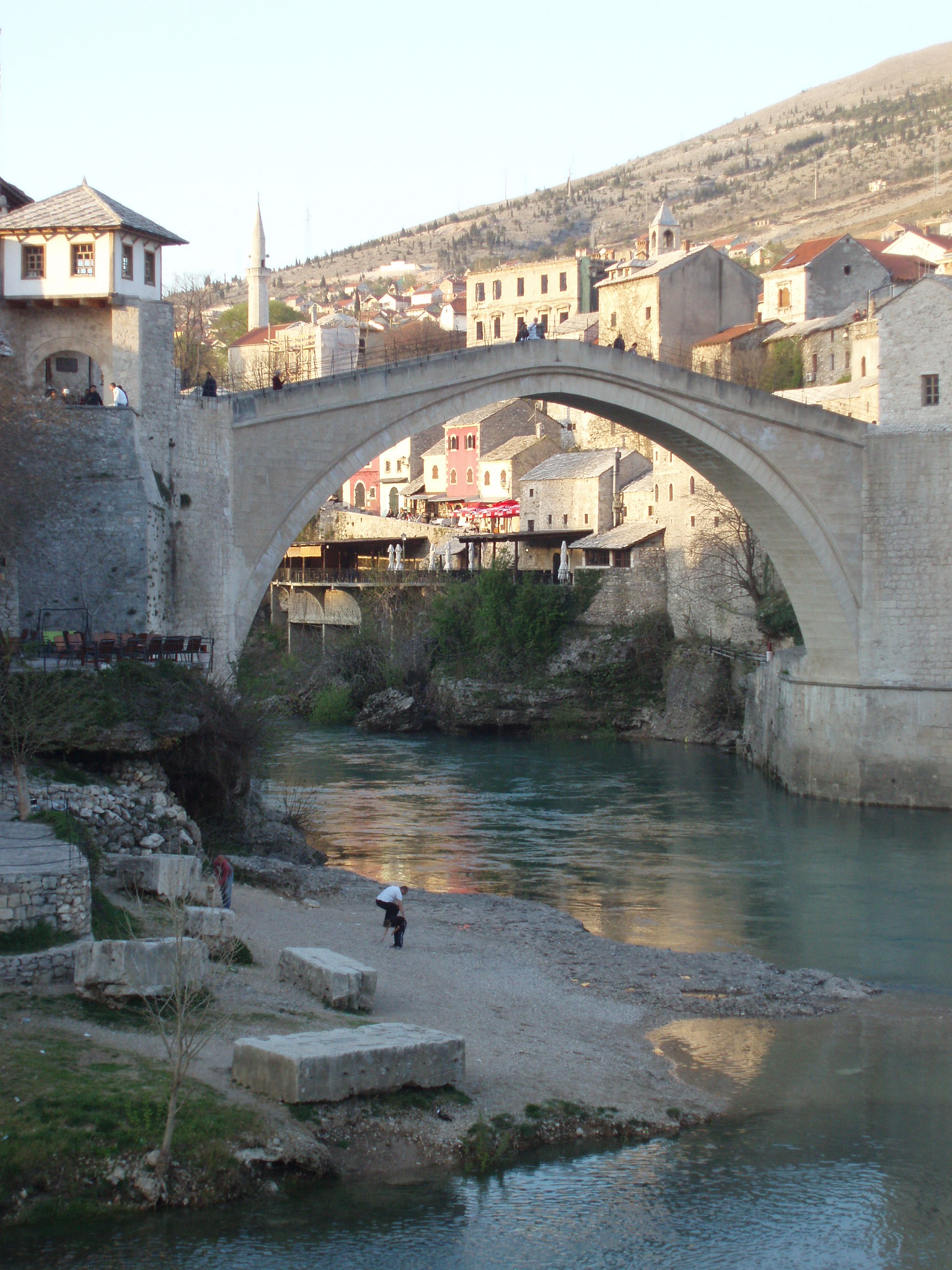
Mostar itself suffered greatly in the war.  Structures that had stood for 500 years were blown apart or collapsed, including Stari Most, the medieval bridge across the Neretva River that is the symbol of Mostar and for which it was named (most means bridge, and mostar is a bridge-keeper).  But, as in Sarajevo and other towns throughout the country, international aid and a strong desire to return to normal have made it possible to repair much of the visible damage.

The old town area has been completely rebuilt exactly as it was; Stari Most was reconstructed using medieval building techniques with stones from the original quarry.  All this new-old construction gives the place a slightly Disneyland feel, but I’m willing to

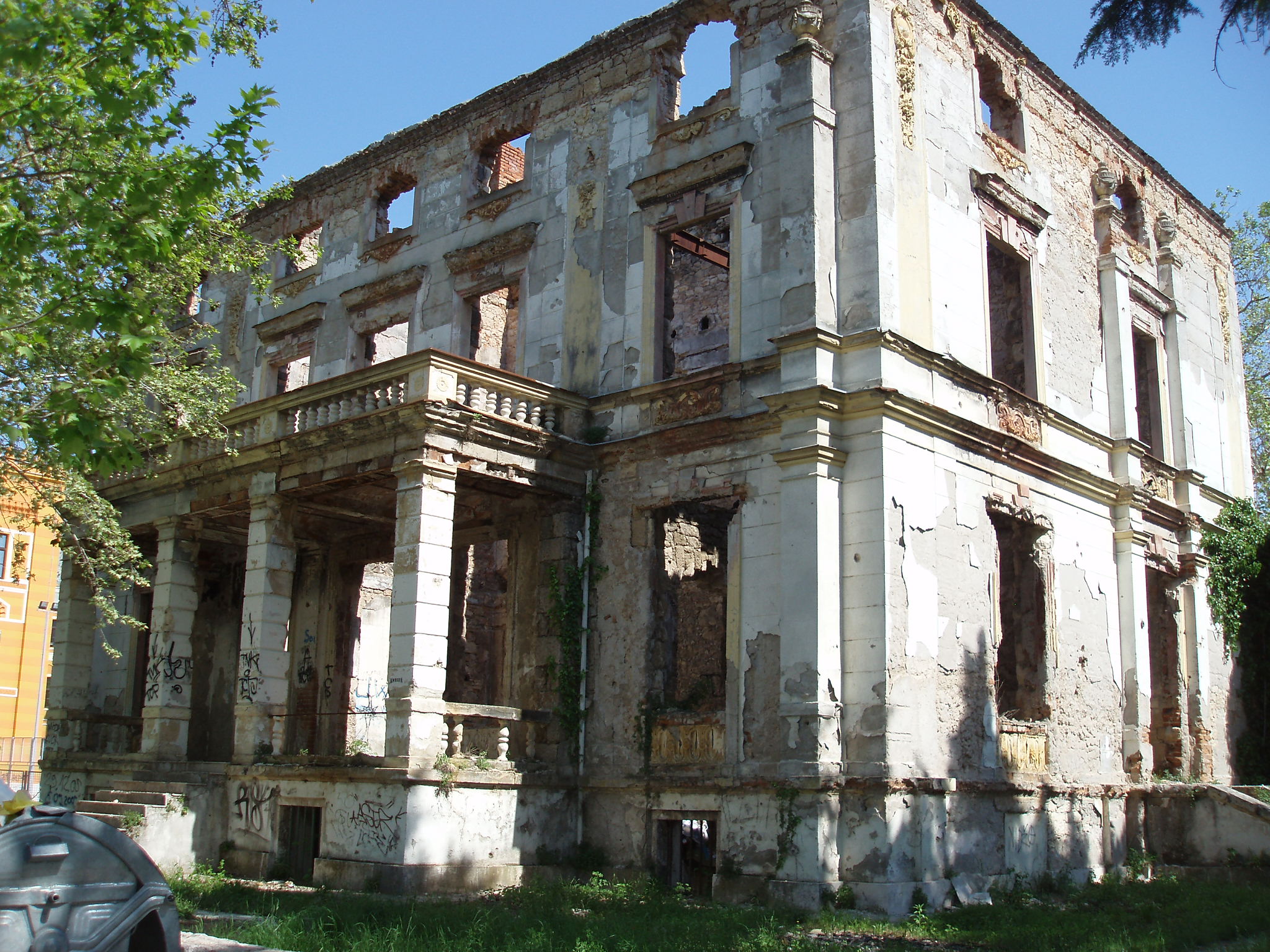
Ruined school

go along with the collective fantasy and agree these are in some sense the original buildings.  If you happen to have read 22 Britannia Road (and don’t mind a sort of random connection), I’d venture to say the motivating force behind the deception is similar.  And it’s not really a deception – alongside the plaque on a building giving a construction date of 1830, you’ll see

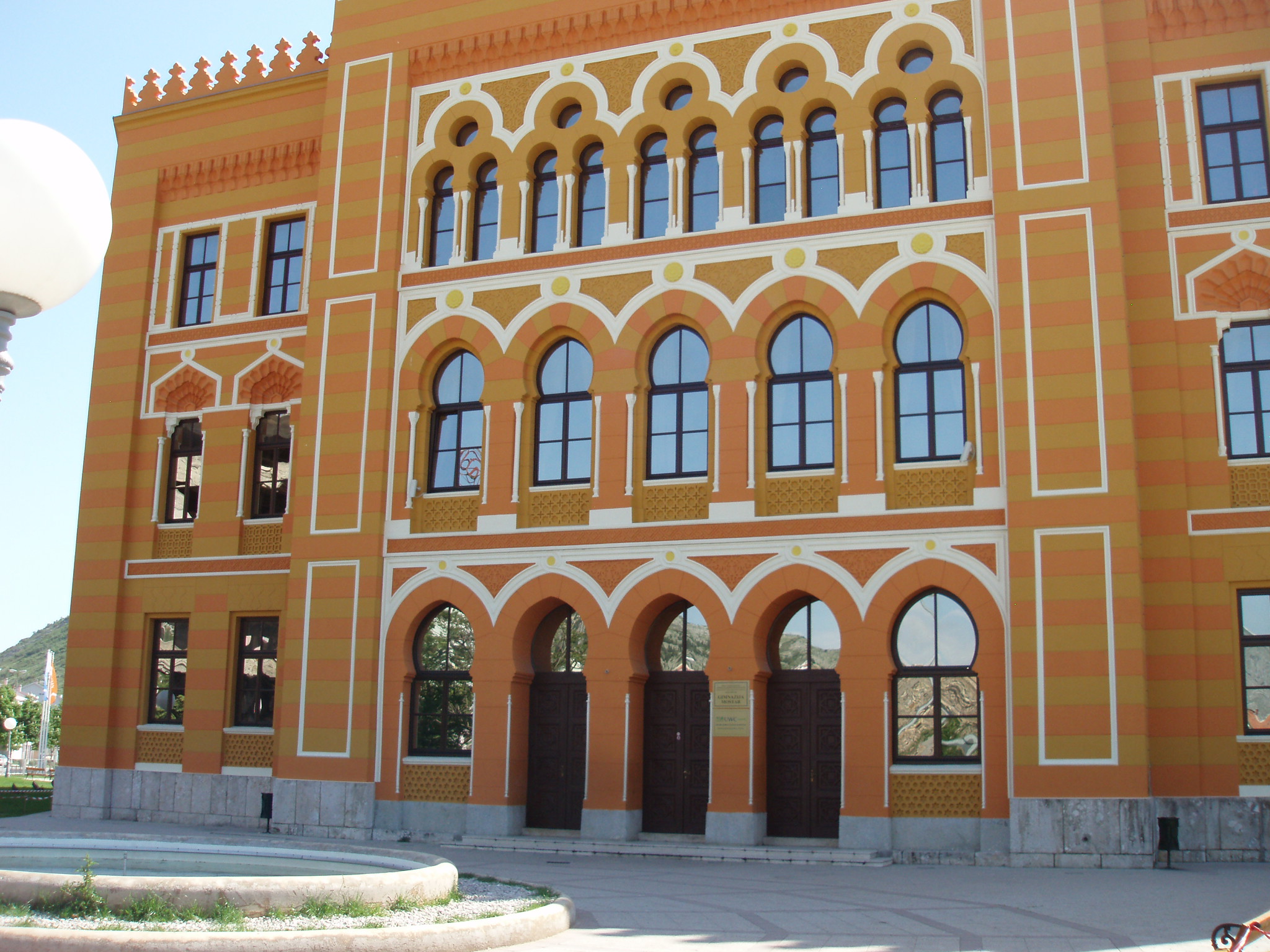
The rebuilt high school

another one thanking an aid organization or foreign country for the funds for its reconstruction after the war.

We spent the day walking around the town.  We visited a couple of mosques built in the 1500s (and rebuilt in the last 15 years); we climbed the 96 steps to the top of the minaret at the Karadozbeg Mosque for a great view of the city.  We wandered

There’s a spiral staircase inside

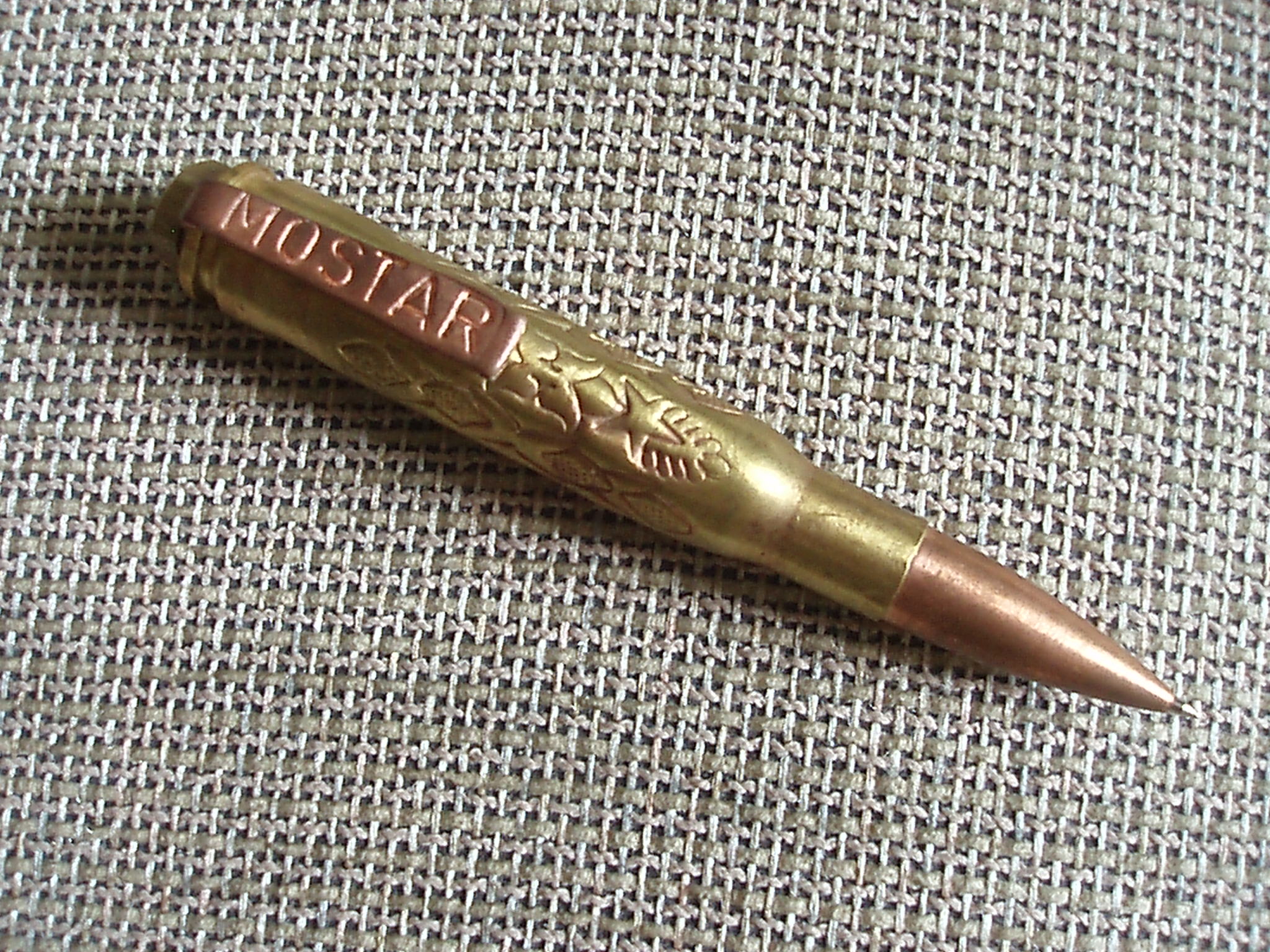
through the little shops lining the cobbled streets of the old town, miraculously escaping with only one souvenir (a ballpoint pen fashioned out of a shell casing from the war).  We walked through

My new pen. It reminds me of the souvenirs my grandfathers brought home after WWI.

areas still under reconstruction, where ruins of schools and hotels stand alongside buildings that are bright new versions of their former selves.

We enjoyed a leisurely lunch at an outdoor restaurant by the water.  We managed to mistranslate everything we ordered (our Bosnian could use a little work, and I forgot to bring the dictionary) but our mistakes led to pleasant surprises; the food in Bosnia is great.

View across the river in the old city

In the late afternoon we relaxed with a glass of local wine on a balcony from which we could watch young men diving off the Stari Most into the Neretva.

The train was packed on the return trip but this time we got to the station early and so got to to rest our tired feet on the way home.

(My son Nik gets credit for the title to this post.  It’s hard to believe they don’t sell Tshirts in Mostar with this slogan )

Mordor

Mordor

Mostar; all that’s missing is a volcano

Posted in Bosnia | Tagged , , , | 1 Comment