Who’s your daddy?

Ethiopians use patronyms (those fancy words I learned in anthropology class are finally getting some use).  Here, if a man’s name is Berhanu Getachew, his given name is Berhanu and his father’s given name is Getachew.  There is no family name that stays the same through the generations.

If a woman’s name is Genet Danye, that tells you that her name is Genet and her father’s name is Danye.  If Berhanu Getachew and Genet Danye get married and have children, their children’s second name will be Berhanu.  Women don’t change their second name when they marry.

When you add an honorific like Ato (Mr.) or Waziro (Mrs.), you use it with the person’s given name: Ato Berhanu and Waziro Genet.  In our school, many Western teachers try to keep things consistent by going with the Ethiopian honorific system – hence I am Ms. Lorna, not Ms. MacIver.

The patronym thing can be a little confusing for new arrivals filling out their first round of paperwork.  Instead of “first name” and “last name” or “surname”, official forms ask for “name” and “father’s name.”  It seems like an odd question until you learn that they are just asking for your second name.  I’m getting very good at paperwork now.  There has certainly been plenty of opportunity to practice.

Posted in Background, Ethiopia | Tagged , | 2 Comments

Wenchi Crater

Our biggest adventure this weekend was visiting Wenchi Crater.  Wenchi is a volcanic caldera with a lake in it, much like Crater Lake in Oregon.

People live in the Wenchi crater.  They raise animals and grow potatoes and “false banana” (cassava), a staple root crop.  In the past few years, various NGOs have helped the locals to develop tourism in the crater.  There is a little building where visitors pay an entrance fee of 10 birr (50 cents); there you can hire a guide and arrange for horses and boatmen to assist you with your trek.  We sprung for the one-day grand tour: horses down to the lake, a boat to an island monastery, hike across the island, boat to the opposite shore, then new horses through the meadows and back up to the rim.  We had a guide who traveled the distance with us.  Children attached themselves to our party while we were on horseback, acting as porters in hopes of a reward. My little guy earned a tip by carrying my backpack.

The scenery was spectacular. This is a place with no signs, no engines, no cement, no plastic. It gives the impression of being a pristine paradise. While on her horse Alekka said that the meadow path felt like the road to Shangri-la. We felt like plastic people, faranji with dorky backpacks and water bottles and cameras and silly hats.  But we sure had a good time.

This slideshow requires JavaScript.

Posted in Around Ethiopia, Ethiopia | Tagged | 4 Comments

Negash Lodge

We stayed at Negash Lodge in the town of Woliso (also known as Giyon).  It’s an old lodge that has been  beautifully renovated.  It has also been enlarged: you can stay either in a room in the original building, or in one of 13 traditional style houses on the spacious grounds.  Our family slept in a very comfortable two-story tukel.

The lodge is host to Ethiopia’s only indoor swimming pool; it also has billiard tables, two restaurants, and treehouse bar.

But the best part is the wildlife.  We were greeted by a troupe of vervet monkeys on the front lawn of our tukel.  The graceful black and white colobus monkeys were a little harder to find but a photogenic group showed up just as we were getting ready to leave.  I saw two little antelopes, dik-diks or klipspringers (I don’t know the difference yet) and some giant mole-rats, which are cuter than you’d think.  The mole-rats were too fast for me, so the picture in the slide show is from Wikipedia.

This slideshow requires JavaScript.

Posted in Animals, Around Ethiopia, Ethiopia | Tagged , , | 3 Comments

Road trip

On Thursday morning, our family plus three more Varnero faranji hired a driver to take us to Negash Lodge and Wenchi Crater in the Oromia region, about 60 miles southwest of Addis.

Addis is a big noisy bustling place; it felt (and smelled) great to get out into the countryside.

field of yellow flowers

The yellow meskel flowers, adey abeba, are in bloom now.

We passed through some smaller towns on the outskirts of Addis.

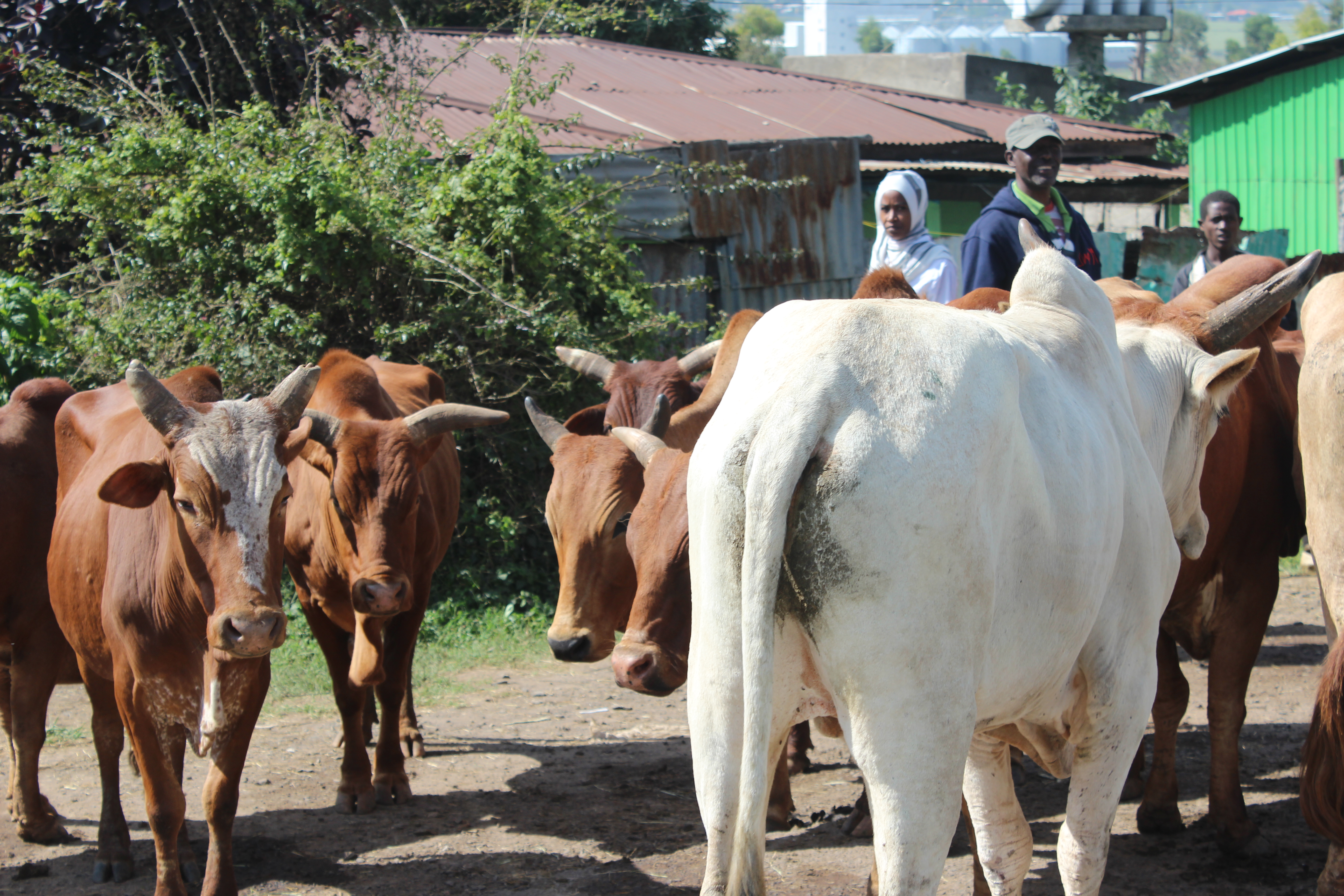
Village cattle market

Village cattle market

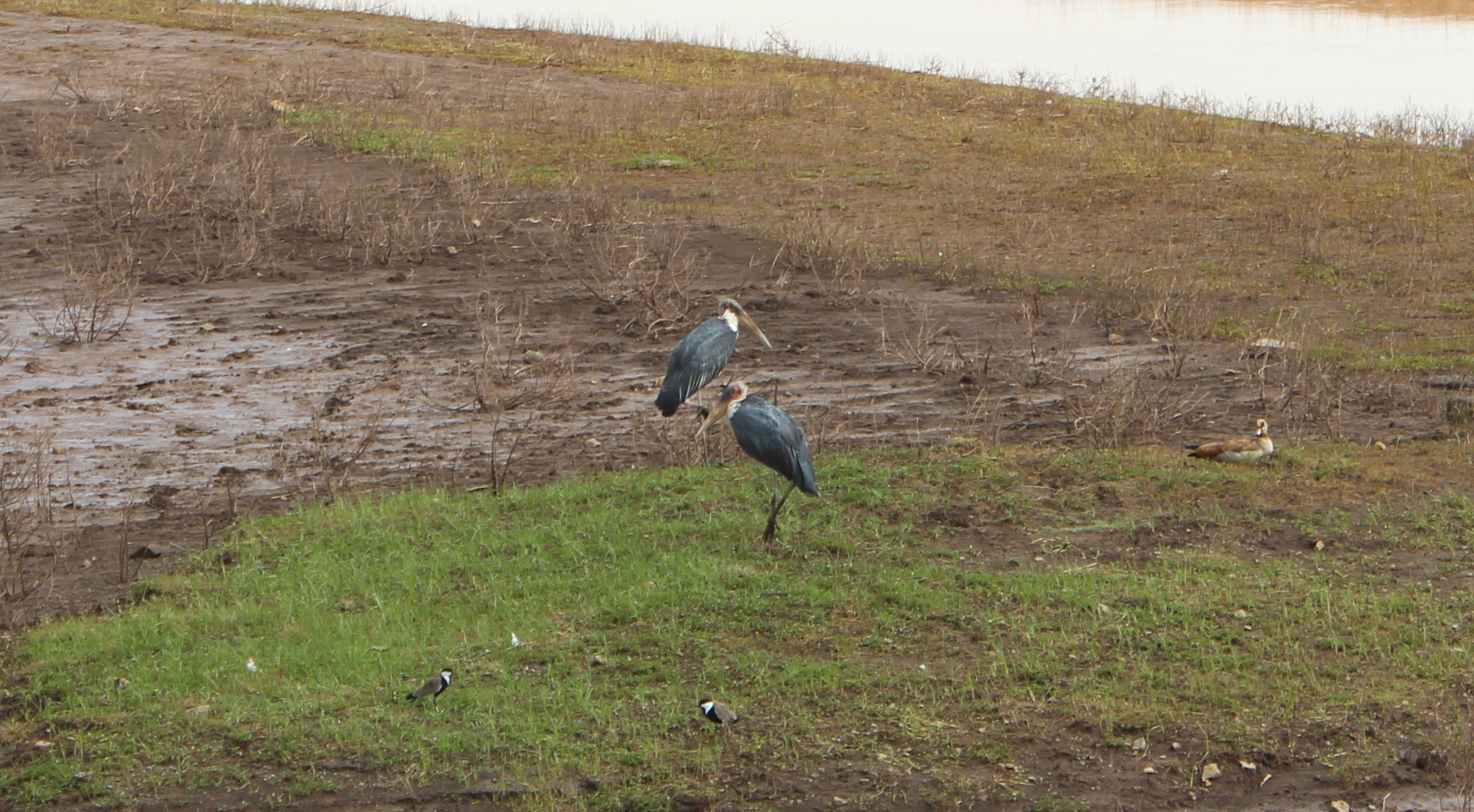
Then the road took us through a marshland area where we saw many kinds of birds.

Our driver called these big birds “marabu.” I haven’t found them yet in my bird book.

We saw farmers tilling their fields with oxen and wooden plows.

ploughing the fields

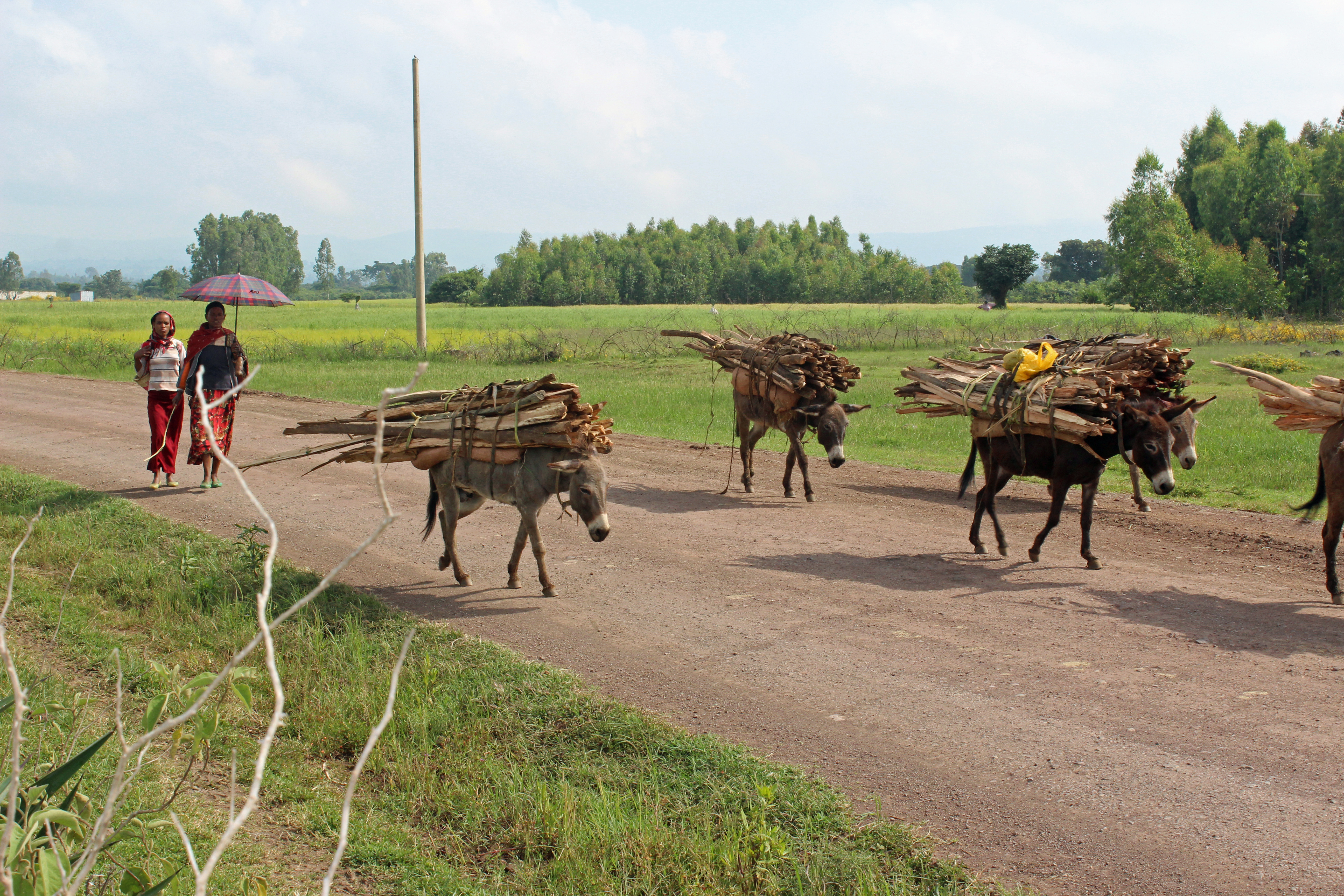
Outside of the city, there are more animals and people on foot than there are cars.

Men and women use umbrellas as parasols.

In the countryside, people mainly live in round tukels or rectangular buildings made of sticks and mud.

women and tukel

If you stop to take a photo, children crowd around the car.  They ask for pens and candy.  We didn’t have any pens but we gave them oranges.

Jerry (ICS music teacher) sang songs to this group.  They sang one for us in return.

They sang us the song they learned at school for the morning flag-raising.

Posted in Ethiopia | 1 Comment

Meskel

Today is Meskel, one of the most important holidays on the Ethiopian calendar. There are public and church festivals throughout the country today.  The elementary students prepared all through September for yesterday’s celebration at the school .

 Meskel is a religious holiday that celebrates the finding of the true cross (the word meskel means cross).  According to tradition, in the 4th century the Empress Helena (later St. Helena), mother of Constantine the Great, went on a quest to find the cross on which Jesus had been crucified.  She had a dream in in which she was told to build a big bonfire.  She had a huge pile of wood assembled and lit, and Helena threw frankincense into the flames.  As she prayed, the smoke drifted up and then down to the ground, directing her to the place where the cross was buried.  A piece of the cross is believed to be kept in the remote Gishen Mariam Monastery, in the Welo region of Ethiopia.

The third graders at ICS put on a musical drama of the history of Meskel.  Then everyone –  students, teachers, and parents – went to the soccer field for coffee ceremony, traditional snacks (nuts and grains, popcorn, and a special spicy bread) and a dancing and singing presentation by St. George’s church choir.  This was followed by the main event: a big bonfire called a demera.  The smoky fire symbolizes the smoke that Helena followed to find the cross.

This slideshow requires JavaScript.

We get a four-day weekend for the holiday.  We’re headed out of town to a place in the mountains called Woliso.  I might not be able to post until we get back – not sure there’s internet coverage out there – but I plan to take lots of pictures. I’ll post them – and add Meskel pictures to this post – on Sunday when I can use the faster internet connection at school.

Posted in Addis Ababa, Ethiopia, International Community School | Tagged , | 2 Comments

Living with baboons

One of ICS’s contracted substitute teachers is an Australian fellow named Mat Pines.  He’s a soft-spoken young man who tutors high schoolers in the afternoon when he’s not called in to sub.  You wouldn’t guess it to look at him, but he just finished a five-year stint living in the wild with a troupe of Hamadryas baboons.

One recent Sunday afternoon in the ICS library, Mat introduced a screening of “Living with Baboons,” narrated by Sir David Attenborough.  The show is an installment of the BBC’s Natural World television series.  The episode documents Mat’s efforts to convince the Afar tribesmen living around Ethiopia’s Awash National Park that they can coexist with the threatened baboons, which the Afar perceive as a threat to their livestock.

The episode is supposed to air on Animal Planet in the US in September or October.  Here it is on YouTube:

Posted in Animals, Ethiopia | 2 Comments

King of the roads

Every driver in America has a DMV horror story.  Next time you finally get to the counter after standing in line for an hour, only to have the window slammed shut in your face, think of us in Ethiopia.

Here the problem is not surly clerks.  Everyone here is very nice.  They say “finished” and “not possible” and “not today” in the most pleasant ways.

For new teachers, there are two matters that have to be resolved through the Roads Authority office.  One is driver’s licenses.  Ethiopia wasn’t among the 179 countries of the 1949 International Convention that created that the International Driver’s License.  If you want to drive here legally, you must get an Ethiopian license.

The other issue is car registration.  For us, the license is just the first step toward vehicular independence. We’ll face the second complicated process, the registration, once we buy a car – the subject of another post.

Last Saturday the school took a group of seven newbies in a bus to the Roads Authority to get our licenses.  We were all as excited as a family of septuplets on our 16th birthday.

It had been a long time coming. Before we were eligible for licenses, we first had to obtain our Ethiopian residence ID cards; I wrote about the delays with that process a few days ago. We also had to go to the US embassy to have our American licenses authenticated, another half-day excursion involving much paperwork.  Then, after we had finally completed the required preliminary steps, the trip to the Roads Authority was postponed when the office had an unannounced closure.   But at long last the road gods smiled on us.

Two Ethiopian men from the school’s transportation department accompanied us to the office, a long, warehouse-like building with a corrugated metal roof, painted-out windows, and a wooden counter that stretched most of the 700 feet from one end to the other.  Applicants crowded the counter – no lines or windows here – trying to get the attention of the clerks.  Luckily our guides were experienced with the process (and fluent in Amharic) and they did all the legwork.

We paid 8 birr apiece (40 cents) for a stamp and a lavender construction paper folder into which we each put our documents: passport, residence ID, foreign driver’s license, photocopies of fronts and backs of all these same documents, a passport sized photo, and the signed embassy authentication form.  Our drivers collected our folders and negotiated the counter for us while the faranji waited on benches along the wall.  An hour or so later they returned with a big ledger book for us to sign and collected 100 birr ($5.00) from each of us.  Back to the counter, and other hour later, they came with another book for us to sign.  Another 45 minutes, and we finally had our driver’s licenses.

Woo-hoo!  Now all we need is a car.

It’s just a paper card; I got mine laminated at the school.
Posted in Ethiopia | Tagged , | Leave a comment

The kitchen is REALLY here

Good news!  Our kitchen has been repainted and the workers are almost done installing the new cabinets and fixtures.  The stove isn’t hooked up yet so we have to use our old stove for now.  Unfortunately they moved it to a part of the kitchen that doesn’t have an electrical outlet so no oven, but the gas works (it’s a cylinder) if you light it with a match.

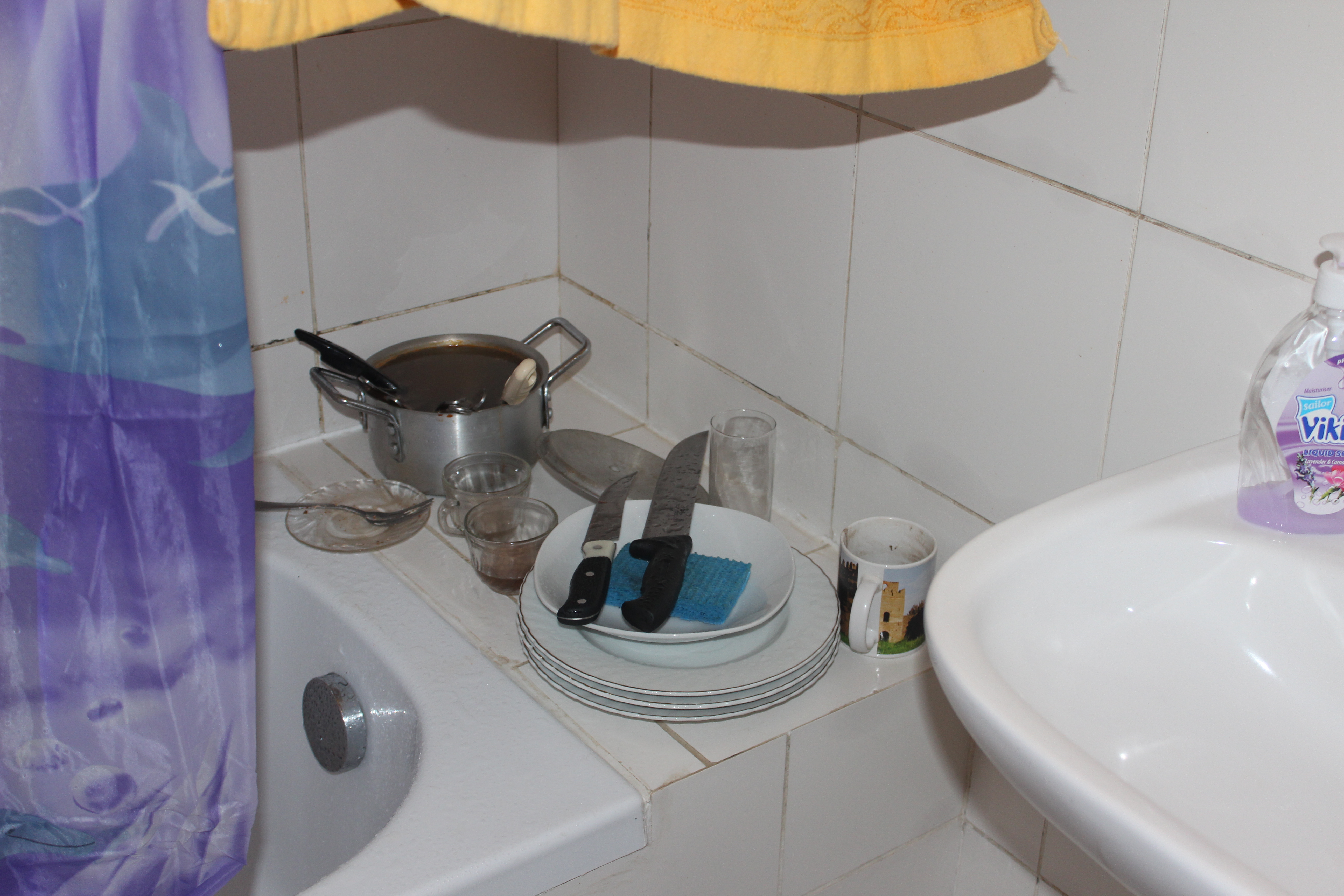
Can’t say the same for the sink – we’ll have to wash our dishes in the bathtub for a few days.  But it will be worth it.

In truth, it’s our housekeeper who’s going to have to deal with this.

Posted in Addis Ababa, Ethiopia, Home life | 2 Comments

The NGO bazaar

The NGO bazaar is the reason most faranji homes look alike on the inside.

On the last Saturday of every month, a group of NGOs holds a bazaar at the Evangelical International College in the Sar Bet neighborhood.  NGO stands for non-governmental organization, those charitable missions that non-profit citizen groups (not governments) in first-world countries put together to do good works in third-world countries.  Some of those groups organize projects that help Ethiopians to help themselves through the production of arts and crafts.

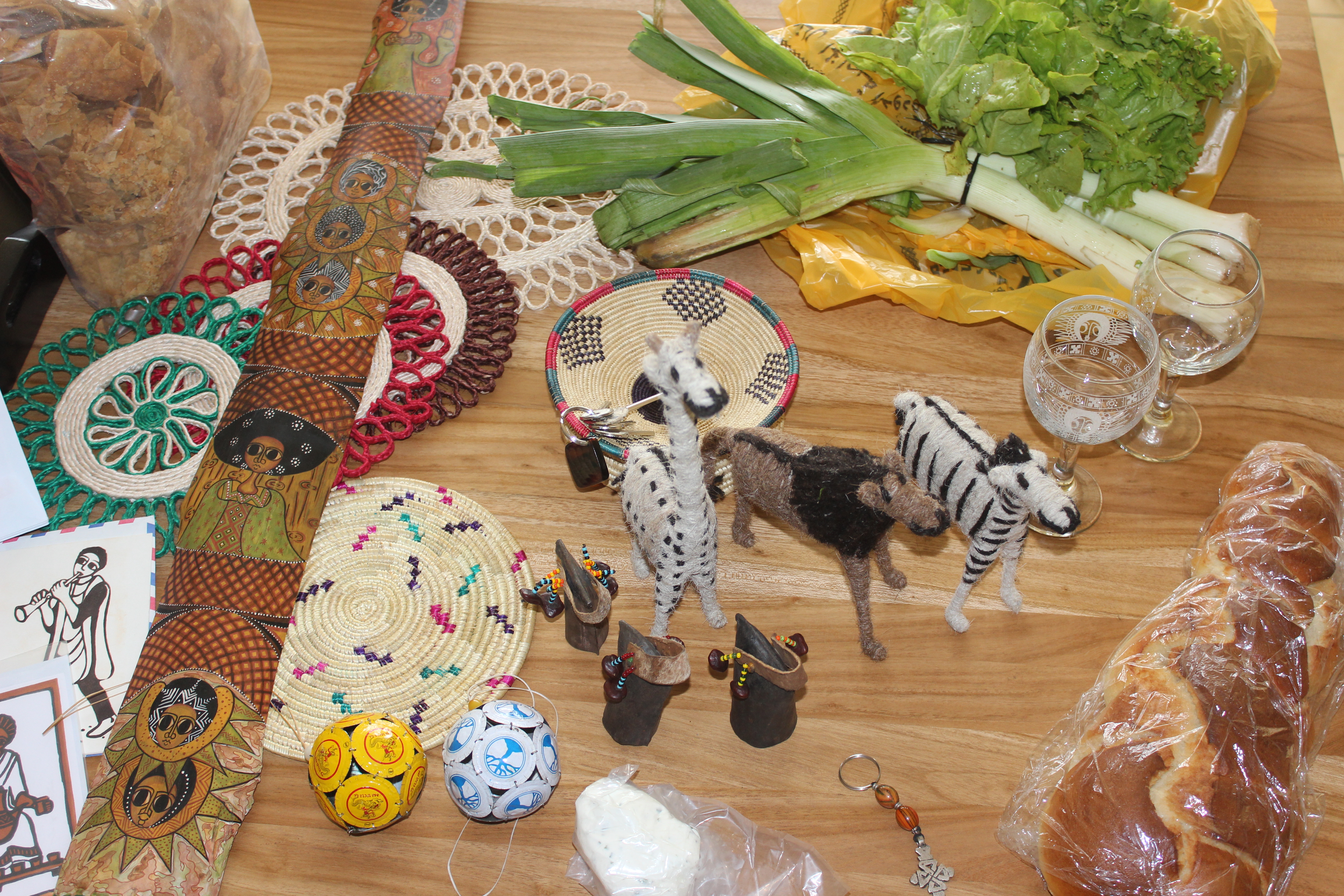
There is a group of blind women who knit sweaters; teenagers who use banana leaves to decorate greeting cards; a mission in a rural region that keeps bees for honey to sell; and a cooperative that recycles used office paper into papier mache boxes and children’s furniture.  Their products are just a few of things you will find on offer at the NGO bazaar.  And decorating the homes of ICS teachers and NGO employees and volunteers.

This month the bazaar was a week early because next weekend is the long Meskel holiday.  We browsed last month but didn’t bring enough money to get much.  Yesterday we brought sufficient funds, and here are the treasures we came home with.

Now our apartment can look like everyone else’s.

Posted in Addis Ababa, Ethiopia, Home life, Shopping | Tagged , | 1 Comment

The kitchen is here

Remember that kitchen that was stuck in Djibouti?  (Not likely to forget something like that, are you?)

It’s here!

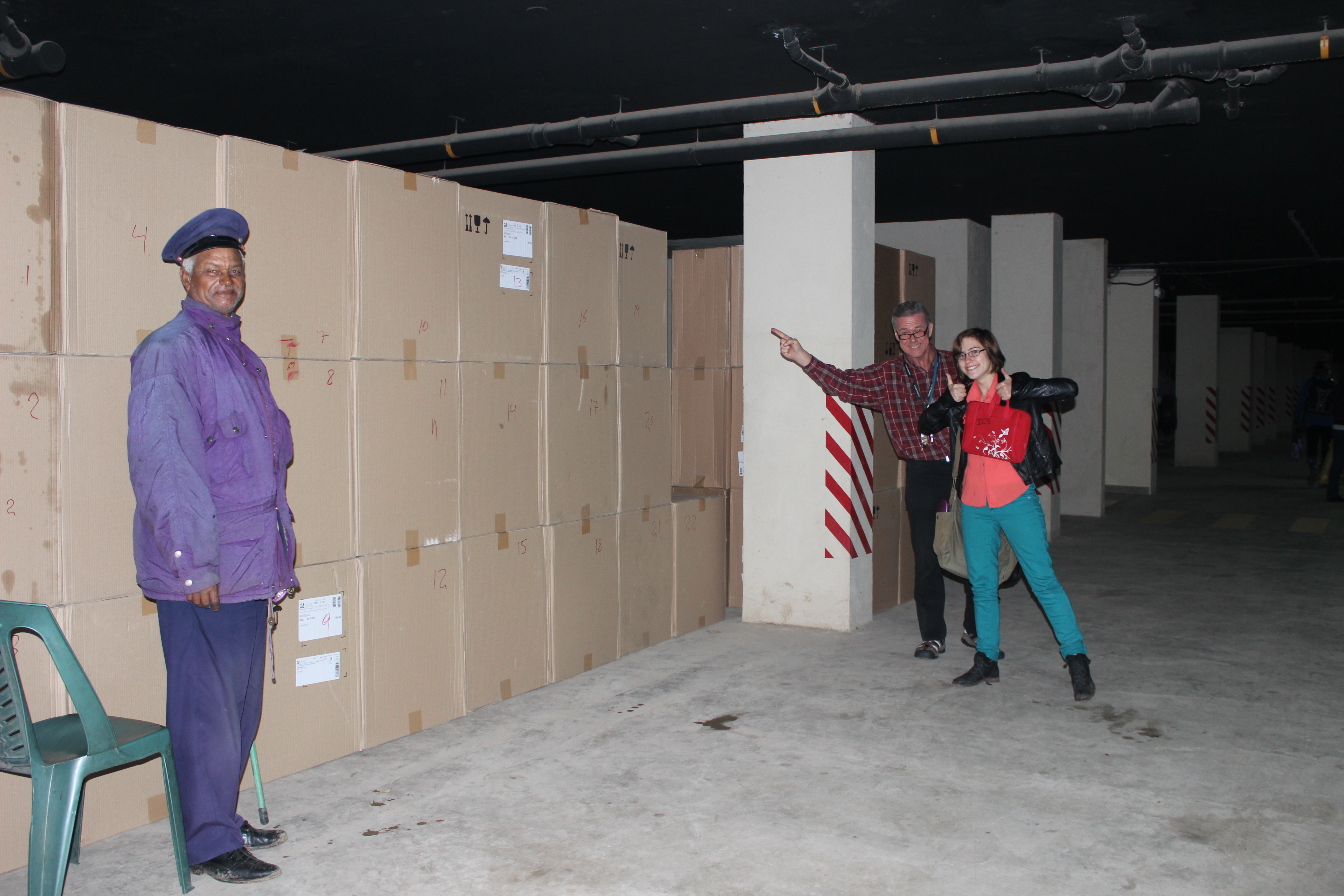
Well, it’s most of the way here.  It’s in the basement of our apartment building, along with the rest of the kitchens for the Varnero faranji.  They have actually been there for more than a week. It seems that now they’ve got this far, our landlord has lost interest in installing them.  Maybe that’s because he is focusing his attention on the plumbing problems that several of our neighbors are suffering from.  That’s OK.  Our kitchen never got repainted after the espresso debacle, and that needs to be done first.

cartons in the basement

Alekka and our neighbor Jerry when we discovered the cartons in the basement. The guard is making sure our kitchens don’t take any more unscheduled trips.

Posted in Addis Ababa, Ethiopia, Home life | Leave a comment