Inspiration

I love this poem. I carried and shared it on Poem in your Pocket Day on April 18, soon after we decided to come here this summer. The author lived for a time on Rousay, a small island off Orkney’s Mainland.

It’s a bit fanciful, a bit magical – and it evokes the mood of this place so very well.

Orkney Interior

by Ian Hamilton Finlay

Doing what the moon says, he shifts his chair
Closer to the stove and stokes it up
With the very best fuel, a mixture of dried fish
And tobacco he keeps in a bucket with crabs

Too small to eat. One raises its pincer
As if to seize hold of the crescent moon
On the calendar which is almost like a zodiac
With inexplicable and pallid blanks. Meanwhile

A lobster is crawling towards the clever
Bait that is set inside the clock
On the shelf by the wireless—an inherited dried fish
Soaked in whisky and carefully trimmed

With potato flowers from the Golden Wonders
The old man grows inside his ears.
Click! goes the clock-lid, and the unfortunate lobster
Finds itself a prisoner inside the clock,

An adapted cuckoo-clock. It shows no hours, only
Tides and moons and is fitted out
With two little saucers, one of salt and one of water
For the lobster to live on while, each quarter-tide,

It must stick its head through the tiny trapdoor
Meant for the cuckoo. It will be trained to read
The broken barometer and wave its whiskers
To Scottish Dance Music, till it grows too old.

Then the old man will have to catch himself another lobster.
Meanwhile he is happy and takes the clock
Down to the sea. He stands and oils it
In a little rock pool that reflects the moon.
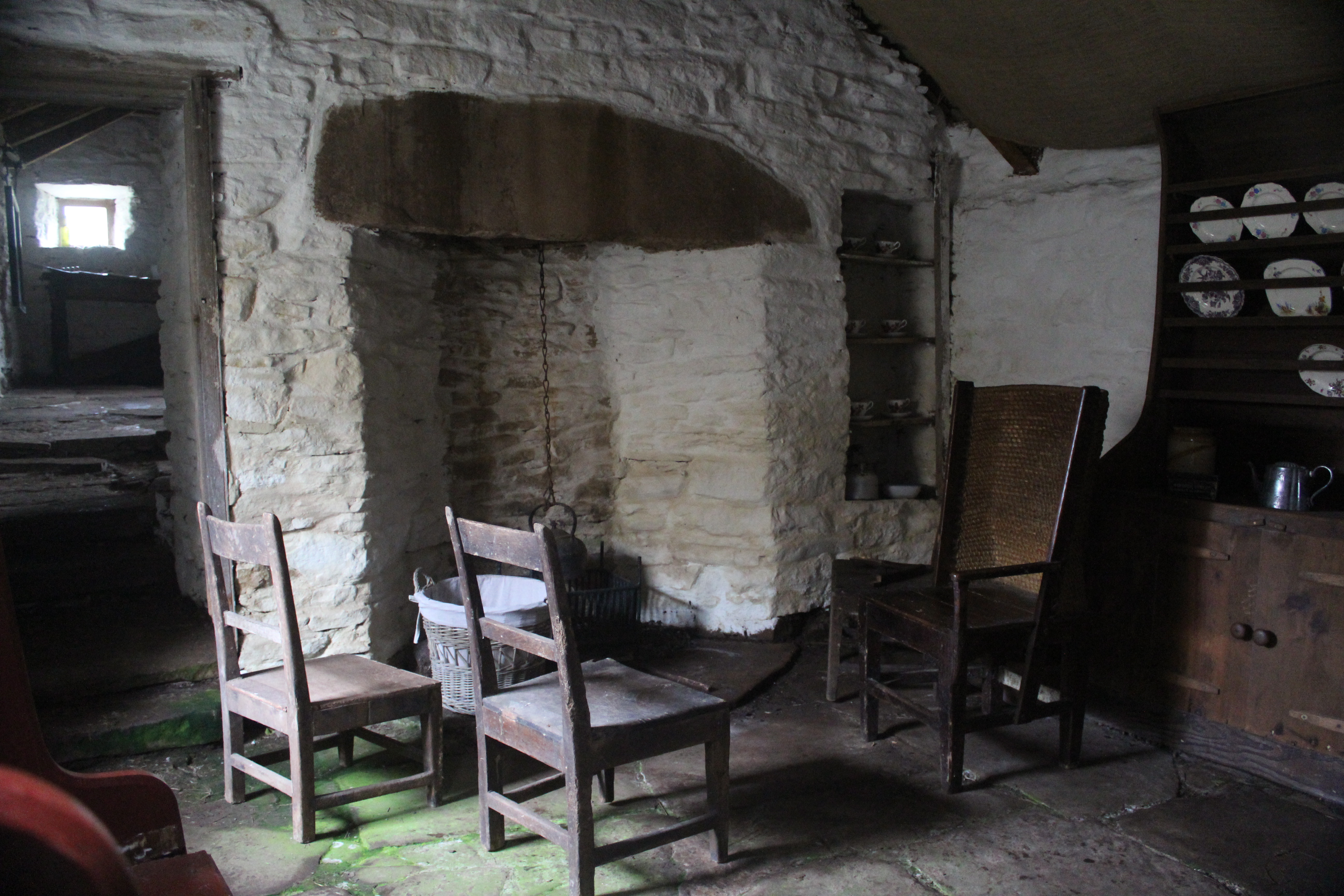
IMG_8776 (2)

The Orkneys seem to inspire poetry. The islands’ most famous son, the poet George Mackay Brown lived almost his entire life in the town of Stromness. He found much to write about there. We stayed in Stromness for a couple of days; I can see how a person might not want to leave.

This slideshow requires JavaScript.

Posted in Elsewhere, Islands | Tagged , , , , | 1 Comment

Walking on Westray

Westray is the second largest island in the Orkneys. Its main village, Pierowall, consists of a small hotel with restaurant, two general stores, a fish vendor, a chippie (open summers only), and the hostel where we are staying.

This slideshow requires JavaScript.

People come here to walk, look at birds, and take photographs. We’ve been doing all three; here are some pictures from our rambles.

This slideshow requires JavaScript.

Posted in Elsewhere, Islands | Tagged , , , , , , | 2 Comments

Kirkwall

Last night we got stuck in Kirkwall. While I love Orkney (I’ve been here twice before), I had hoped to avoid its capital city, which I remembered didn’t have a whole lot to recommend it. But we arrived too late in the day to get to any of the smaller islands that make up Orkney, or even to get across Mainland to Stromness.

IMG_7473

This is how I remembered Kirkwall – a bit bleak.

It turns out there was plenty here to keep us interested. There is the red sandstone St. Magnus cathedral, founded in 1137 by the Viking Earl Rognvald:

This slideshow requires JavaScript.

as well as a number of other attractive features:

This slideshow requires JavaScript.

We had a pleasant dinner at a new cafe called Helgi’s. It’s named after a figure who appears in some of the old Norse sagas (but not – correct me if I’m wrong, Norse scholars – in the Orkneyinga saga that tells the history of the earls of Orkney from the 800s to the 1200s ).

IMG_7408

Black pudding and scallop appetizer at Helgi’s.

We spent the rest of the evening at The Reel, a pub owned by twin sisters who are traditional Orkney musicians.

IMG_7431The Wrigley sisters weren’t performing themselves that night, but here they are at the Smithsonian Folkways Festival in Washington DC a few years ago.

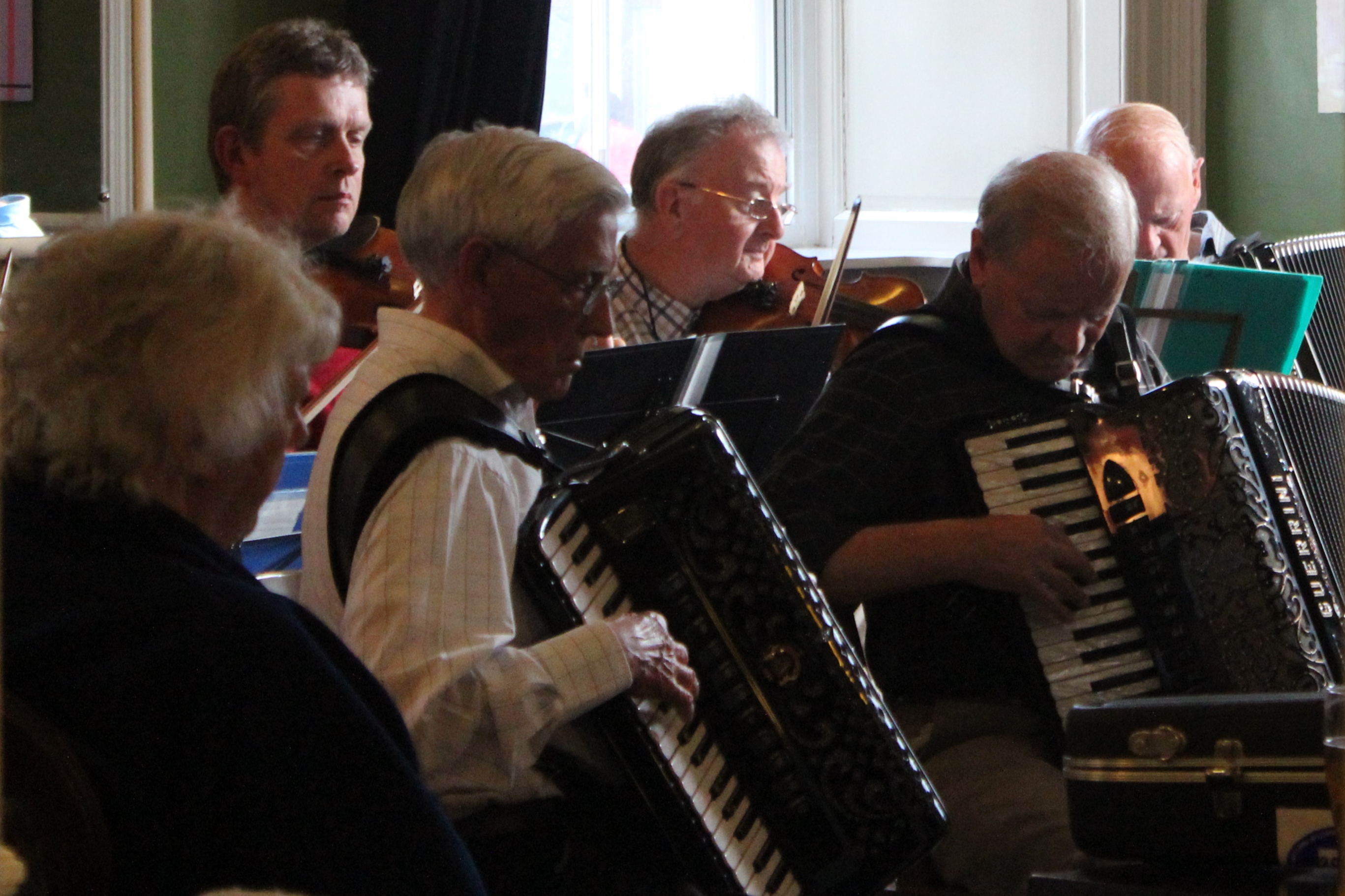
We had a fine time drinking Orkney beer and listening to the Orkney accordion and fiddle club. Kirkwall’s not such a bad place after all.

IMG_7427But today we are off to another, smaller and more remote island (my favorite kind!)– that’s where we can explore some the natural wonders of this place.

Posted in Elsewhere, Islands | Tagged , , , , | Leave a comment

The island adventures begin

Our time in Scandinavia came to an end today with a short flight to Kirkwall, Orkney.

This route makes for an easy transition between regions: Orkney was ruled by Norse kings until 1468 and there are still many cultural ties. The Orcadian dialect is full of Norse words and the intonation sounds a lot like Norwegian.

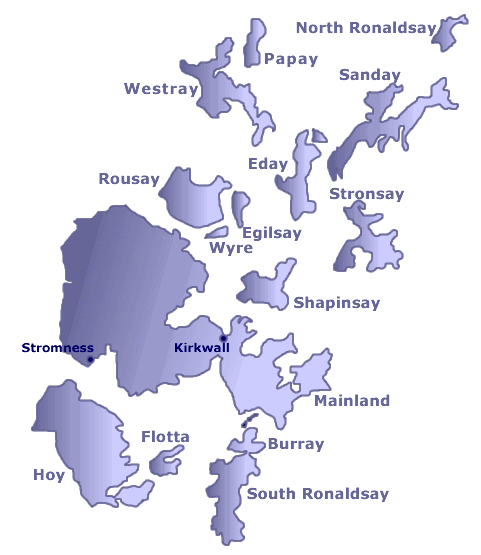
Though Orkney is a part of Scotland, the people here identify as Orcadian and refer to Scotland as if it were another country. When someone here says Mainland, they don’t mean Great Britain, they mean Mainland Orkney, the largest island in the archipelago (and our present location).

Orkney-mapI should probably mention that I have a thing for small islands. My MacIver people came from an island (Lewis, where we’ll be in about a week), and I married a guy who comes from a long line of Greek islanders.  Islands are on the itinerary for the rest of this trip so get ready for lots of ocean photos.

When we were in London at the start of this vacation, I picked up a copy of this book by Judith Schalansky:

islandsOn those long ferry rides I can plot our future holidays.

Posted in Books, Elsewhere, Islands | Tagged , | Leave a comment

A day in Bergen

Today we made our way back to Bergen, where we spent a few hours in the train station on Saturday morning. This time we’re staying a little longer but unfortunately not long enough for me to get to the site I most wanted to see here, Edvard Grieg’s home. Troldhaugen is supposed to be an excellent museum, and if you go in the morning you can catch the daily concert.  But the trip back from Flam took all day (OK, I’ll admit it was a very scenic day which included the Flamsbana train ride). But no hall of the mountain king for me.

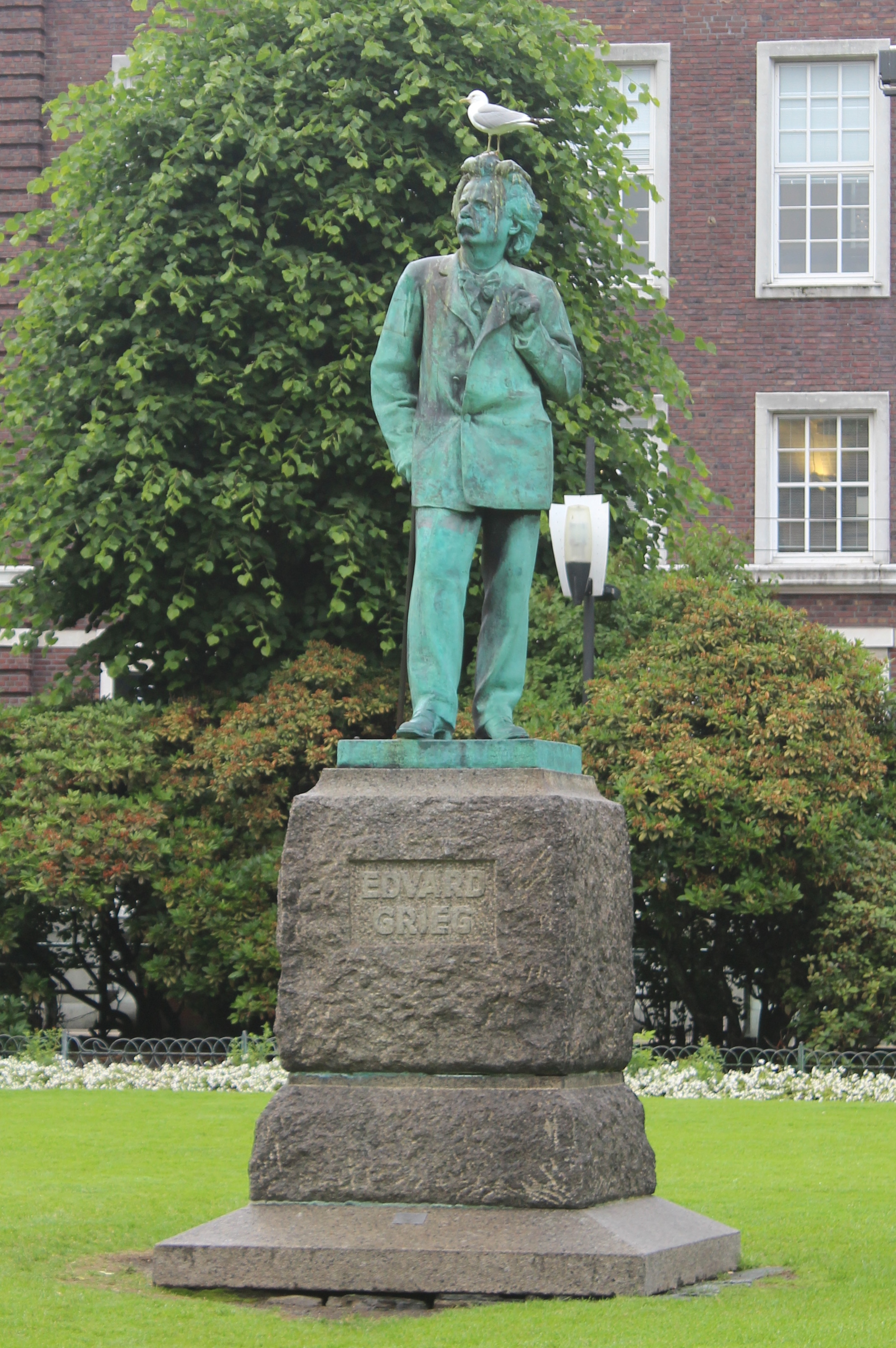
Edvard Grieg

I did get a picture of the Grieg statue in the city park though (with seagull).

Instead, we strolled along the waterfront with its famous Bryggen buildings, from the 1700s:

IMG_7160And we wandered through the old town:

This slideshow requires JavaScript.

And we enjoyed some interesting statuary and public buildings:

This slideshow requires JavaScript.

But really, the coolest part about Bergen was the seagulls. The light was just right for me to take these photos – and rid my backpack of some stale breadrolls left over from our fishy cheesy meals at the same time.

This slideshow requires JavaScript.

Posted in Elsewhere | Tagged , , | Leave a comment

Borgund stavkirke

Andreas rented a bike today and took it on the train partway to Myrdal, then rode back. He said the views were spectacular, but since he didn’t take a camera I can’t share them with you.

I headed by bus to the village of Borgund, in search of Norway’s best preserved stavkirke.

IMG_6964

These wooden churches date from the times when Christianity first came to Norway. This style of medieval church construction was practiced all over Scandinavia at that time – the design is based on a the palisades and ships of the Vikings. The Vikings were the converts building these early churches, and that’s what they knew how to make.  The only remaining examples are the Norwegian ones, of which there are 28. Almost all were built in the 1100s. The one in Borgund, which is said to be the least changed, dates from the late 12th century.

This slideshow requires JavaScript.

Posted in Elsewhere | Tagged , , | Leave a comment

Pining for the fjords

Even a budget traveler can’t go to Norway and not see the fjords. Today we took our second fjord trip – the first was the Geiranger fjord, which we cruised during our stay in Alesund. That day was a little overcast and drizzly, but the waterfalls and mountains were still beautiful.

This slideshow requires JavaScript.

Today’s destination was the Nærøyfjord, which is reachable by boat from Flam. This trip was even more gorgeous than than the other one.  And this time the sun was shining.

This slideshow requires JavaScript.

Posted in Elsewhere | Tagged , , | Leave a comment

Flåm railway and Flåm

This morning we backtracked a little and took a train back along the same route we traveled last night, then at Myrdal transferred to the privately run Flåmsbana railway. The route from Myrdal to Flåm, a small village at the tip of the Aurlandsfjord, lives up to its reputation as one of the most scenic in Europe.

This slideshow requires JavaScript.

Flåm itself turns out to be a lovely little village nestled in a deep valley. A pretty river runs through the village on its way to the harbor. The village has bikes to rent, a good system of bike paths and walking trails, some cute cafes, a small railway museum, and a brew-pub. We got lucky and found a relatively inexpensive room in a comfortable rental apartment with a shared kitchen and free fast internet. I think we’ll park ourselves here for a few days.

This slideshow requires JavaScript.

Posted in Elsewhere | Tagged , , | Leave a comment

Norway on $450 a day

When we told friends in Addis that we were going to Norway, just about every one of them said the same thing: “Wow, nice!  But you know, it’s really expensive.”

It’s hard to understand just what that means until you get here. $6 to ride the city bus, $200 for the cheapest hotel room, $15 for a (small) glass of (very ordinary) wine, $20 to get into a museum, $40 for the simplest dinner for two (chicken stirfry with plain rice) from the Chinese takeout place. Ouch.

We had thought we would travel to Narvik, above the Arctic Circle, just for the heck of it, but our overhead here is too high for joyriding.  Instead we’ll spend our remaining time in Norway looking for free outdoor activities instead of museums, more cheese and fish sandwiches from the market instead of restaurants, and more hostels instead of hotels.

One fun way to save a little money is to take the overnight train, which we are doing right now as we head back down to Bergen.

This slideshow requires JavaScript.

Posted in Elsewhere | Tagged , | 2 Comments

Power sightseeing in Oslo

We allotted a single day to take in this major capital city. Fortunately we got an early start with our arrival on the overnight train, and had done some strategic planning in advance so we could fit in the things we most wanted to see: the opera house, the art gallery, the folk museum, and Vigeland park.

Oslo’s opera house is just celebrating its 5th anniversary. It’s a fine piece of contemporary architecture, with high open spaces, interesting textures, lots of glass, and (the coolest part) a roof you can walk all over, from the sidewalk and the waterside right up to the highest point for some fine views. And it is right across the street from the main train station, providing easy access for out-of-town opera lovers.

This slideshow requires JavaScript.

The second stop on our city tour was the national museum. Oslo is celebrating the 150th anniversary of its most famous artist, Edvard Munch.  You know…

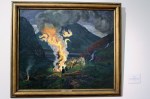
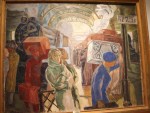
The Nasjonalmuseet’s  special tribute exhibit was excellent. There’s a lot more to Munch than that one picture (which, by the way, Munch painted and printed over and over again in different versions). Unfortunately, no photos allowed in the exhibit, but here are a couple of other examples of Norwegian art from elsewhere in the museum.

.Next up was the Norsk Folkemuseum. This wasn’t high on Andreas’s must-see list but he agreed to go along and I think he had a good time. It’s one of those open-air museums where they’ve taken old buildings from around the country and moved them to a big park. It’s also a living history museum, with people in period costume demonstrating traditional crafts, cooking, music, and so on.

Calling the cows. I admit it, I like this stuff.

We finished our day in Oslo by taking the tram out to Vigeland park.   This is a city park decorated with statuary by the Norwegian sculptor Gustav Vigeland. In about 1920, Vigeland was in a dispute with the city of Oslo because they wanted to demolish his house to build a library. After long negotiations, he turned over the house in exchange for a new one that would become a museum of Vigeland’s work after his death (with his ashes in the belfry). On his part, Vigeland agreed to give all his future work to the city of Oslo. Vigeland was a very prolific artist, so the end result was this huge sculpture park full of everything the artist made for the rest of his life.

This slideshow requires JavaScript.

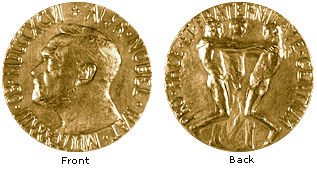
Never heard of Gustav Vigeland? He designed the Nobel peace prize medal.

Posted in Elsewhere | Tagged , | 2 Comments