Wardrobe malfunction

Everything in our house here has a lock on it. The desks, the cupboards, even the refrigerator. We don’t use most of the locks (if you can’t trust your guards and housekeeper, who can you trust?), but there are a few wonky doors that only stay shut if we lock them. Like my closet.

IMG_8314

This morning the key wouldn’t turn to unlock the closet. We tried soap, lotion, and of course lots and lots of jiggling. Still it remains locked up tighter than the Ark of the Covenant.

I tucked in my shirt today, so maybe no one will notice I’m wearing yesterday’s clothes.

Posted in Home life | 4 Comments

5:2

I know that for many people there is nothing duller than a diet blog. If you feel that way, I recommend you just skip this post, and I promise I won’t talk about it again for a long time. But if you want to know how I lost 20 pounds in a few weeks with almost no effort, read on.

It’s called the 5:2 fasting program. Basically, you eat normally five days out of the week, but on two days you restrict your intake to 500 calories. Some versions of the program recommend fasting on two consecutive days, but I don’t think I’d like that and separating the days is working out fine for me. My regular fasting days are Monday and Thursday. I chose them because those are the days I am least likely to have an event or special meal to tempt me. But if I do get invited out on one of those days then I can always switch days that week (this week I fasted Tuesday and Friday because we happened to eat out on my usual days.)

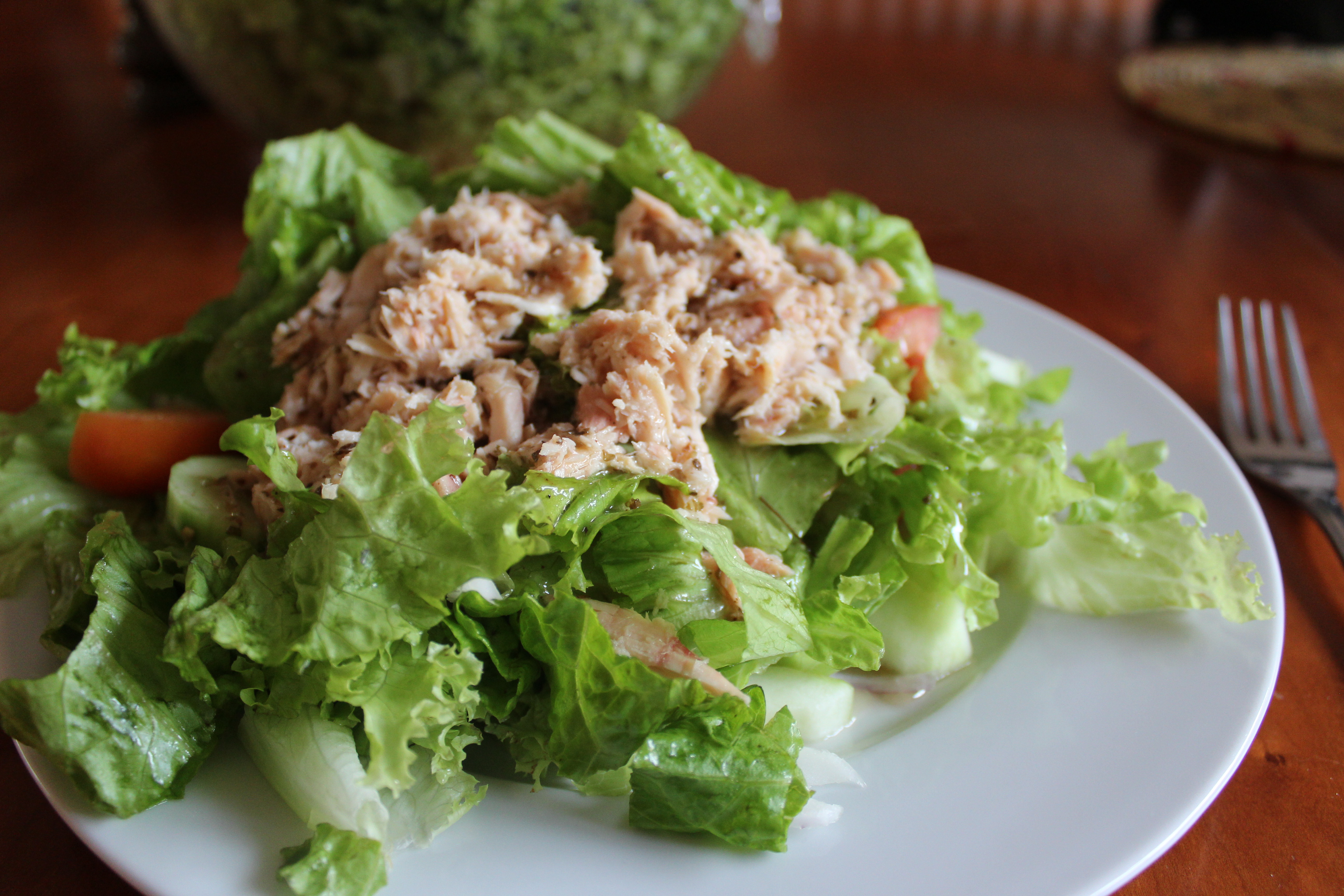
You can distribute your 500 calories throughout the day however you want, and you can choose any type of food you fancy so long as it adds up to 500. What does 500 calories look like? After experimenting for a couple of weeks, I settled into a set menu that works for me. I’m never hungry first thing in the morning, but when I do want something to eat around 9 or 10 am I have a piece of fruit. Then I have another piece of fruit for lunch around 1 pm. If I get hungry in the afternoon I drink herbal tea, and that gets me through until I go home. I have dinner at about 6 pm: a big green salad with a can of tuna and 2-3 tablespoons of vinaigrette dressing. Then more herb tea until bedtime.

This diet works for the simple reason that you eat fewer calories over the course of the week than you used to. People wonder if then you are so hungry the next day that you overeat. For me, the answer is no. I find that I appreciate food more on my non-fasting days, and I think I actually make better choices as a result. I suppose if you started pigging out on your unrestricted days, you could add a third fasting day.

I’m sure the diet would work even better if I added some exercise into the mix. Maybe I’ll do that later. But it’s working for me now because my 5 normal days are just that: normal, with no foods to avoid, and no calories or points to think about. And the 2 fasting days are really quite refreshing (I’m not just saying that).

IMG_7912

I really look forward to this on Monday and Thursday evenings.

Observant Orthodox Ethiopians fast two days a week all year long, every Wednesday and every Friday. “Fasting” has a different meaning here: it’s basically a vegan menu, with no animal products (strangely, though, it seems tuna is acceptable under the fasting rules.) But I do feel a little more in tune with the culture when someone offers me something I can’t have on one of my two days, and I say “no thanks, I’m fasting” … and that’s perfectly ordinary.

Posted in Food | Tagged , , | Leave a comment

1:1

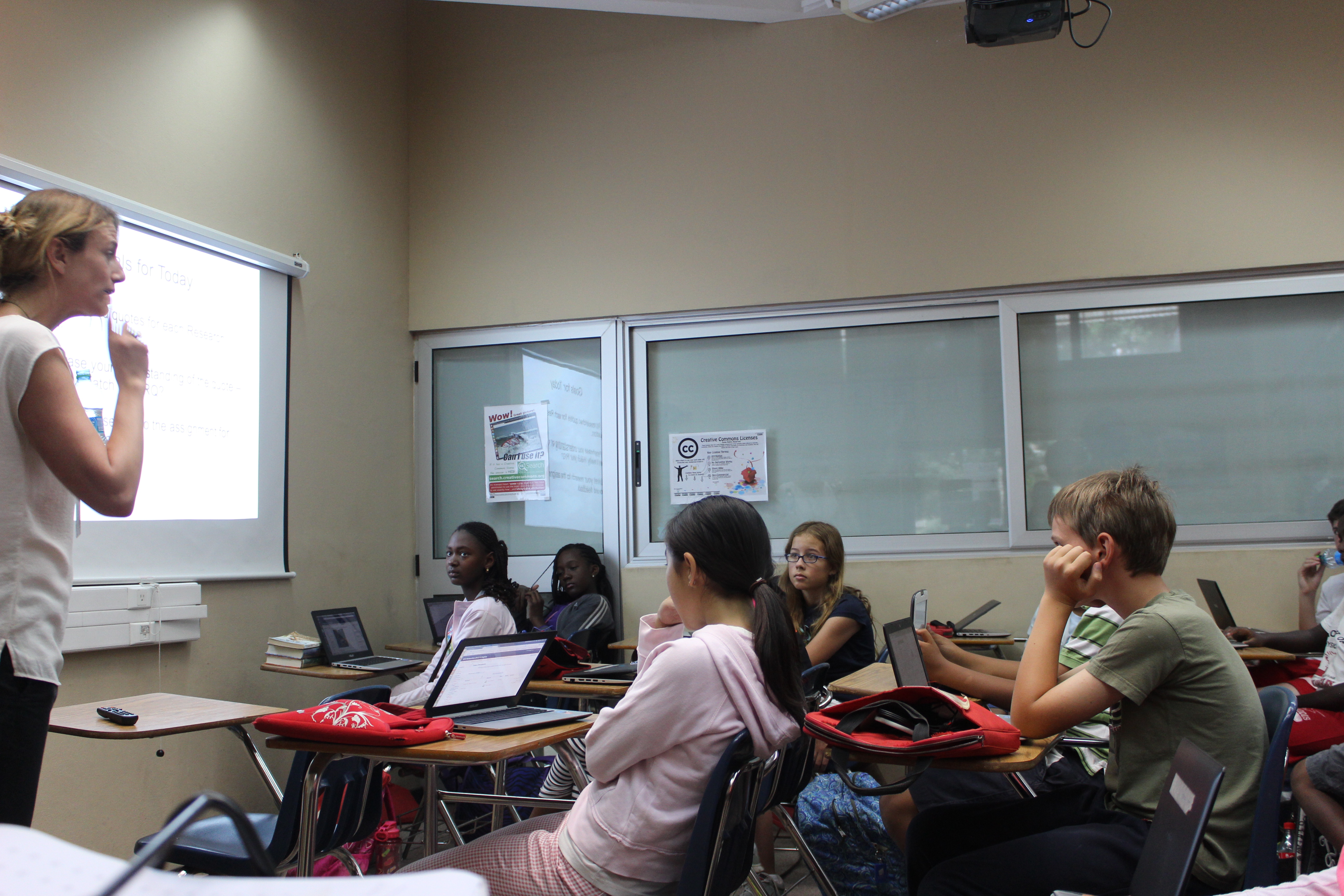
ICS is what’s called a one-to-one laptop school. Here, that means that every kid in grade 6 is entitled to his own school-issued computer. It’s funny to think how normal this seems to me now in Addis Ababa, yet how outlandishly futuristic such programs sounded to me in Medford, Oregon just a couple of years ago.

IMG_7902

There are a number of reasons a program like this would have been unthinkable at my old high school in the US. Not only would it have been prohibitively expensive (and alarming for the poor one-man IT department), but the administration was a bit freaked out about putting too much technology in the hands of teenagers. Imagine the objections. Kids would break the computers. Kids would steal the computers. Kids’ parents would steal the computers. Kids would watch porn on the computers. Kids would be on Facebook all day long. Kids would download music and movies illegally. I could go on.

It’s remarkable how these concerns either don’t arise here, or how much they don’t matter in actual practice. I suppose part of it is that we are a private school, and if computers are lost/broken/stolen, most parents will pony up for the damage. Also (though it’s rarely necessary) we can withhold grade reports or diplomas while US public schools can’t.

But as for issues of ethical use, well, the general feeling is that you expect the kids to be responsible. If they aren’t, then there are consequences. This school has high academic standards – if you don’t get your work done, you get poor grades. And poor grades are considered a bad thing.

Our school has its own wireless network, and there is a filter. We don’t filter out social networking sites – part of the 21st century learner profile to which we aspire involves lots of discussion and collaboration, so blogging, tweeting, facebooking etc. are actively encouraged for educational purposes. Students need open access to online tools and resources. How do we make sure they aren’t playing games, sharing songs, etc.? We don’t. But teachers learn to keep the kids on task in class, using techniques such as asking them to “tip their screens” when attending to a presenter, or by requiring students to close all tabs other than the one they are supposed to be using for the task at hand. Downloading during school hours slows down the network, so downloading has to happen after hours. Yep, some kids are playing 2048 when they’re supposed to be writing up their chem lab report, but they’ll pay for it tonight in homework time.

IMG_7903

The students get to take their laptops home, so how can we restrict what they use them for there, where there’s no filter? We can’t. But all students sign an acceptable use policy when the computer is issued, and if their parents catch them accessing something they shouldn’t (and that’s up to the parents to set those boundaries), then we can refer back to that agreement. But from what I understand, that rarely happens.

Of course, there are some problems. Currently the biggest one is the issue of the haves versus the have-nots. If they own one, a student can use their own personal computer instead of a school-issued laptop, which means we have kids with Macbook Airs lording it over the kids with ICS’s basic Acer notebook. Also, the school’s policy of using open-source software (our operating system is Ubuntu, and our office suite is LibreOffice) is a noble and forward-thinking philosophical stance, but the kids with their own computers are using proprietary software from Microsoft and Apple that not only isn’t wholly compatible with the school-issued programs, but which in many cases is simply superior. (I know our IT department would disagree with that last statement, so let’s just say that MS and Apple are easier for those of us whose tech skills are less advanced.)

Students without Internet connection at home have to stay on campus to get on the web. But the school has one of the fastest connections in the country so even kids with home Internet choose to stay on campus, making connectivity less of a social divider than the computers themselves. But at least everyone does have a computer, and everyone does have Internet access  – more than I can say for students in Medford, Oregon.

Think about it. We can’t manage it in one of the richest countries in the world, but we can do it in Ethiopia. Like so much else, it is a matter of priorities.

Posted in International Community School, Teaching | Tagged , , , | 2 Comments

One does not simply walk into Mordor

About two years ago I wrote a post with almost the same title. I wanted to use it again because this time there really WAS a volcano.

After another early breakfast, we hung around while the local hires broke camp. I took a bunch of pictures.


This slideshow requires JavaScript.

This was the day of our long journey on what the tour company bills as the “worst road in the world” to the base camp at Erta Ale volcano. I think there are worse roads on this earth, but this one was pretty bad, and that meant we were on it for a very long time.

This slideshow requires JavaScript.

In the early afternoon we stopped at a small village where locals provided us with two rooms. We sat on the floor on mats and pillows to eat the pasta lunch our cook had prepared for us. We were all pretty hot and exhausted, but things really livened up when one of our party noticed a huge spider crawling on her face.

This slideshow requires JavaScript.


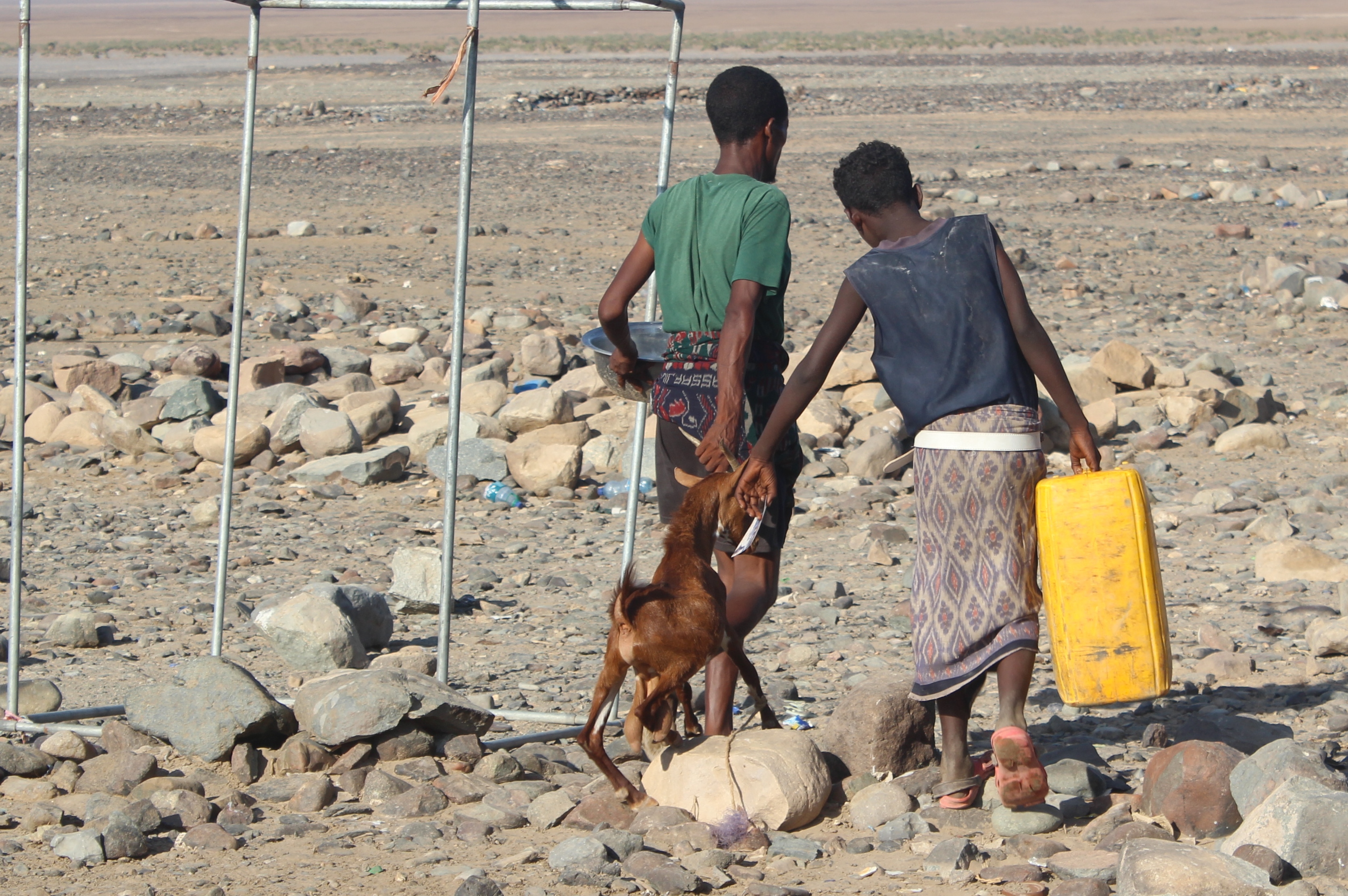
The drivers bought a baby goat at the lunch stop. When they started to tie it to the roof of a car, one of the passengers objected and begged to hold it on her lap instead. No doubt the drivers thought this highly eccentric.

IMG_7407

We stopped again just outside the village at a water pump built by a foreign NGO. We have seen these in other villages. This one was designed so the runoff fills a trough for the camels. I cannot imagine where the Afar people used get water for themselves and their animals before they had these. I have never seen terrain as dry as this. Once in a rare while there is a small patch of plants – I suppose this must indicate some moisture in the ground. But this truly is a hostile environment. At the pump our drivers filled all the empty water bottles they’d been saving; “for washing,” they said.


This slideshow requires JavaScript.

As we traveled onward, the landscape became even more barren. Lots of mini-tornado dust devils appeared; we drove through some of them. Eventually the dust turned to black volcanic rock.

We stopped at another small village where the local chief gave permission for us to continue. There the guards bought two more baby goats, and this time they did get strapped to the roof. Not a very noble sentiment on my part, but I was relieved that it was other people’s cars rather than ours– the sad bleating would not have been a positive addition to the experience.

This slideshow requires JavaScript.


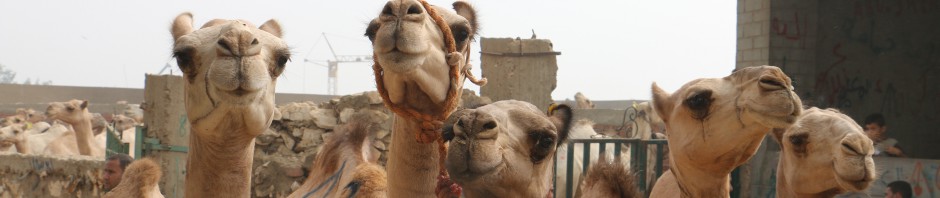
At last we arrived at what looked like a small village, actually an army camp. We weren’t going anywhere until after dark, so we spent the afternoon trying to stay cool. Some people read, or played cards, or watched the goat slaughter, or visited the camels that were going to carry our water and sleeping mats up to the volcano tonight.

This slideshow requires JavaScript.


Finally, after the sun went down, after the camels were loaded, after we all ate dinner, after water bottles were handed out, we began the long walk up the mountain in single file. It was very dark and it was a challenge to stay together. There was a visible trail at the start, but as we got further up we just had to try to follow the headlamps of the people in front. Almost four hours later we were there, at the edge of a caldera of boiling, spitting, spurting, rolling lava. It was stunningly spectacular.

This slideshow requires JavaScript.

We spent the night at a small camp just away from the rim of the volcano, then were up at 4 am to make our way back down the mountain.

Posted in Around Ethiopia, Ethiopia | Tagged , | 4 Comments

Sunset at the lake

Danakil day 2, afternoon

The tour company advised us to bring a book and a diary for Saturday afternoon, when it would be too hot to go anywhere. The temperature reached 50 C, which is about 122F. Indeed, that is too hot to go anywhere.

Lunch was ready for us when we got back from the morning tour. They put on quite a spread today.

IMG_7205

After that, a few of us decided to go see what the rest of the village was like. There was a small souk and a bar. We wandered over to the bar, where the proprietor scurried to shoo some non-drinking men off of a wooden bench. We tourists lined ourselves up on the bench and ordered beers and cokes. There’s no refrigeration, but the drinks came out of an insulated chest where they’d been warming up at a slower rate than the outside air. There was a generator, though, which meant we were able to enjoy our lukewarm beverages while watching “Ethiopia Has Talent.”

IMG_7212

Then it was off to a shelter to nap until late afternoon.

IMG_7215

Except for that one lively group who played hearts.

One of the cooks assistants asked me if I wanted meat with dinner. “Sure, ” I said. It immediately became clear why he was asking.

IMG_7218Around 4:30 we piled back into the cars. “We are going to the lake,” said the guide. “Wear your short pants and your sandals.” A lake? Seemed pretty unlikely, but OK.

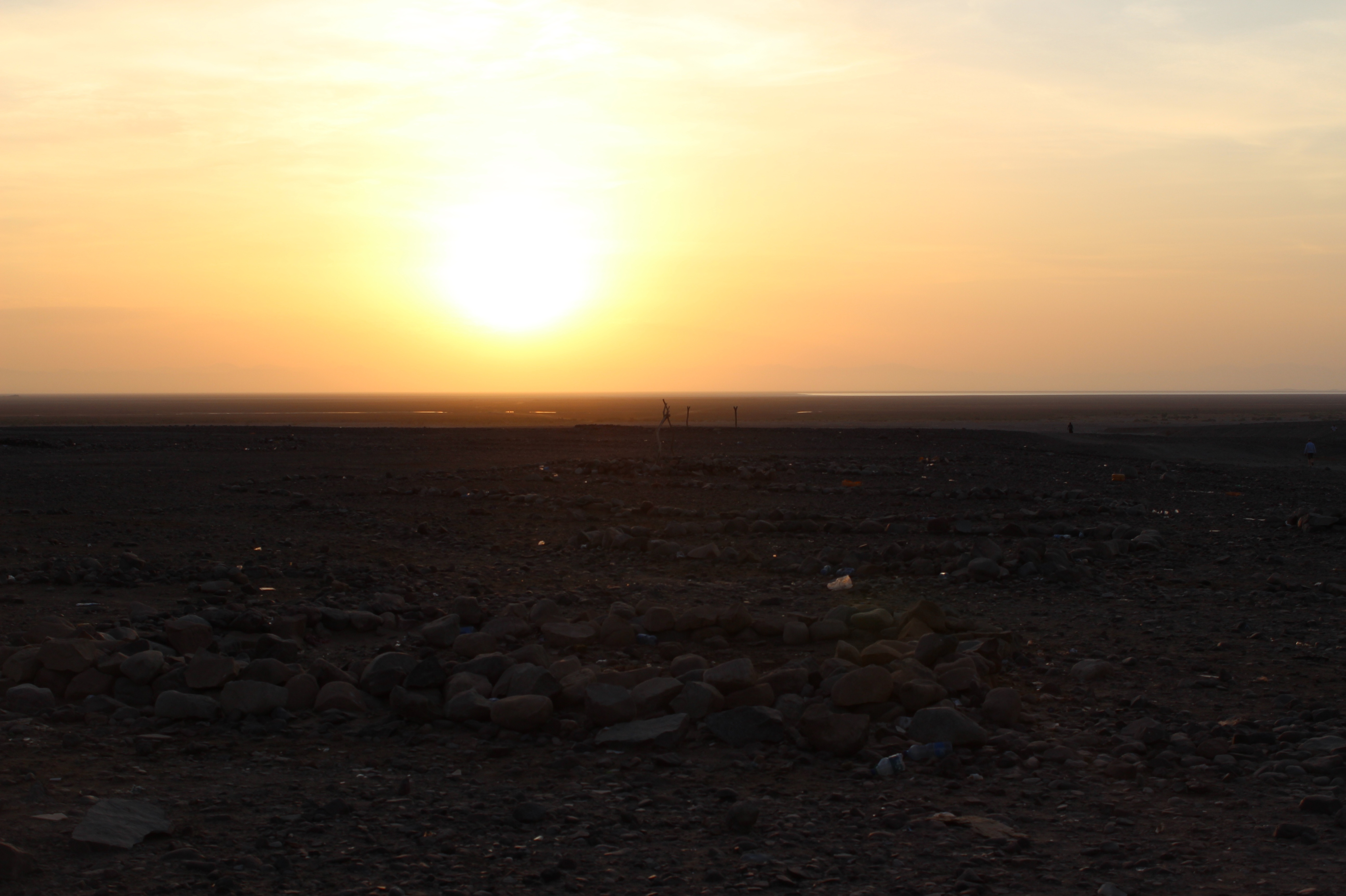
Sure enough, it was a lake – a huge, shallow body of salt water, perfectly clear. The surrounding earth was covered in a crust of white salt that made the scene look glacial. Walking was painful for tender faranji feet, but it got a little better out in the water. The lake was so shallow, Andreas was able to walk out over a kilometer and the water was still only halfway to his knees. We stayed until sunset, then back to camp for rice with goat meat, and that blissful nighttime breeze.

This slideshow requires JavaScript.

Posted in Around Ethiopia, Ethiopia | Tagged , | 1 Comment

To the moon, Alice

Danakil day 2, morning.

Alice said she was feeling envious when I told her we were going to Danakil. She researched it on line and said it looked like the moon. Now that I’ve been there, I would agree. Not that I have been to the moon, of course, but I think this was probably better. It was certainly more colorful.

A representative from the tour company met with us a few days ahead of time to go over the itinerary. I accidentally left my notes from that meeting at home, so for me our morning route unfolded as a series of intriguing surprises.

You have to get out and see things early, because the day starts hot and then gets hotter.

IMG_6714We headed out right after breakfast. The texture of the dry earth changed as we traveled.

This slideshow requires JavaScript.

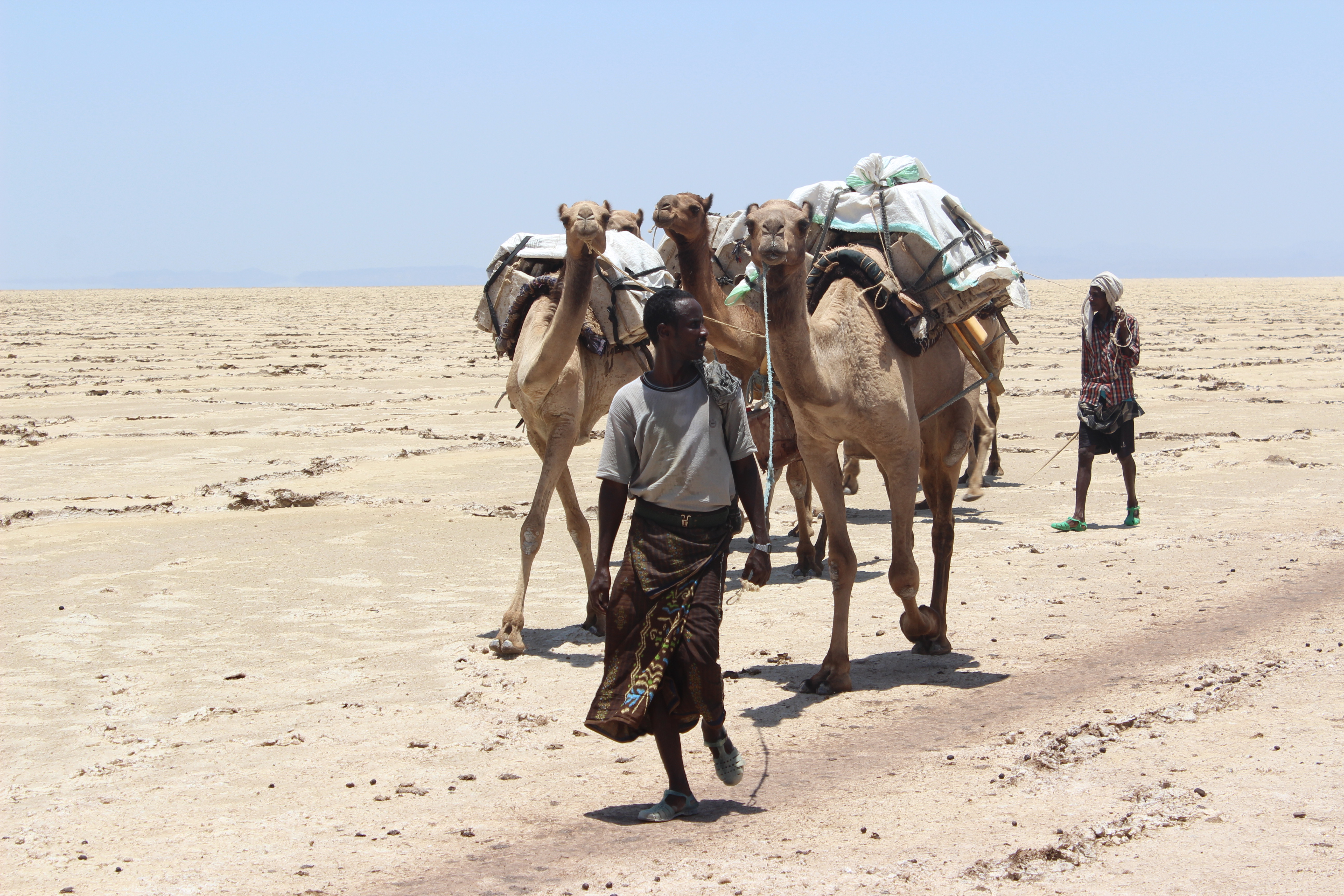
On a normal day there are hundreds of salt harvesters toiling out here in the blazing sun. They work in cross-ethnic teams: the Afar men harvest the salt, and the Tigray men take it by camel over the mountains to the markets. We’d been told that they wouldn’t be working this weekend because of the Easter holiday, but our guide spotted a group of camels on the horizon and we drove out to see them.  There was a team of Afar men there harvesting salt to bring back to local villages. We felt pretty lucky to be able to see this. It must be one of the hardest jobs in the world.

This slideshow requires JavaScript.

Our next stop was Dallol, which means colorful in the local language. We parked the cars and hiked over a small hill. It was a bit like landing in Oz.

This slideshow requires JavaScript.

Our next stop was an area with volcanic caves.

This slideshow requires JavaScript.


Then back in the vehicles, and off to another colorful area.

This slideshow requires JavaScript.

Last we visited a strange oily lake and some other remarkable features:

This slideshow requires JavaScript.

On the drive home, we encountered the camels we’d seen in the morning, now on their way back to the village with their load of salt.

IMG_7200 IMG_7193And back to camp in time for lunch.

Posted in Around Ethiopia, Ethiopia | Tagged , | Leave a comment

An awfully big adventure

Danakil day 1: getting there

Over the four-day Easter weekend, Andreas and I traveled with eight other ICS teachers to an area called the Danakil Depression in the Afar region of northwestern Ethiopia. It’s taken me a few days to sort out the more than a thousand pictures I took. There’s a lot to show you, so I’m going to break my Danakil story into four or five sections backdated to last week. Don’t worry, I won’t include ALL of the pictures.

map

The Danakil Depression is in the north, circled in black. Map: http://www.sharyemtours.com/home/map.html

We began our adventure Friday morning with a one-hour flight to the city of Mekele. Mekele has a clean, organized, uncrowded feel – quite different from Addis. The tour company picked us up at the airport and transported us to their offices, where they loaded our luggage and all the supplies for our expedition onto a convoy of 4WD vehicles.

IMG_6568

Alcoholic beverages are necessary for properly launching the expedition in Mekele. Who says 10 am is too early for a beer?

Heading out of town, the natural and cultural landscape are already very different from Addis. Instead of the round thatched tukuls common in highlands of Oromia and Amhara, up here in Tigray the homes are rectangular and made of stone.

This slideshow requires JavaScript.

After a couple of hours traveling east, we crossed into the Afar region, where we stopped for lunch.

This slideshow requires JavaScript.

The Afar people are nomadic herders, so the homes here are of a quite different type.

IMG_6667After lunch we drove on. We encountered our first camel caravan.

IMG_6625In the afternoon we stopped in a village with an army base where our guide got permission for us to enter Danakil. We also picked up two military guards, who rode on the roofs of the front and rear vehicles.

This slideshow requires JavaScript.

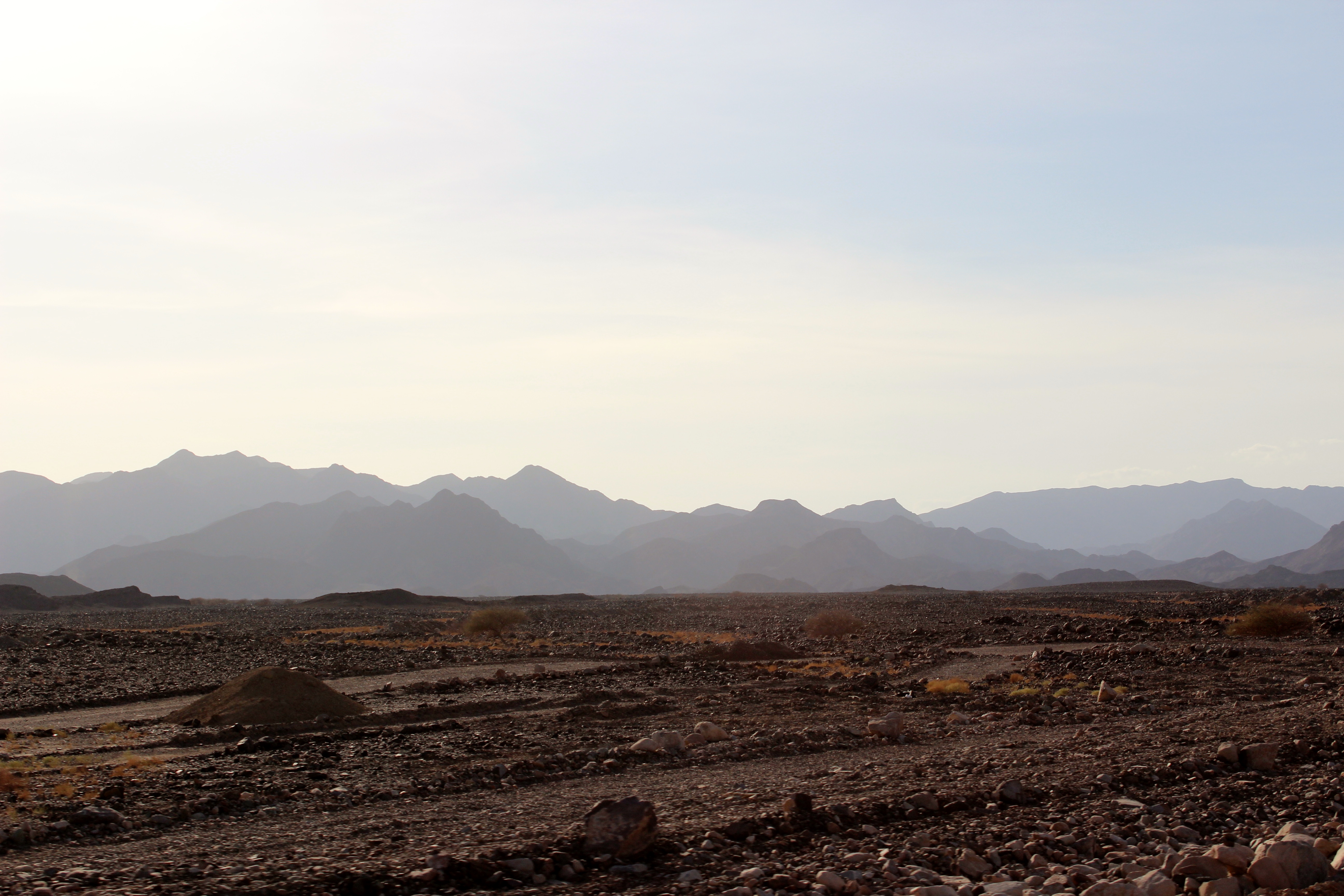
Continuing on, the terrain got flatter and drier, with hills in the distance

IMG_6678In the late afternoon we arrived at our destination, an Afar village in the Danakil desert. The travel company has an arrangement with the villagers to accommodate tourists. Local men helped unload the vehicles and brought out raised woven straw beds, which they arranged near a building we’d be using as a kitchen and shady shelter. Over a small rock wall was a bathing booth made of plastic sheeting, and off in the distance, a corrugated metal latrine (hole-in-the-ground style, as they all are here). On one of the buildings someone had painted a sign : Afar Hotel. I think this was meant to be ironic, but I cannot say for sure.

This slideshow requires JavaScript.

When the sun went down, our cooks made us a simple but tasty dinner of soup, rice, greens, salad, and oranges. After dark it cools off (into the 80s, maybe) and there is a pleasant breeze. We slept outside on our woven beds, under the stars.

This slideshow requires JavaScript.

Posted in Around Ethiopia, Ethiopia | Tagged , | 1 Comment

Meanwhile, back at the ranch

Our daughter Alice might have thought she was getting a bargain when we went overseas and she moved into the big old house. But then about a month into her residency, the kitchen caught fire and the whole first floor sustained major smoke damage. The insurance paid for everything; still, if organizing the subsequent six-month cleanup and renovation didn’t disabuse Alice of the bargain notion, three years of constant old-house upkeep have worn her down.

Recently she posted this status on Facebook:

Free to a good resident:

One five-bedroom 100-year-old brick home; comes with myriad unique bonus features including:

  • a water heater-cum-cigarette lighter: approximately once per minute the control panel sparks loudly, so you’ll never be denied a relaxing smoke
  • an in-wall cistern: I don’t know what keeps filling it, but it sure seems to be an “H2Ornucopia”!
  • engage in a Debordian dérive every time you plug in the Cuisinart. With the almost magical, patternless tripping of fuses and the random, mapless layout of the plugs and fixtures they power, you will have no choice but to actively engage with the house, which may or may not be becoming sentient.

First come first served!

Huspaz! also comes with a neurotic 11-year-old terrier and rotten egg bombs hidden in every other bush outside- you never know what you’re gonna get!

Well Alice, happy birthday. It’s a big one, and I hope it’s a good one. Someday we’ll take that white brick elephant off your hands. Meanwhile I hope you enjoy the new smoker. Just don’t use it in the house.

smoker

Posted in Elsewhere, Family | Tagged , | 6 Comments

Continuity

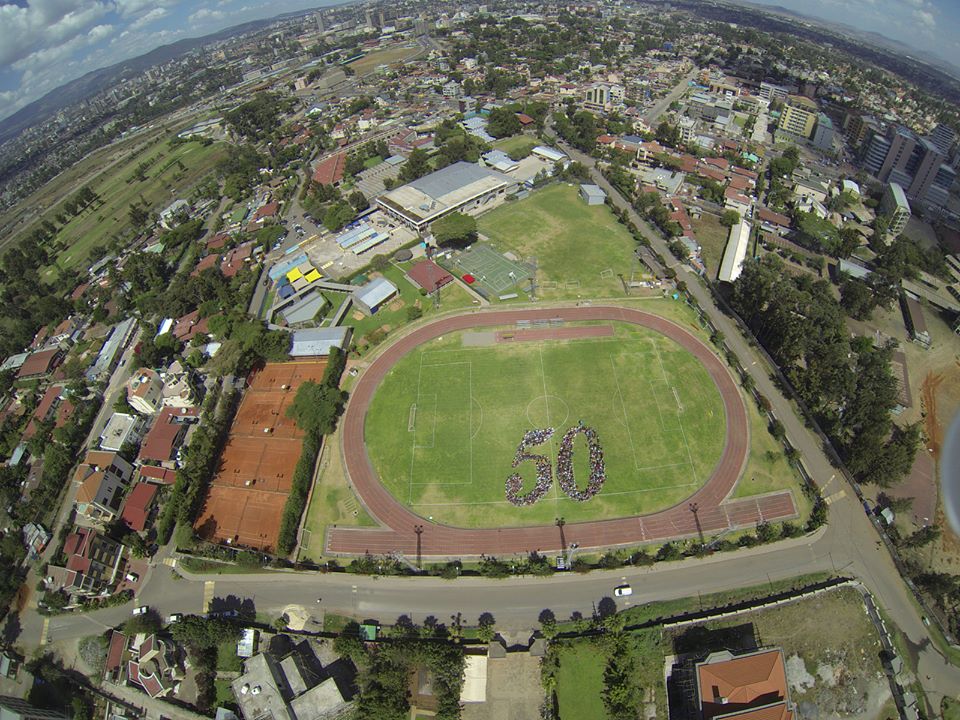
Our school is 50 years old this year.

It’s hard for me to picture what this school would have been like in 1964. That year I was in kindergarten at Merriewood Elementary School in Lafayette, California, where Mrs. Collins taught us “duck, duck, goose” and “duck and cover.” In Ethiopia, Haile Selassie was still emperor. The school was the American Community School then. This neighborhood was out on the edge of town, and there were few automobiles. If you’ve read Cutting for Stone, the main characters Marion and Shiva Stone would have been 10 years old that year (and in case you were wondering, the author Abraham Verghese did not attend ACS/ICS; neither did Marion and Shiva, their being fictional and all).

At any rate, the semicentennial celebrations began yesterday with an all-school photo followed by music, speeches, and an evening wine and hors d’oeuvres thing for parents in the parking lot outside the new cafeteria.

There will be a whole series of anniversary events over the next several months – alumni reunions, a commemorative book, and so on.

For those of us who are here on a very temporary basis (as most international teachers are), it feels a little funny to be celebrating the long history of an institution we just arrived at and also to be involved in making long-range plans for its future. Probably only a handful (if any) of the current teaching staff and administrators will be here to see those plans to fruition. But that’s how it goes. And anyhow, it’s always nice to have something to celebrate.

50 years

Andreas and I are somewhere along the top edge of the 5.

By the way, ever wonder how they take pictures like this one, credited to ICS alumnus Adam Kidane? My favorite part of yesterday’s event was the little remote-controlled quadcopter with attached camera zooming over the crowd. At $500 it’s an expensive toy, but oh so cool.

20140415_143709


Posted in International Community School, Teaching | Leave a comment

Holiday in hell? Sign me up!

Pursuant to Tuesday’s “don’t go there” post…

Some ICS teachers spent last October break in the Danakil Depression in northern Ethiopia, the place National Geographic called the “cruelest environment on earth.” I was sorry to miss that excursion, but we’d already booked a safari in South Africa and I figured I’d get another chance. Sure enough, a group of adventuring teachers is putting together a visit to Danakil over an upcoming weekend.

According to Philip Briggs, author of the 2009 Bradt guide to Ethiopia:

The Danakil’s climatic inhospitality is mirrored by the reputation of its nomadic Afar inhabitants…who as recently as the Italian occupation had the somewhat discouraging custom of welcoming strangers by lopping off their testicles. While scrotal intactness is no longer a cause for concern, the Danakil remains a challenging travel destination: daytime temperatures frequently soar above 50°C [122°F], there’s no shade worth talking about as alleviation, the heat is often exacerbated by the fierce gale known as the Gara (Fire Wind), and  creature comforts are limited to what you bring in yourself. (311)

Tourists do sometimes get kidnapped in that region. Well, says one of our friends organizing the tour, if it happens to us maybe they’ll let us call in to work and extend the holiday. Ha ha.

Are we actually going on this trip? Of course. Who could resist the superlatives on the tour’s website: “one of the most inhospitable regions of the world;” “This may be one of the worst road in the world.”

And we are reassured by the safety measures:

  • Scout and police service in Afar Region as per the program.
  • Camel and camel tires in Afar Region as per the program.

I may go just to find out what a camel tire is.

The intro to this BBC travel video features some nice shots of Danakil (thanks for this, Hannah)

Posted in Around Ethiopia, Ethiopia | Tagged , , , | 1 Comment