Mushroom farmers v. 2

Mushrooms are not a part of the traditional Ethiopian diet.  I base this assertion on 30 years’ experience eating in Ethiopian restaurants in the US; 10 months in Addis Ababa have not revealed mushrooms as a component of Ethiopian cuisine here either.

In Portland, when we first moved to Oregon, Andreas and I walked around an Ethiopian neighborhood in search of some good kitfo.  One menu we looked at (I won’t name the restaurant) listed mushrooms as an ingredient in almost every dish.  This did not appeal, in fact it sounded downright unappetizing. We ended up at the enjoyable Dalo’s Kitchen instead.   I’m still not sure what was up with that one place – they must have had a special deal with a mushroom supplier.

In Addis you can find high-priced canned mushrooms at the faranji shops.  Pizza restaurants typically offer them as a topping, but we don’t order them because Alekka thinks canned mushrooms are disgusting (I sort of like them because they remind me of the Blondie’s window on Telegraph Avenue where I used to get a slice on the way to class).  There is a large Chinese population in Addis, which explains why you can find shiitake mushrooms at some markets, but they are always the dried variety.

There is one kind of fresh mushroom you can buy here, however, and that is the oyster mushroom.  A little over a year ago five university students in Addis set up an enterprise called Sweet Mushrooms that trains people to grow oyster mushrooms at home. Growers pay 600 birr ($30) to take a one-day course that includes a take-home starter kit. Sweet Mushrooms buys the harvested mushrooms back from the growers and uses them to make mushroom sandwiches, which they sell out of tiny street stands in Addis.

The people who grow mushrooms can also sell the mushrooms independently.  One of our Ethiopian staff at the school has a friend who brings them to school to sell to the teachers.

OLYMPUS DIGITAL CAMERA

I bought these from the mushroom lady.

According to an article in What’s Out! Addis, Sweet Mushrooms is looking into growing other varieties of mushrooms as well.

I’ll be on the lookout for that.

Posted in Addis Ababa, Food, Shopping | Tagged | 2 Comments

This is just to say

This is just to say

I have eaten
the can of American tuna
that was hidden at the back of
the cupboard

and which
you were probably saving
for lunch on a hard day.

Forgive me
it was delicious
creamy with Best Foods mayo
and so cool

             -Andreas Konstantinos Horaites

Boy was I mad. Andreas doesn’t even really LIKE albacore tuna. Perhaps I was a teensy bit unreasonable.  But I was so looking forward to that little treat. You can’t buy solid tuna in water here.

Last week I finished reading a short story collection titled On Being Foreign: Culture Shock in Short Fiction (Tom J. Lewis and Robert E. Jungman, eds).  One of the stories was “An Outpost of Progress” by Joseph Conrad. The piece is about two guys who’ve signed on to run a remote African trading post.

They do not adjust well.

A few months in the jungle and all that is left of the supplies they brought is coffee and rice, and the company steamer carrying fresh goods is several weeks overdue.  They’ve managed to make enemies of the locals, who now won’t trade with them, and they have no local food-gathering skills. The two men quarrel bitterly over a small stash of sugar that one of them has been hoarding. It’s to add to the coffee in case they get sick “because any little extra like that is cheering.” This being Conrad, both men end up dead: one guy kills the one who wants to eat the sugar, then he kills himself just before the boat arrives.

I am trying to hang onto the lesson in this story. My tuna may be gone, but I can hear the steamer coming around the bend. Only 4 more weeks until summer vacation.

 bumble_bee_solid_white_tuna_pa12_oz


Posted in Expat experience, Family, Food, Home life | Tagged | 4 Comments

Lucy: “I’m home!”

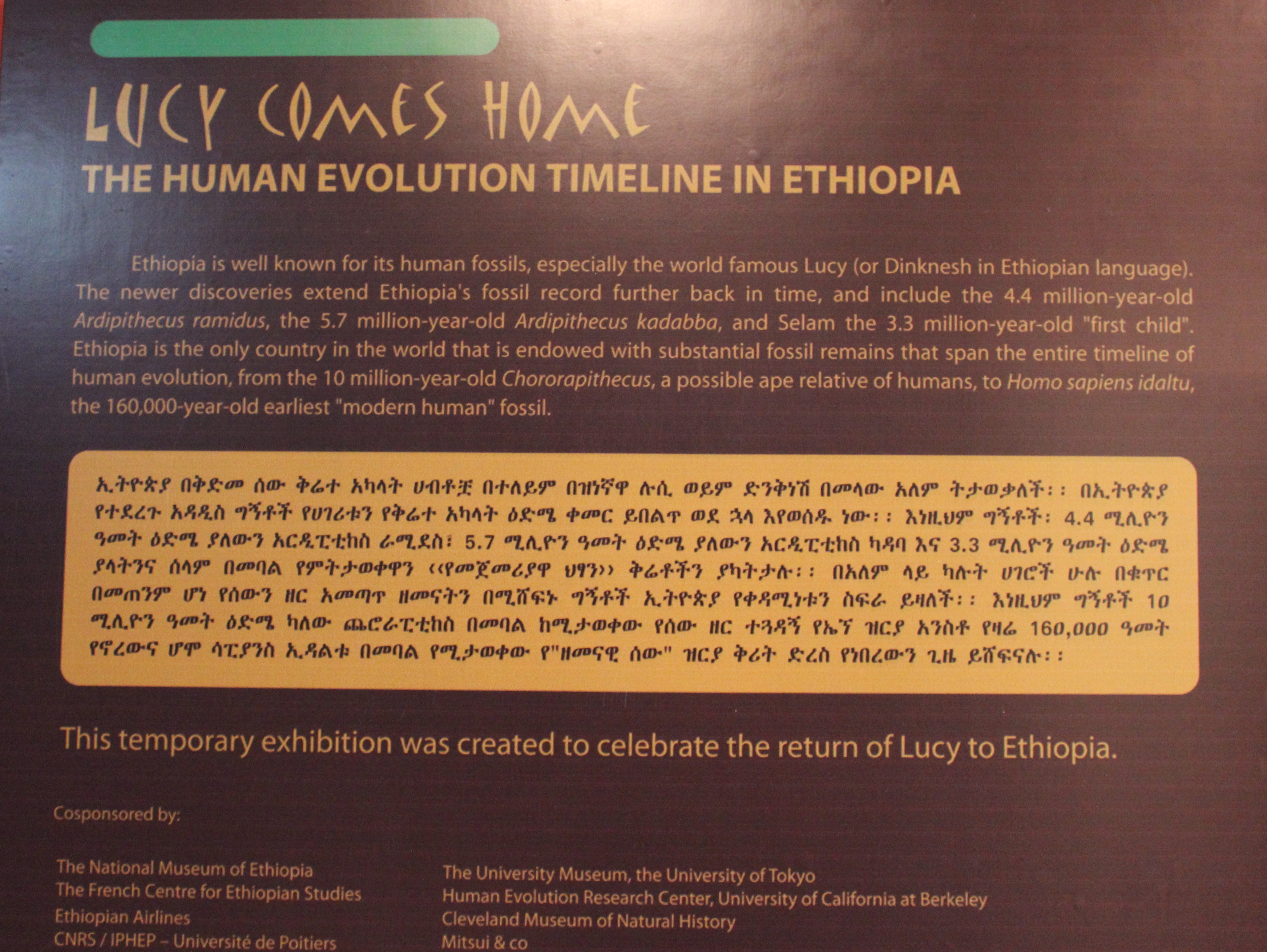
Lucy’s back in town.

IMG_4251

AL 288-1, aka Lucy, was discovered in the Awash Valley of Ethiopia in 1974.  The hundreds of little pieces add up to about 40% of the skeleton of a 3.2 million year old female Australopithecus afarensis.  She was named after the Beatles song that the paleontologists were listening to at their camp (among the team was one of my Berkeley anthro professors, Tim White; you know how we love the Beatles in Berkeley).

Lucy’s been on tour in the US for five years but on May 7 she returned to her permanent home at the National Museum here in Addis Ababa. We went to see her this weekend.

IMG_4246

Hm. Guess I should have asked Andreas and our friend Vicki to move before I took the picture.

To the dismay of a few of us in the party, Lucy’s back, but she’s not on display.  The real fossil bones are locked away in a secure storage room. What’s in the case is a replica.  The guard wasn’t really able to explain why this is.  I suppose maybe they don’t have the proper security, though I don’t know why someone would steal this.  For ransom, maybe.  There is a history of locking up the national treasures here – the Ark of the Covenant is believed to be in an ancient church in Axum (northern Ethiopia), but no one can look at it except one person, the Guardian of the Ark.

IMG_4252

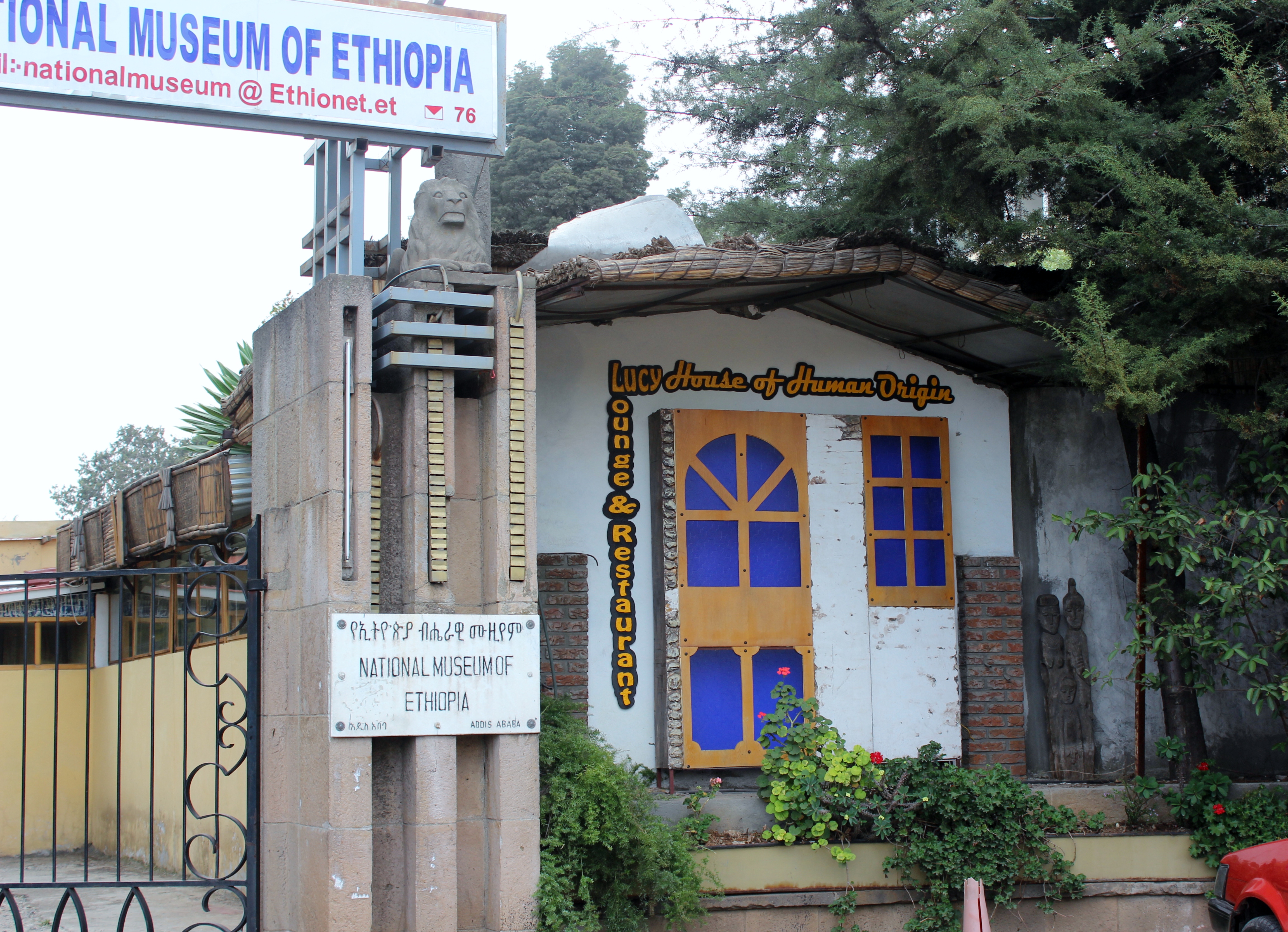
Some countries have House of Pancakes, some countries have House of Human Origins.

In 2009, while Lucy was on tour, paleontologists dug up even older bones.  Ardi predates Lucy by just over a million years.  Like Lucy, she lived in Ethiopia, but I cannot tell you where she is now.

Posted in Addis Ababa, Background, Ethiopia | Tagged | 2 Comments

Grow your own

I love cooking with fresh herbs. Unfortunately, the selection in stores here is pretty limited.  I can almost always find parsley, cilantro, and rosemary, but that’s about it.

The infamous Varnero pot plant delivery included mint, oregano, and thyme.  Our family got thyme, which is great, but I have to go knocking on the other Varnero faranji doors if I want one of the others.  And how can I make pesto or dolmas without basil or dill?

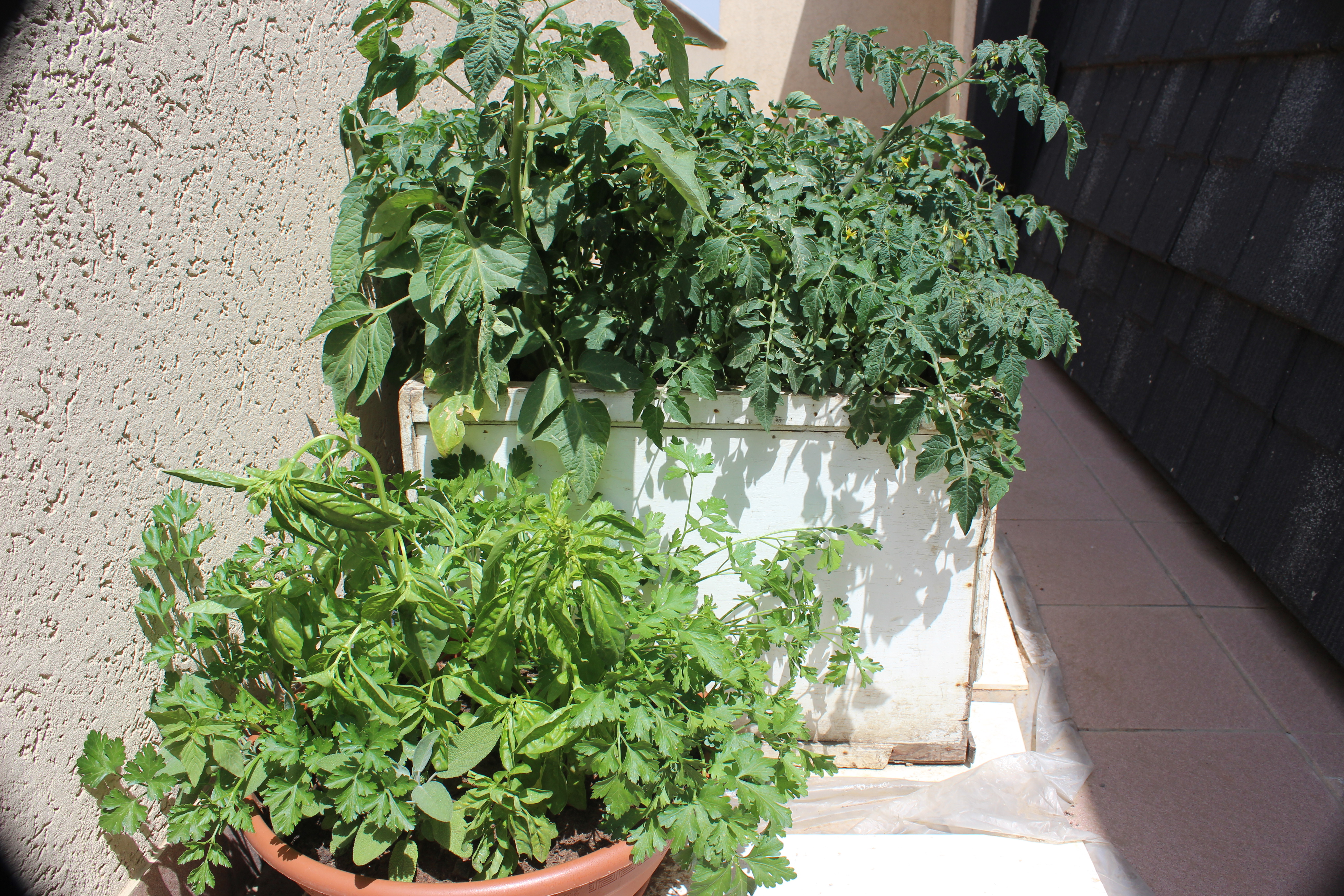
Andreas and I planted basil, parsley, sage, dill, and tomato seeds in the peat pots I’d brought back from the States in January. They were on the balcony for a while, then in our bathroom (which gets more sun than the balcony), and now they are on the roof.

Mmm, pesto coming up in a week or two. I hope the tomatoes are ripe before we go away for the summer.

IMG_4241

Posted in Food, Home life | 2 Comments

Sole Rebels

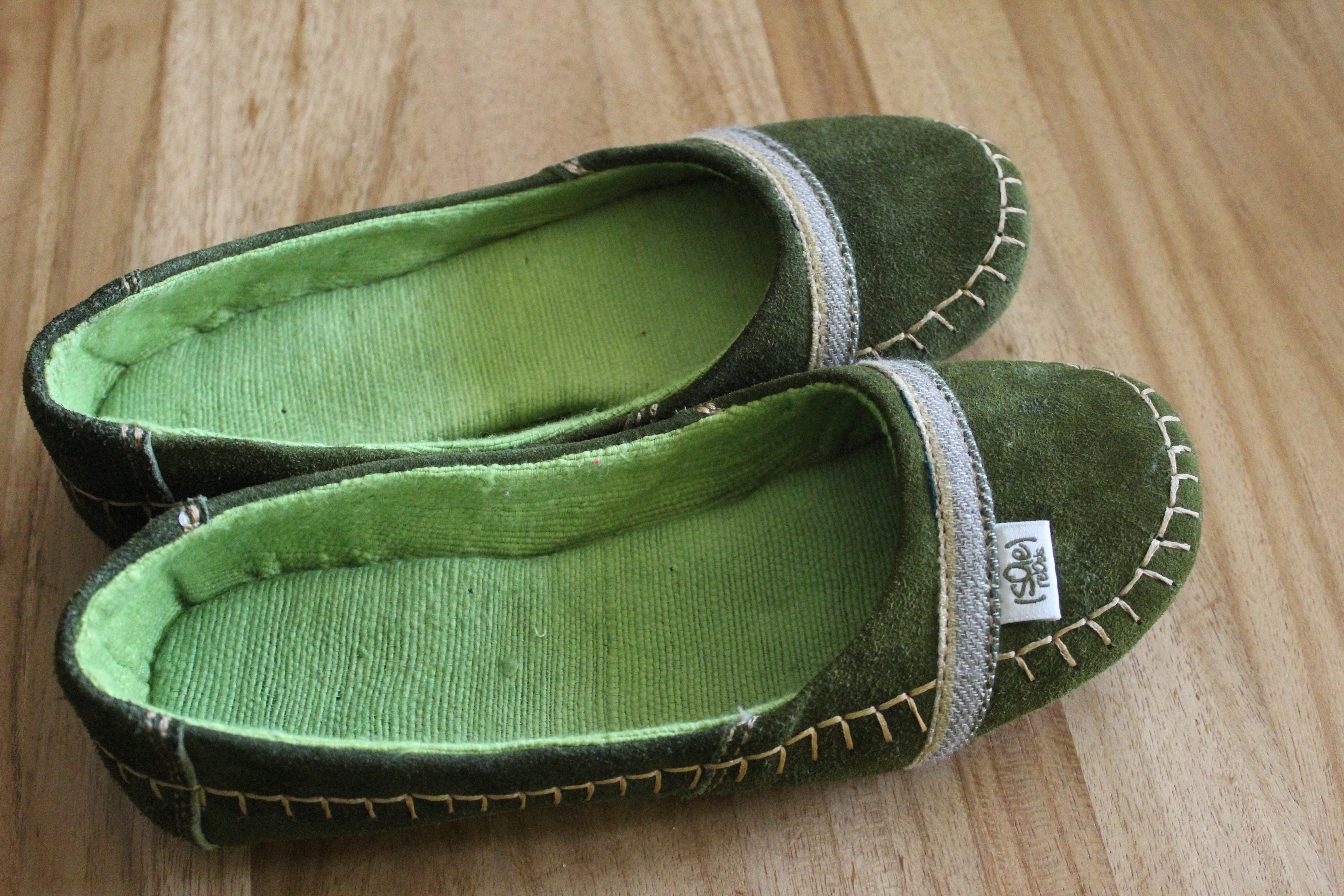
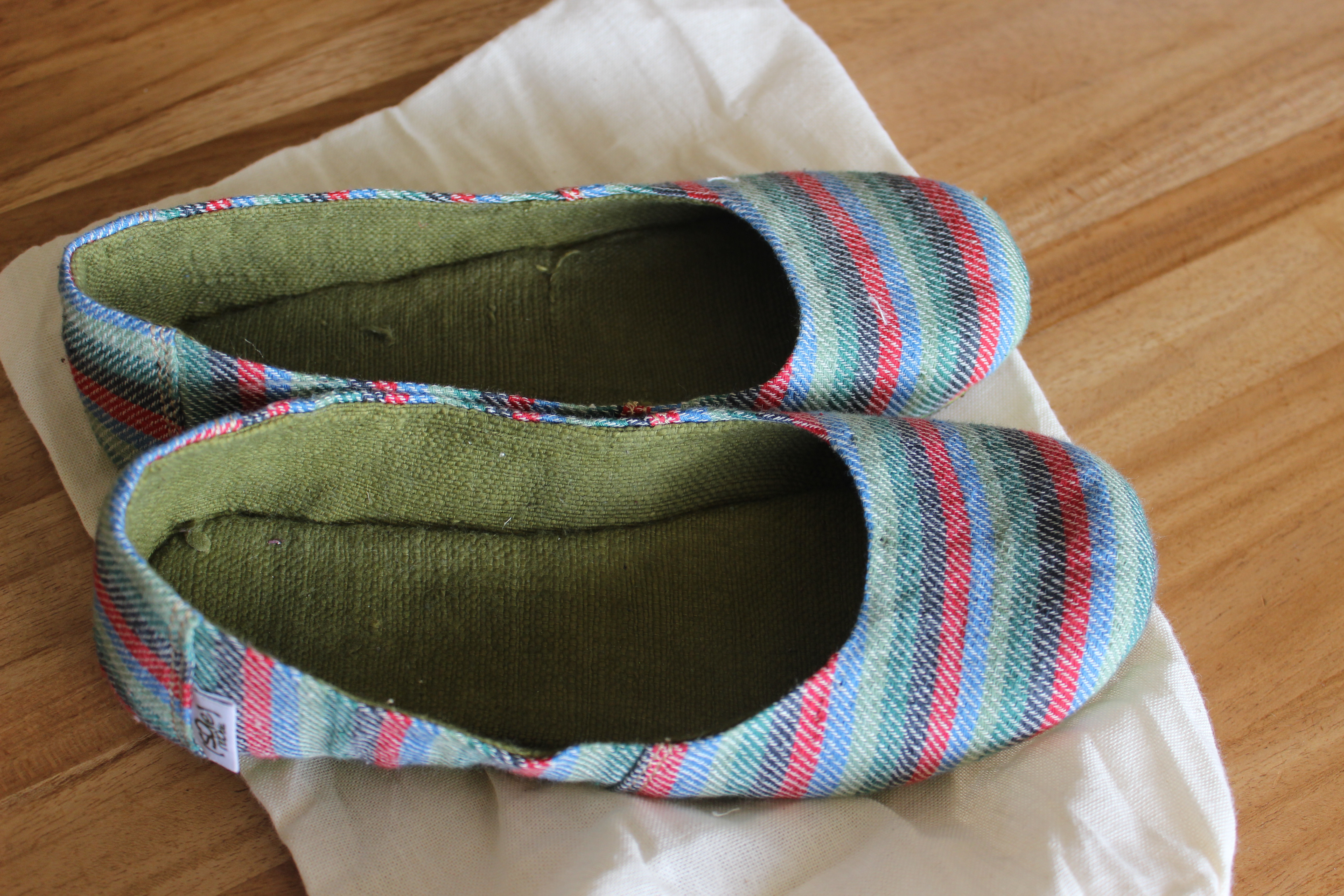
My new kicks:

sole rebels 1

Sole Rebels shoes are made in Ethiopia. They’re fair trade, and comfortable, too.

The company is owned by a woman, Bethlehem Tilahun Alemu, who employs only other women. She pays them a living wage. The materials are made locally or recycled (the soles are tires).  She also has a vegan line that promises no animal products are used. There’s a Sole Rebels store in the Adams Pavilion shopping center near the school.

I liked my first pair so much that I went back this weekend and got another one.

IMG_4208

Oprah likes them, too.

Posted in Addis Ababa, Ethiopia, Shopping | Leave a comment

Kitty litter crisis

We came home one evening before spring break to find this official notice from the Varnero management on our dining room table.
kitty letter-page-001 (2)
(the purple stamp on the signature is what makes it official)

All the cat owners in the building got one. OK, but what are we supposed to do with all the cat poop? Take to school with us?

Ethiopian friends advised us that if we ignored the letter, the problem would probably go away.  Business as usual. So far, so good.

Posted in Home life | Leave a comment

Orthodox Easter, twice

I’m not a churchy person – my religious affiliation might be described as lapsed Unitarian – but I do get into the pageantry and mood of religious festivals. Maybe even more than some, because I’m not bothered by questions of belief. This year I had the opportunity to observe more than my usual share of Easter celebrations: we were in Sorrento all of Roman Catholic Easter week, then we were here in Ethiopia for Orthodox Easter this last Sunday.

Carrying the cross in Meta.

Procession in the town of Meta Sorrento.

Andreas tries to attend a Greek Orthodox Easter service every year, but I’ve been curious wanted to see what the Ethiopian Orthodox service is like. As it turns out, we didn’t have to choose between them. During the repressive years of the Derg there was a curfew for foreigners that necessitated shifting the Greek celebration from midnight to 9:30 pm, and they never moved it back again. The Ethiopian ceremony starts earlier but goes on for hours, with the best bits happening after midnight. So it worked out that we could attend both.

IMG_4198

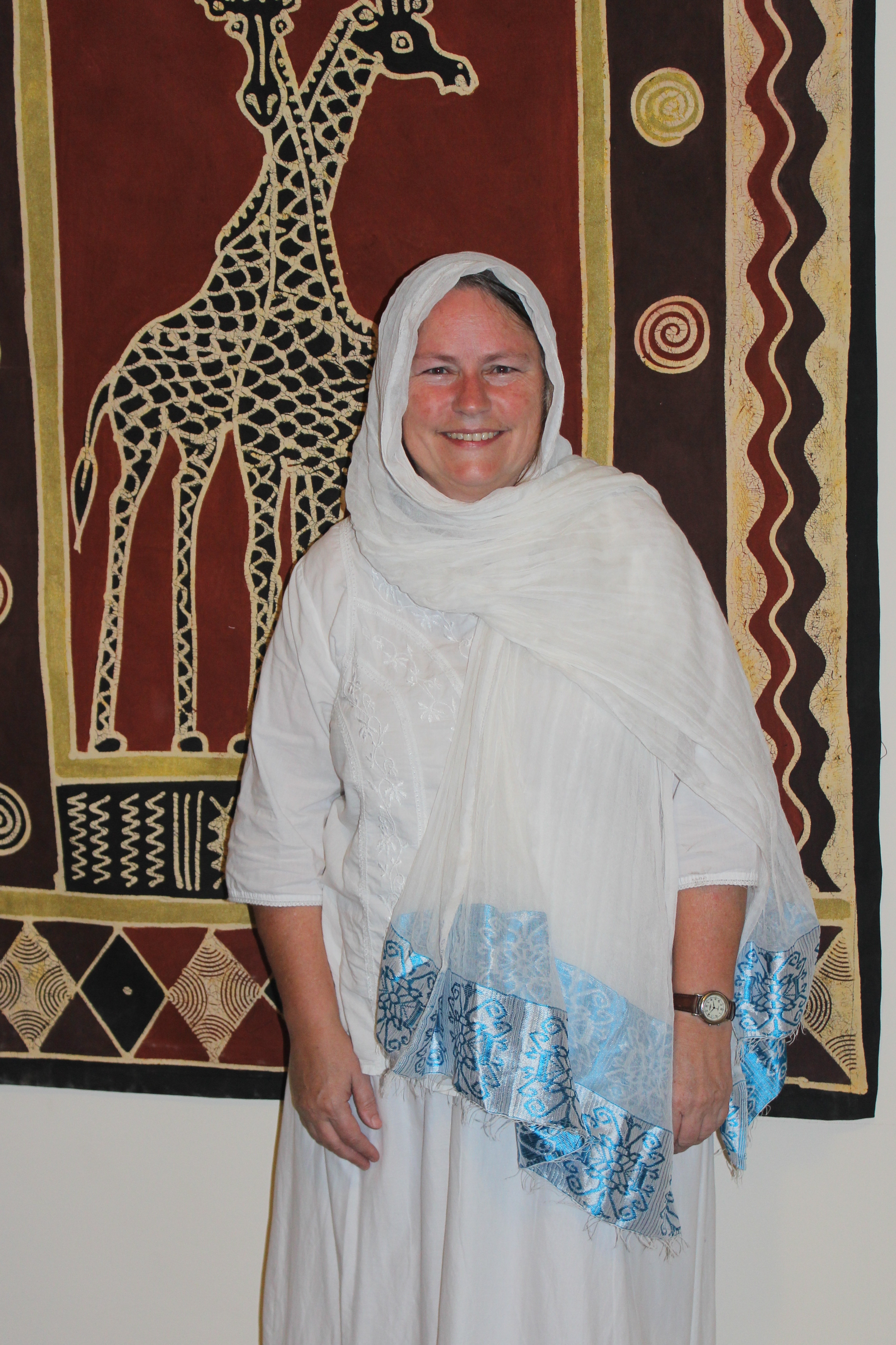
Me, dressed for church on Saturday night. There are no special clothing rules for the Greek Orthodox church (other than covered from shoulders to knees), but for Ethiopian church men and women both dress all in white, women’s heads are covered, and shoes are removed at the door of the church.

The Greek church in Addis is St. Froumentius in the Piazza neighborhood. It was built in 1935 but because it’s modeled after the Byzantine style it looks much older. The main part of the Easter service took place outside in the courtyard.  The candles, the incense, and the Greek liturgy were all familiar.  The priest was a jolly sort of fellow who really got into handing out the red-dyed eggs inside the church after the 9:30 xristos anesti part. It was interesting to see all the Addis Ababa Greeks turn out for this – diplomats and embassy workers, random hyphenated Greek ethnic types like us, and the legacy of what was before the Derg a large Greek community in Addis, most of them now blended Greek-Ethiopian families.

OLYMPUS DIGITAL CAMERA

Sorry about the poor picture quality. No flash…

Afterwards we drove to the Kiddiste Mariam church, one of the older Ethiopian Orthodox churches in Addis, to see part of the Fasika (Easter) service.   I felt welcomed there, although I was conscious of being the only faranji among many hundreds of Ethiopian worshippers (Andreas didn’t want to go inside).  I was also very aware of the fact that I understood almost nothing of what was going on. I suppose I had a notion that the Easter service would bear some kind of resemblance to the Greek Orthodox one that I know, but I was wrong; I didn’t recognize any part of the service.

I wasn’t comfortable enough to pull out the camera at all in the Ethiopian church. My impressions are of hypnotic chants, barefoot people dressed in white and packed shoulder to shoulder; some sitting on the grass-strewn floor reading the Bible; some touching foreheads to the ground to pray; men and women separated inside the church; silver rattles and crosses (the priest walked around blessing people with it – I got the forehead cross bump blessing); string candles dipped in beeswax; men (priests?) in the center of the ceremony, raising and lowering their canes in time with the chants; lots of icons.

Here’s a video I found on YouTube taken last Easter by someone (username syncronetix) who didn’t mind using their camera in church. It’s a different church in Addis but you can see what it’s like.

Posted in Addis Ababa, Background, Ethiopia | Leave a comment

Easter feasting

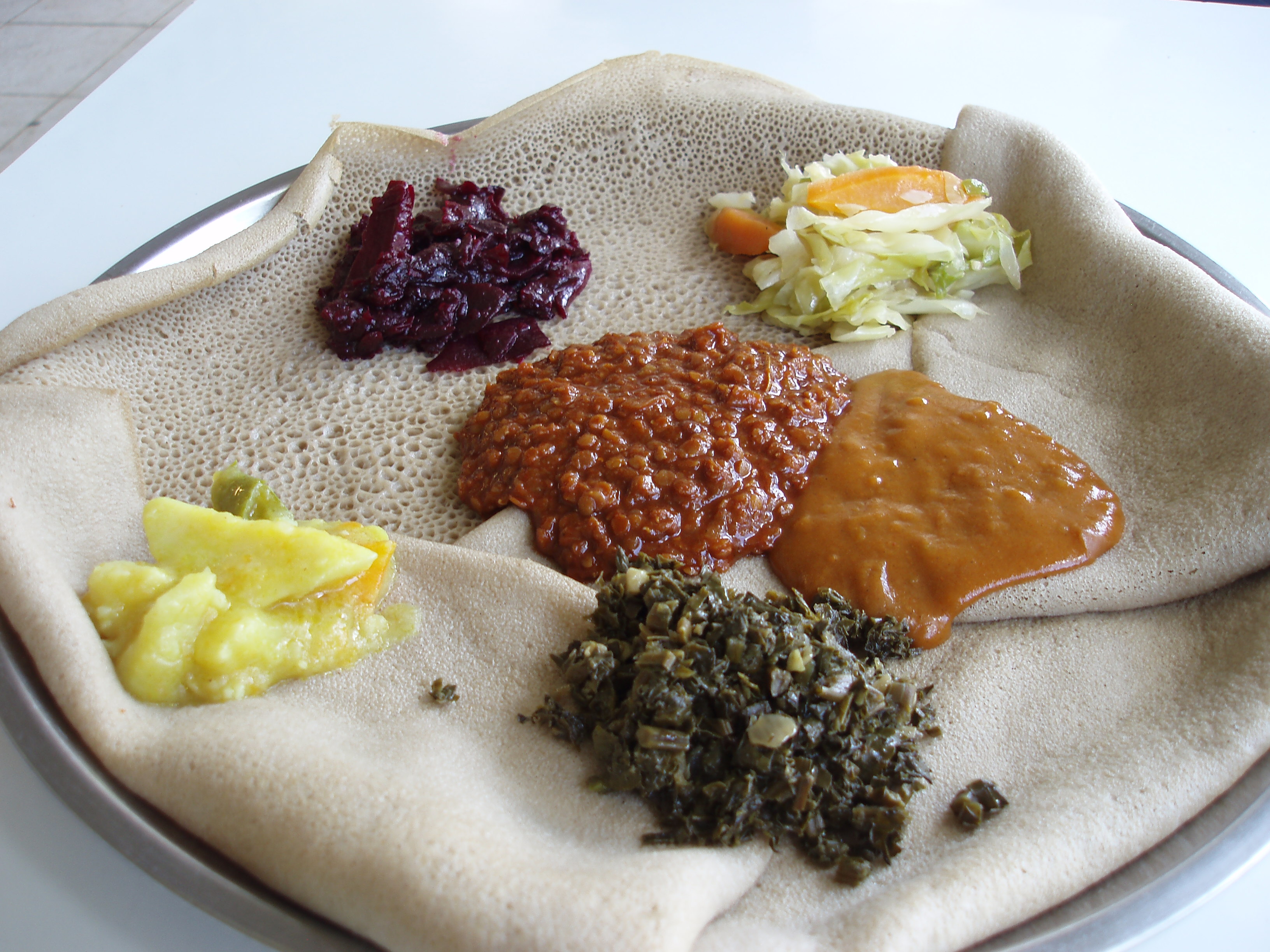
There is a 55-day Lenten fasting period before Fasika during which Orthodox Ethiopians adhere to a strictly vegan diet: no meat, eggs, or dairy products are allowed.  On top of that, they only get to eat one meal a day and it has to be after 3 pm.  Starting on Good Friday until Easter Sunday they don’t eat or drink anything at all.

Fasting never tasted so good.

A vegan meal

Needless to say, folks are jonesing for some animal protein by the time Easter finally arrives. Driving to and from Debre Zeyit, we saw sheep, goats, and cattle for sale on almost every streetcorner and vacant lot. People were buying live animals and leading them home on ropes, tying them onto the roofs of their trucks or even loading them into the trunks of little cars in preparation for their big Fasika feast.

The day before Easter, cattle for sale in the roundabout next to our apartment.

The day before Easter, cattle for sale in the roundabout next to our apartment. Don’t worry, no one’s going to eat the donkey.

Yesterday one of the grade 1 girls brought show-and-tell photos of her family slaughtering their Easter sheep.  Lots of snapshots of small children with their hands full of intestines and lungs. Their teacher said she wasn’t sure if she should post them on the show-and-tell wall: “Some of the American parents are kind of funny about that.” The longer I stay away, the weirder Americans seem. But I don’t want to freak anybody out, so here’s a picture of our not-at-all-gory Greek Easter feast: souvlaki, dolmas, tiropita, tzatziki, hummus, melitzanasalata, bread, Greek salad, olives, feta, and baklava.

IMG_4200

Posted in Ethiopia, Food | Tagged , | Leave a comment

Debre Zeyit

Today it was back to work after the three-day Orthodox Easter weekend. For Ethiopian Christians, this is a holiday spent at home with family, but for faranji like us it presented a good chance for a short crowd-free getaway.

Our family decided to leave early Friday and spend the night in a nearby area popular with weekenders.  The town of Debre Zeyit was originally named Bishoftu, but was renamed Debre Zeyit (Mount of Olives in Amharic) under Haile Selassie’s rule when there was a movement toward more biblical names. It has been officially Bishoftu again since the 1990s, but it seems Debre Zeyit has stuck as that is what everyone calls it.

The town is in a hilly area – the Bishoftu volcanic field – and features not just one, but six (I think) natural crater lakes: Bishoftu, Hora, Bishoftu Guda, Babogaya, Koriftu, and Cheleklaka.  We stayed at the Babogaya Resort, a clean, modern hotel with a good restaurant right on the water.  Next time I will bring my binoculars because there were so many interesting birds.

This slideshow requires JavaScript.

Posted in Around Ethiopia | 1 Comment

Pirates!

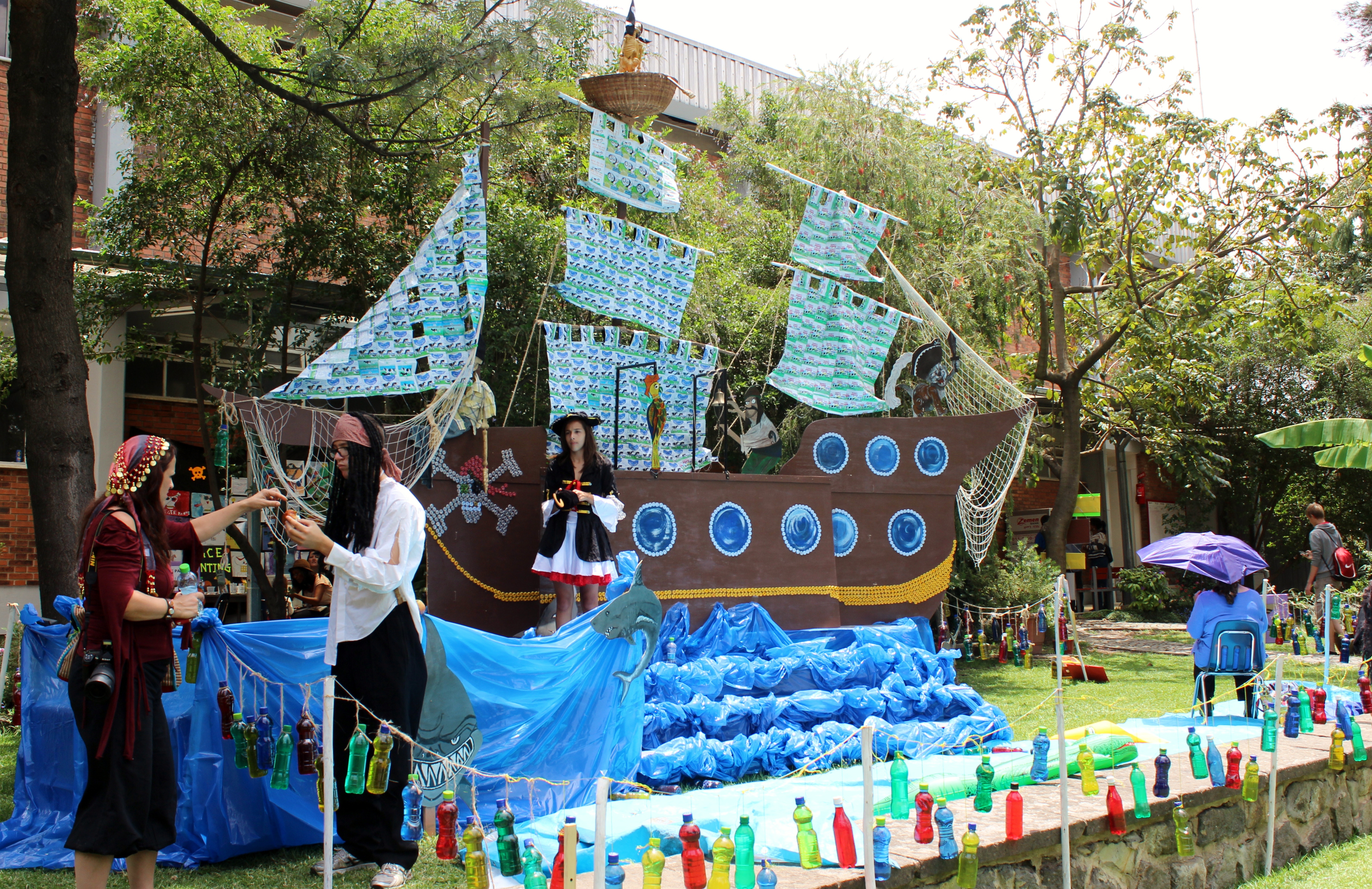
Check out the recycled-materials ship from the school’s pirate-themed spring carnival last weekend. The sails are plastic milk bags. The trim is bottle caps.  The ocean is blue packing plastic. And of course the buoys are plastic water bottles. Never underestimate the ingenuity of a PTA mom.

IMG_4088

After the carnival we went to our friends’ house for a round of my favorite game, Settlers of Catan.  Check out their vintage set:

IMG_4144

And guess what: Settlers has a new Explorers & Pirates expansion set that just went on sale!  I have to figure out how to get it here.  A test of my ingenuity, I guess.

Posted in International Community School | Tagged , , | Leave a comment