Worst idea ever

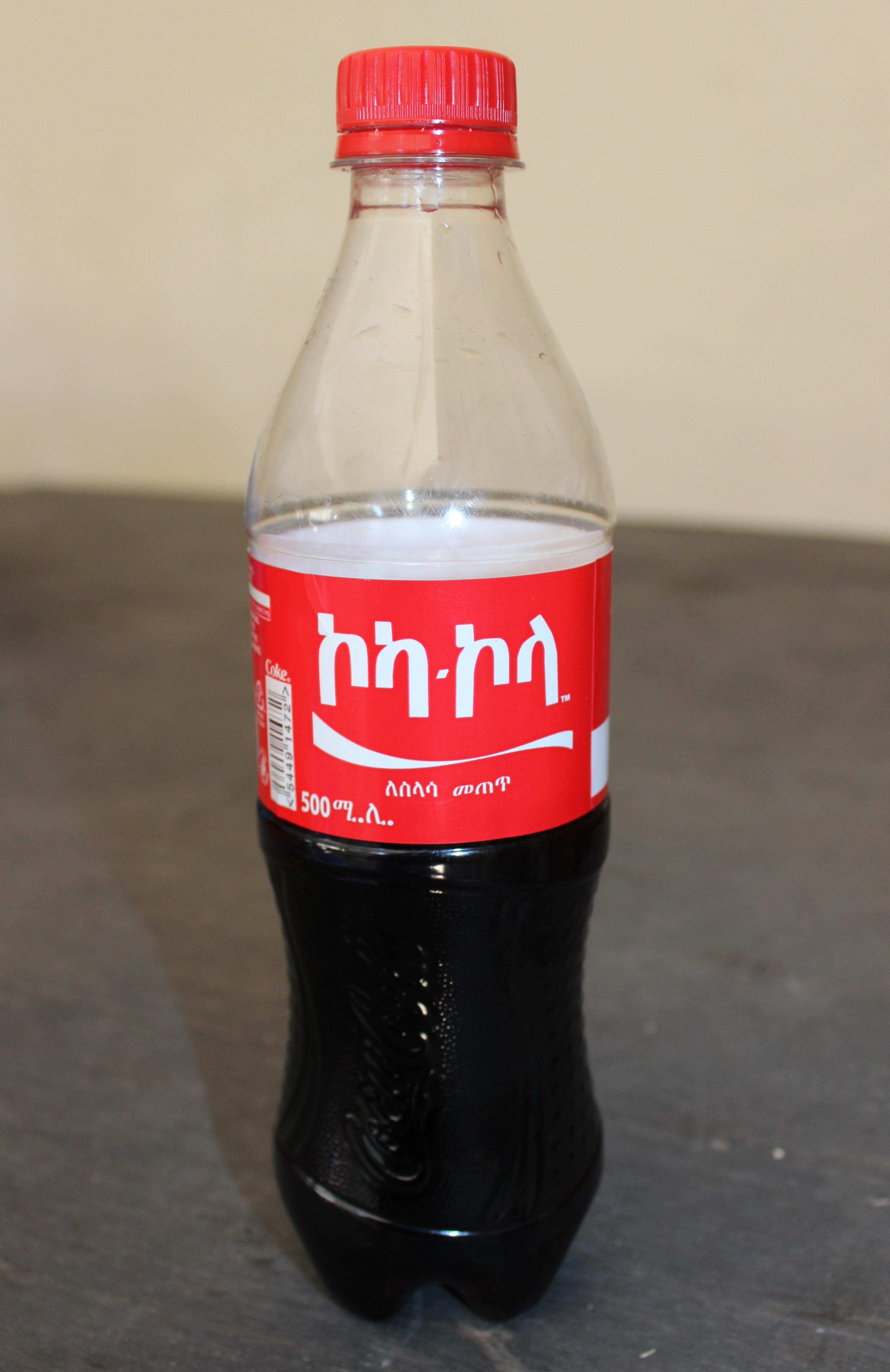
I don’t know if I ever showed you the one word I can read in Amharic:
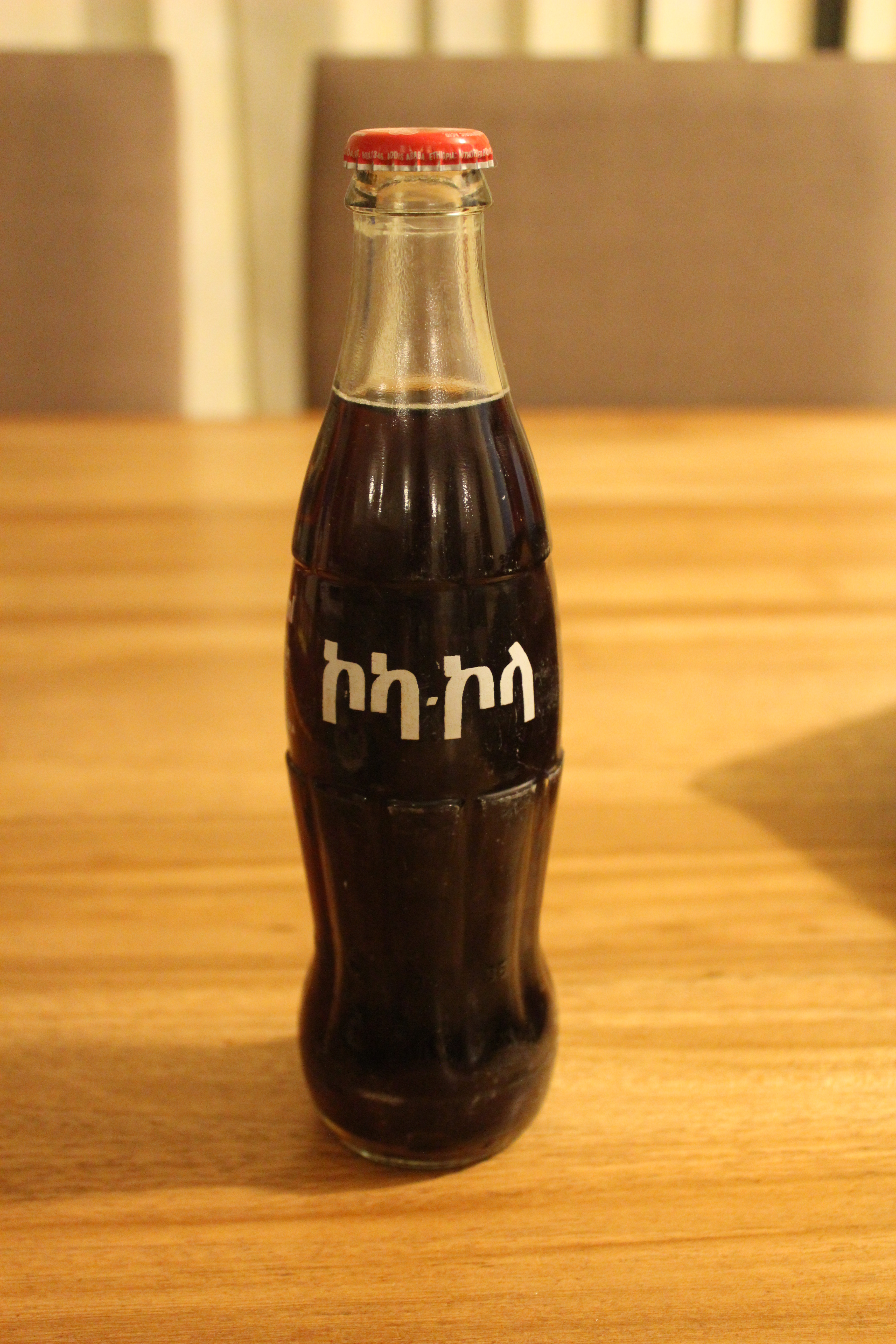
IMG_4403Coke is one of the few American brand names you see in Ethiopia. But it makes up for all the others with its ubiquity.

I’m no big fan of soft drinks, and even less of irresponsible multinational corporations. Do you remember the Nestle boycott in the 70s and 80s? That company heartlessly and aggressively promoted its powdered baby formula in third world countries with bad water and high poverty.

Since coming here I’ve heard similarly negative things about Coca-Cola. Alekka came home from her environmental science class last year with the disturbing information that Coke is promoted as a safer substitute for water in many rural Ethiopian communities where the water supply is contaminated. People in those communities are starting to suffer from diabetes and other illnesses as a result. They can’t get water, but they have plenty of Coke. Something is wrong with this scenario.

And then there is the problem of all the water that Coca-Cola factories use. In many places in the world, there is simply not enough water to go around. India is one of those places, and there Coke is on a big campaign to restore its good name by creating schemes to make up for what it consumes. It’s probably too much to hope we’ll be seeing that in Ethiopia, where access to clean water is no less of an issue.

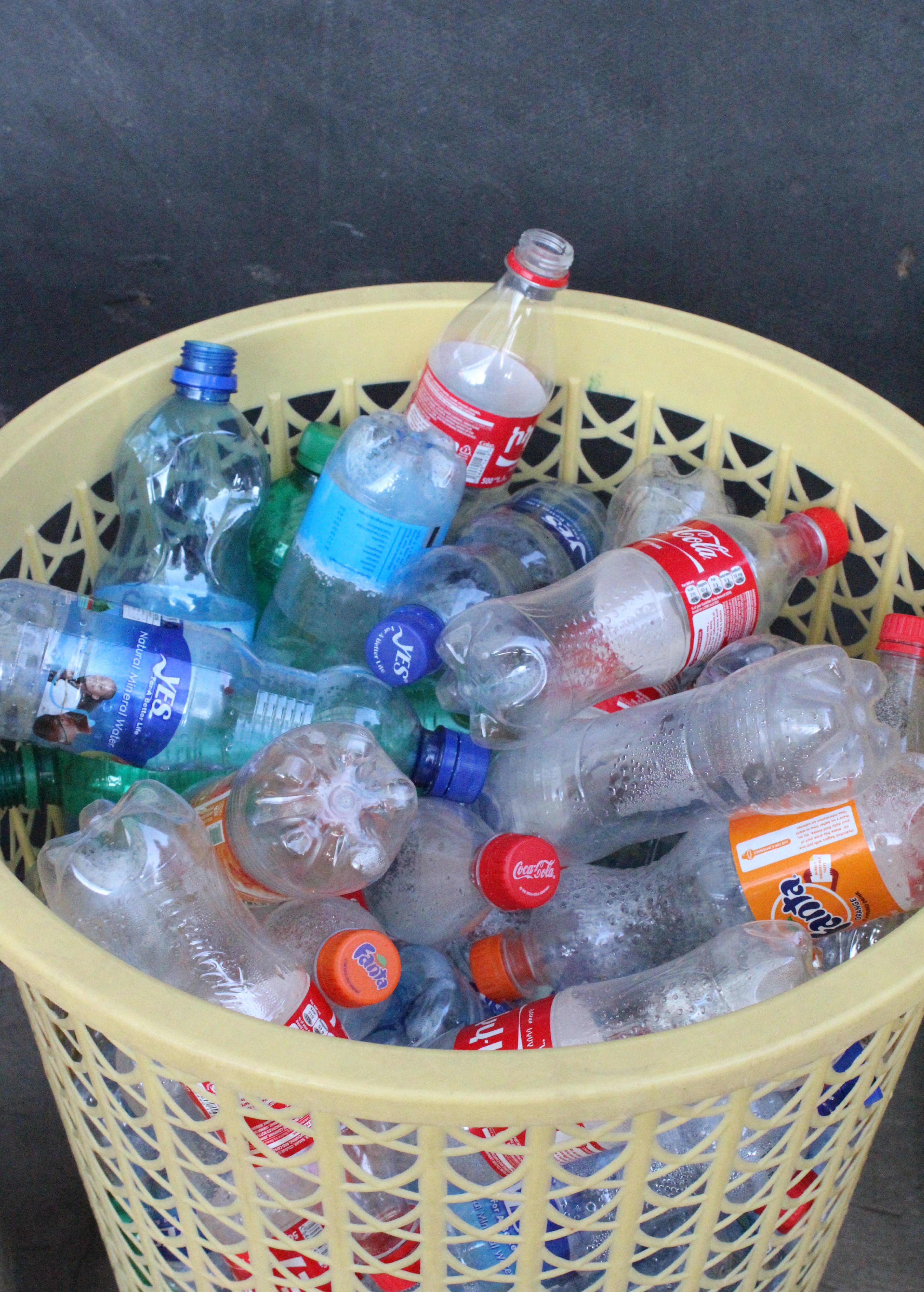
But at least Coke here comes in glass bottles, which are washed and reused, right? So even if it’s using tons of water, and advertising to people who ought to have access to safe water instead, Coke isn’t promoting destruction of rainforests through aluminum mining, or adding to the non-biodegradable waste disposal problem with zillions of plastic bottles, is it?

It wasn’t until a few months ago. A news story on the radio reported that Coke in Ethiopia was going to start bottling in plastic containers “to better meet consumer needs.” Needs? Who needs Coke?  But almost immediately the city was plastered with signs, banners, and pennants promoting Coke in the new plastic bottle.

IMG_2827Just what we needed. More trash.

IMG_2888

If I ever find I need a cola, I guess I’ll have to buy…

IMG_2057


Posted in Ethiopia | Tagged , , , , | 1 Comment

The tagine queen and her new machine

I came home from our October trip to Morocco with a suitcase full of nuts, preserved lemons, dried fruit, and five kinds of olives. Since then I’ve been working on my Moroccan cooking skills. I make a mean tagine, if I do say so myself.

IMG_2928One of the things I like most about tagine is that you cook it on the stovetop as opposed to the oven. That means you can make it without electricity, like I did a couple of nights ago when we had company over for dinner and the power went out. We’re cooking with gas, oh yeah (albeit in the dark).

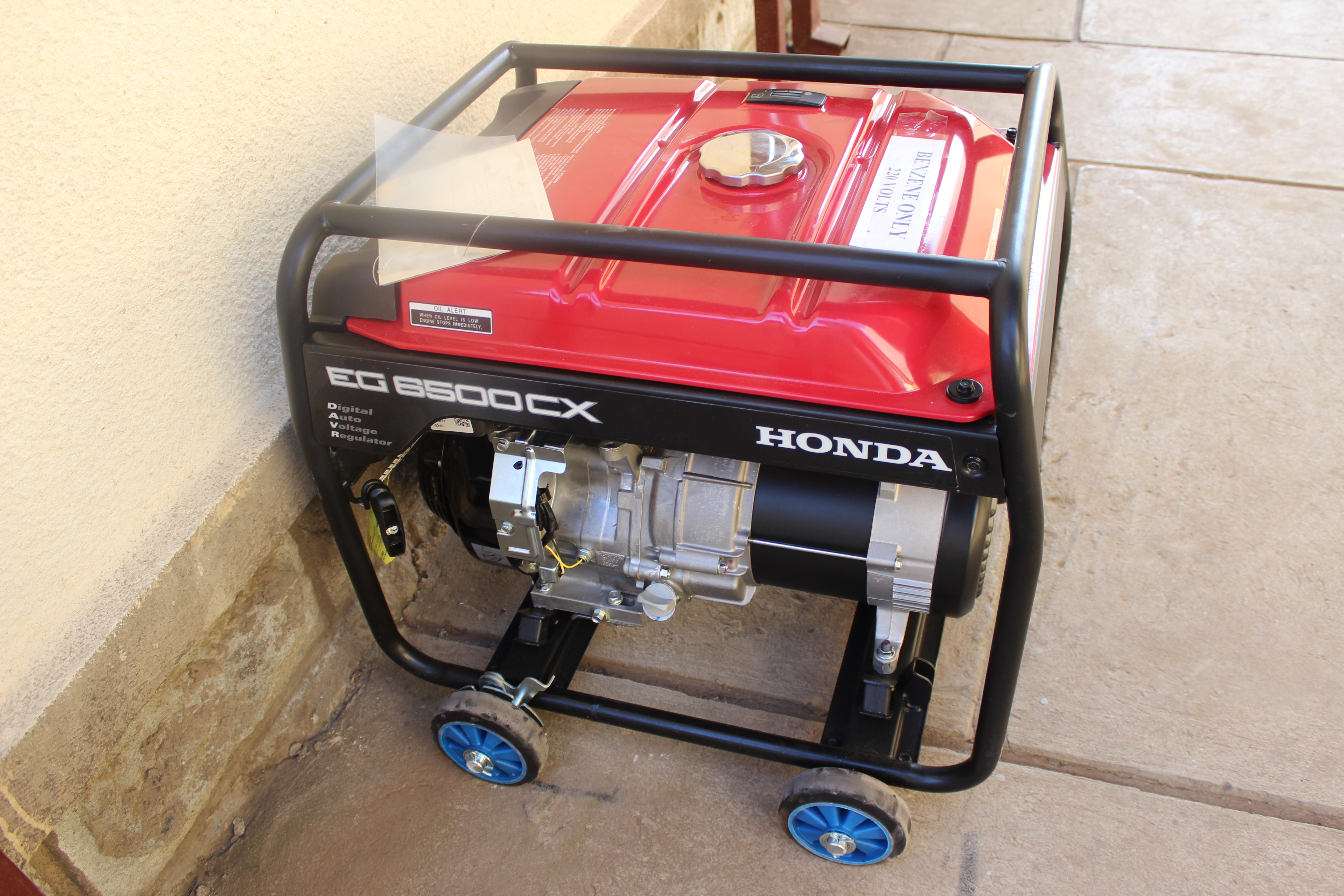
Electricity may be less of an issue for us very soon. Yesterday when I got home from work I found this shiny new item in the driveway:

IMG_5873A powerful generator! Thank you, ICS! When it’s hooked up, this baby will be able to run the whole house – lights and oven included.

Posted in Around Africa, Food | Tagged , | Leave a comment

Timket

Once again I find myself in a blogging backlog situation. And once again it’s because I’ve been so busy being a tourist myself that I haven’t had time to write. Which is actually a happy thing, but now it’s catch-up time.  I’ll start with this last weekend and try to fill in the month-long blank over the next couple of weeks.

This weekend was Timket, a three-day religious festival that is one of the most important events on the Ethiopian Orthodox calendar. If you are a Christian you might know the occasion as Epiphany, but what exactly it commemorates and the date of the holiday depend on whether you belong to a Western or an Eastern church, and whether you use the Gregorian or the Julian calendar. For Western Christians, Epiphany is the day the Magi visited the baby Jesus. Most Christians in the West follow the Gregorian calendar, and the holiday is celebrated on January 6 or 7.  For Eastern Orthodox Christians, Epiphany celebrates the baptism of Jesus (rather than the visit of the Magi). Eastern churches using the Gregorian calendar (for example, most Greeks) also celebrate Epiphany on January 6 or 7. For those using the Julian calendar (like Greek Old Calendarists and Ethiopian Orthodox), Epiphany falls on January 19. We watched the city get ready with decorations for several days ahead of the holiday.

This slideshow requires JavaScript.

Because Eastern Orthodox Epiphany is about baptism, rituals usually involve water in some way. On Greek islands, the priest throws a cross into the sea and young men dive in to try to get it.  In Ethiopia, Timkat is the time when the tabots go out for a walk to the water. The tabot is a replica of Moses’s tablets. Every Ethiopian Orthodox church has one. It’s normally kept in the church behind a curtain in the Holy of Holies where only the priest can go. But on the afternoon before Timket, the priest carries the tabot out of the church on his head, and an elaborate procession accompanies the tabot to a water source. We followed a procession from the big church near ICS to a roundabout where it met up and joined with a procession coming from a different direction.

This slideshow requires JavaScript.

Early the next morning the priest blesses the water and sprinkles it on the participants. A very kind and well-connected Ethiopian friend of ours, Selam, arranged front-row seats for me, Andreas, and our friend Sukey at the blessing of the waters at Jal Medda park on Sunday morning, where priests from eleven of Addis Ababa’s churches had carried their tabots on Saturday. This particular blessing of the waters was presided over by not just any priest, but by the patriarch of the Ethiopian Orthodox Church himself, Abune Mathias. Something like 100,000 people were in attendance.

This slideshow requires JavaScript.

Later in the day the procession returns the tabot to its home church. We went back to our own neighborhood for this, so we watch the procession negotiate the walking bridge over the Ring Road back to our local church, the same way we go home from school.

This slideshow requires JavaScript.

Posted in Addis Ababa, Ethiopia | Tagged , , | 3 Comments

Axum

IMG_5355

This time we included Axum on our visit to the north. None of us had ever been there before so it was all new territory.

Axum was the seat of the Axumite Empire (100-650 CE), a wealthy and powerful kingdom that engaged in international trade with places as far away as Rome and India, and which established colonies in southern Arabia.

IMG_5393

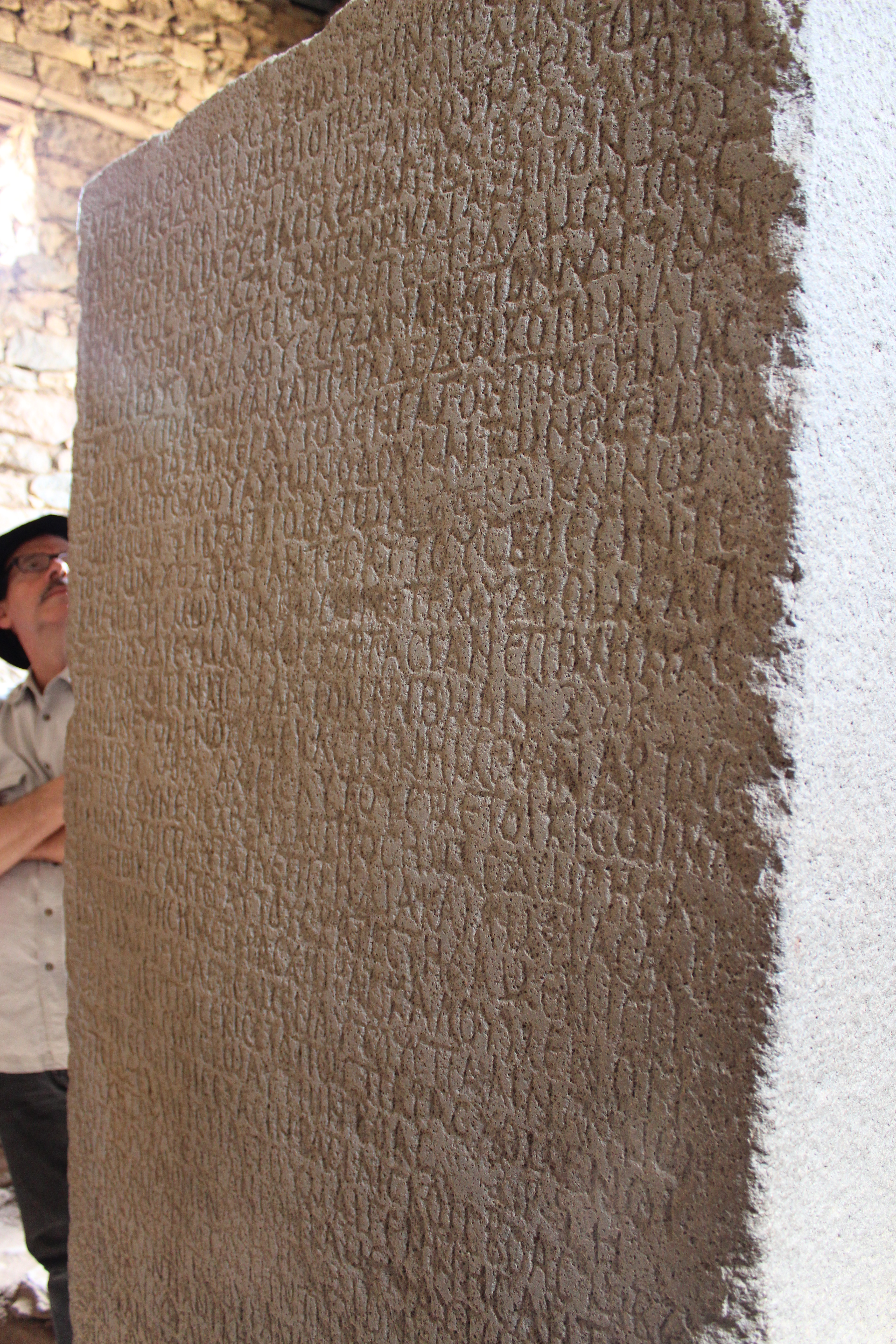
In the 1980s some farmers found this ancient stone. It records the victories of King Ezana in three languages: Sabean (South Arabian), Greek, and Ge’ez (ancient Amharic).

A Syrian from Tyre named Frumentius converted Axum’s King Ezana to Christianity in about 340 CE; this was the beginning of Orthodoxy in Ethiopia.

Axum  remains a religious pilgrimage site because, according to Ethiopian Orthodox church tradition, the actual Ark of the Covenant is there. For non-religious readers who also somehow missed the first Indiana Jones movie, the Ark is a wooden box containing the tablets inscribed with the Ten Commandments. Menelik I, the son of King Solomon of Jerusalem and the Ethiopian Queen of Sheba (yep, there’s a story there), is said to have brought the Ark back to Ethiopia with him after a visit with his father.

This slideshow requires JavaScript.

Tourists don’t get to see the Ark. In fact, only one person in the world gets to see it: the monk who guards it, who lives permanently in the chapel where the Ark is kept, next to the church.

But there is still a lot to look at in Axum. Ancient sites include tombs, palaces, and fields of monolithic stelae, and there’s a good archaeological museum as well as a church museum filled with the crowns, robes, and goblets of the generations of Ethiopian emperors crowned in Axum’s church.

This slideshow requires JavaScript.

Posted in Around Ethiopia, Ethiopia | Tagged , , , | 1 Comment

Lalibela, again

We took a weekend trip with Sukey and Nik up to Lalibela and Axum. Yes, we were just in Lalibela a couple of months ago, but it’s one of Ethiopia’s most interesting historic sites and we felt our guests should see it, too. It was fun for us to go again: we saw some new things, and the guide we hired to take us through the churches put a slightly different spin on the history from the last one.

Alekka stayed home this trip. She’d been to Lalibela twice already and she had lots of homework to do. But we made a new friend on the hotel shuttle bus. Lori was interesting company and added much to our enjoyment of the weekend.

This slideshow requires JavaScript.


Posted in Around Ethiopia, Ethiopia | Tagged , | 1 Comment

Gaudi

Barcelona’s buildings by Antoni Gaudi (1852–1926) are so incredible that I had to give them their own post. Gaudi was an important figure in Catalonia’s Moderisme architectural movement. His works are colorful and curvy, based on shapes and figures from nature as well as on symbols drawn from Catalan history, mythology, and religion. Seven of the structures are on UNESCO’s World Heritage list.

The first buildings we visited, Casa Batlló and Casa Milà, were originally built as private residences. Entrance fees are rather high at these popular tourist sites; as a party of seven we had to be choosy and we chose not to take the tour. I think if I go back to Barcelona again I’ll want to see the interiors. But even the outsides are spectacular.

This slideshow requires JavaScript.

In 1900, Gaudi’s industrialist friend Eusebi Güell hired him to design a residential park. The development was a financial failure. Aside from the community areas and a guard’s house only two houses were completed. But the grounds eventually became the lovely Parc Güell.

This slideshow requires JavaScript.

But the piece de resistance on our Gaudi tour was La Sagrada Familia. We could see this amazing church from the window of our apartment but didn’t get inside until our last day in the city, when we were finally able to obtain tickets (it’s VERY popular).

This slideshow requires JavaScript.

Construction of La Sagrada Familia started in 1882. Gaudi was totally devoted to the project; he even slept on site. In 1926, Gaudi was hit by a streetcar. Because he dressed like a beggar and carried no identification, he didn’t receive much in the way of medical treatment and died three days later.

The cathedral was only partially built and even the planning was unfinished. Other architects took on the project, but lack of funding made progress slow. Many of Gaudi’s models and sculptures were destroyed in the Spanish civil war but there were drawings that survived and construction continued. Now there is a big push to finally complete the cathedral in 2026. Watch this video to see what it’s going to look like.


Posted in Elsewhere | Tagged , , , , , | 1 Comment

Homage to Catalonia

After a week in Berlin, we transferred our moveable feast to Barcelona. The big Christmas holiday in Spain is Three Kings Day on January 6. With Ethiopian Christmas on January 7, we are getting the most out of our holiday season this year.

Barcelona is a beautiful city full of the most eye-popping architecture (see also my post on Gaudi)

This slideshow requires JavaScript.

and fabulous art (think Miro, Picasso, and Dali)

and interesting history

and – you know what I like best – delectable food, especially of the piscine and porcine types

This slideshow requires JavaScript.

It is a curious and eccentric place. It’s one I’ll need to come back to again someday.

This slideshow requires JavaScript.

Posted in Elsewhere, Family, Food | Tagged , | Leave a comment

Then we take Berlin

We began the holiday season this year with a visit from Alice, our older daughter who lives in our house in Oregon. Alice was more than ready to come see us after the ancient oil-burning basement furnace gave up the ghost just in time for the polar vortex of 2013. Alice farmed out the dog, arranged a schedule of daily human visitors for the cats, drained the pipes, and took off for sunny Africa.

Alice arrived while I was still in Hong Kong, but her dad and sister kept her well entertained while I was away. We had a few days in Addis all together before heading out to meet up with the rest of the family in Berlin.

Why Berlin, you ask? Especially in the middle of winter?

Well, here are a few reasons:

1. Christmas markets. If I was missing holiday spirit in Addis Ababa, there is plenty here for everyone.

This slideshow requires JavaScript.

2.  Museums and monuments

This slideshow requires JavaScript.

3. Hearty food to keep you warm

This slideshow requires JavaScript.

4. Family and friends

This slideshow requires JavaScript.

5. They don’t have this back home in Addis

This slideshow requires JavaScript.

But best of all…  we get to wear our silly hats!

IMG_4140

Posted in Elsewhere, Family, Food | Tagged , , | Leave a comment

Smells like Christmas spirit

I’ve been finding it a little hard to get into a holiday mood.

If you live in a country where Christmas starts as soon as the back-to-school sales are over, it might be hard to imagine anyone feeling nostalgia for department stores.  But at least at the mall you can count on some tinsel and fa-la-la.  These things are practically nonexistent in Addis.  Even in Damascus there were Christmas decorations at the school and in shops around town.  I could use some silver bells, chestnuts roasting, and pine trees.

The atmosphere around here is so lacking in holiday spirit that I wasn’t even going to bother decorating the house. But then our friends Leslie and Brian had us over for board games, and they had a tree, and candles, and Christmas music, and it was really nice.

So I went home and got Andreas to drag the lavender bush in off the porch. I put the Christmas iTunes folder on shuffle. The candles were taken care of (we only have power about 5 hours a day at the moment, so we keep plenty on hand.) We lit a fire in the fireplace. Just a real old-fashioned Christmas. Except that it smells more like Victoria’s Secret than a pine forest.

Here’s a three-year retrospective of our ex-pat Christmas trees.

Posted in Addis Ababa, Expat experience, Home life | Tagged , | 1 Comment

WWW

A week of service learning outside the traditional classroom is an important component of the academic program at many international schools. In September, ICS students in grades 10 and 12 had their Week Without Walls: grade 10 worked with a school in Awash this year (a new destination; last year they went to Lalibela and Gondar – you can read Alekka’s guest post about that trip here), while this year’s grade 12 went on a retreat at Negash Lodge near Woliso.

Grades 9 and 11 got their turns last month. The grade 9 trip always has an environmental theme. The students go to the Bale mountains where they conduct various ecological experiments. Unfortunately this year that trip got rained out: after two relentlessly soggy days, the students returned to the city and went on a couple of local day trips to finish out the week.

Grade 11 had better luck. Our own Alekka was of course on that expedition. Her class spent the week volunteering at the Common River project, a community development NGO based in the Rift Valley south of here.

This slideshow requires JavaScript.

At Common River, the students planned and led English language learning activities for elementary school students

This slideshow requires JavaScript.

they painted masks

aDSC_0306they made paper airplanes

DSC_0701

and they led a variety of outdoor physical activities for children and women.

This slideshow requires JavaScript.

Alekka’s favorite service activity at Common River was the iPad class for adult women. Small children make her a little nervous; as the baby in our family by a wide margin, Alekka hasn’t had much opportunity to be around little kids. On this trip she loved working with the ladies.

The ICS students brought iPads from school to use in the lesson. They sat down with one or two women at a time, showing them how to use the tablet to take photos and then how to arrange them creatively into a photo album. The women took pictures of their daily lives: their families, their friends, their kitchens, their cows. The iPads had to come back to Addis but the albums are being printed up and someone will take those to Common River to give to the women who participated.

This slideshow requires JavaScript.

When not involved in the the service learning, ICS students were busy cooking the meals they’d planned in advance, washing dishes, meeting with an academic advisor about their future plans, doing a few leadership and teambuilding activities, and of course goofing around (but only a little).

This slideshow requires JavaScript.

Not much in the way of plumbing, so no showers to take up their time!

Latrines and wash station

Latrines and wash station

(all photos in this post are by ICS teacher/photographers who chaperoned the trip, mostly our friend Niclas Thein)

Posted in Around Africa, Family, International Community School, Volunteering | Tagged , , , , | Leave a comment