Ain Sokhna

Two weeks before summer vacation seemed like an odd time for a weekend away, but I’m glad now that Andreas talked me into an overnight trip to the coast.

Our destination this time was Ain Sokhna. At just about two hours from Cairo, Ain Sokhna is the city’s nearest beach. The name means Hot Spring. There’s been a port here since pharaonic times but these days it’s all about the seaside resorts. We set off early Friday morning in a hired car with our travel buddies Jeff and Joy.

13453821_10209533549520828_55009725_n

Ain Sokhna is the red dot on the Gulf of Suez off the Red Sea.

We stayed at place called Cancun Resort that Jeff and Andreas had been to last year with some other teachers.

IMG_3682

The resort is situated between the beach and the highway.

This slideshow requires JavaScript.

When Jeff and Andreas were here last time, it was September and Ain Sokhna was still packed with Egyptian holidaymakers (the national schools don’t start until almost October); this time it was very different. Schools are still in session, plus it is Ramadan and people are mostly staying home with their extended families. The weather was gorgeous and there was hardly anyone else around.

This slideshow requires JavaScript.

The resort has a long garden path that leads from the hotel and pool down to the beach.

IMG_3690

The first morning when we walked down to the beach nobody was in the water. The guard pointed out the red flag: no swimming. A little research told us that a man got his leg chewed off by a shark here last week so there was now a 15-day ocean swimming ban in effect.

IMG_3755

That was enough to put me off, but the lure of the sea was too strong for the serious salt-water aficionados in the party.
IMG_3670

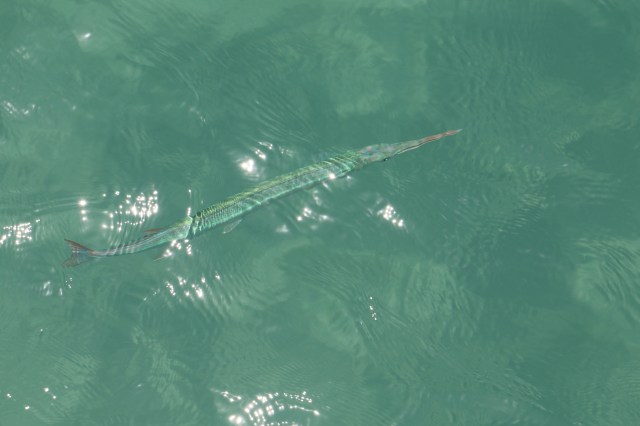
Shark! No, not a shark. Just a needlefish.

Happily they returned from their swim with all limbs intact.

IMG_3699

Not trusting the sharks to respect the orange buoys, I volunteered to watch the hats while the others went swimming.

Later in the afternoon this modest lady and I had the hotel’s shark-free pool all to ourselves.

13446309_10209533651963389_1576994359_o

Dinner was at 7:00 sharp – we made sure to get to there on time. People who have been fasting since 3:00 am can make quick work of a buffet.

This slideshow requires JavaScript.

In the evening, Cancun’s “animators” (the activities directors) put on a show out in the garden. The best act was the whirling dervish.
This slideshow requires JavaScript.

Posted in Around Egypt, Egypt | Tagged , , , , , , | 2 Comments

Tookish

“Then something Tookish woke up inside him, and he wished to go and see the great mountains, and hear the pine-trees and the waterfalls, and explore the caves, and wear a sword instead of a walking-stick.” ― J.R.R. Tolkien, The Hobbit.

I’ve been working on my family history for a very long time. I have a few lines that presently have me stumped but overall I have a pretty good picture of my direct ancestors, as far the records go.

The fun of genealogy for me is looking at the recorded details of individual lives in connection with larger historical events in order to gain an understanding of what life was like for my ancestors. I like to figure out why they made the choices they did. It is surprising how much about a person you can learn from something as seemingly dry as a census record. And when you start to look at family groups over time, you really start to feel like you understand them.

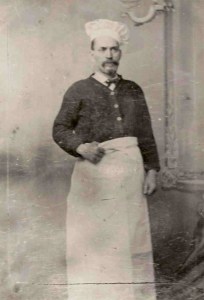
As is true of the people I know in real life, I don’t enjoy the company of all my ancestors equally. There is definitely a pattern as to why I am drawn to some branches more than others, and why those sections of my tree are more filled out with distant cousins and ancillary lines (relatives by marriage). It’s the Tookish ones, the adventurers, that appeal: the Drurys who moved west with every new American frontier from Pennsylvania to Washington’s Olympic peninsula; the Rowans who carefully studied and planned in Glasgow for their new lives as pioneer farmers in Ontario; and my enigmatic deMasserano who worked as a cook on a ship, starting in France and moving his family from Canada to the US to Australia and back again.

Jean Ramon deMasserano, 1837-1898. His cooking skills took him around the world.

Jean Ramon deMasserano, 1837-1898. His cooking skills took him around the world.

No offense to my present-day cousins (some of whom I am quite fond of), but I find the Woodyards of West Virginia, farmers and successful businessmen for over 300 years and counting, not terribly interesting. Similarly, researching the Rapin family, comprising generation upon generation of Quebecois farmers, is quite a slog (except that one time in 1704 when two kids were kidnapped and raised by First Nations people, now that was a lively episode).

There was a scientific study done in 1999 that linked a certain gene – DRD4 – with human migration. References to this study and some more recent research on the variation DRD4-7R seem to point to this gene as a factor in the propensity to travel. An interview this March with Indiana University geneticist Justin Garcia led to a spate of popular articles about a genetic basis for wanderlust. It seems about 20% of the population has this gene. I am inclined to think the Drurys and the DeMasseranos must have had it. My Baggins-ish parents lived in California their whole lives; maybe it’s recessive. Perhaps someday Ancestry.com can test for it.

Posted in Expat experience, Family | Tagged , , | Leave a comment

Constant vigilance

AIS West offers the International Baccalaureate Diploma Program as an option for grades 11 and 12. The IB was developed as a standardized international educational program and so the IB organization is quite strict about how it is implemented.

In May (or November for the southern hemisphere) at the end of grade 12, all IB students take a series of final examinations in their six subject areas over a three-week period. These tests are sent off to be evaluated by independent IB examiners. The students have to wait until July to find out how they did.

It’s a high-stakes test and the examination situation is tightly controlled.

IMG_1133

We used these hallway signs at ICS

In the Middle East, most schools operate on a Sunday-Thursday schedule, but because the IB exam schedule must be standardized internationally our kids must still take Friday tests (there are different versions of the test for the different time zone bands, however, so that students won’t share test information with friends in other parts of the world).  The test proctors are called “invigilators.” I volunteered to invigilate on one of the Friday exams. I was very vigilant and I swear no one cheated. Check out my magic eye.

Unknown


Posted in Teaching | Tagged , , , | Leave a comment

Chilling on the Red Sea

Whew. It looks like the heat wave is over for now. With predicted highs mostly in the low 90s I think we are in for better days over the next couple of weeks.

13173626_1753050001606599_2509294556624359834_n

Man attempting to keep cool in Cairo. The picture came from an Egyptian news article earlier in the week but darned if I can find it now to give photo credit.

Lucky for us, we missed the first two days of the weekend’s miserable weather. Our colleague Julia organizes weekend trips to the Red Sea with the dive company Deco Divers, and we had reserved places on her latest teacher outing: a two-night “live-aboard” dive/snorkel excursion out of Hurghada on a 30-meter yacht.

11266498_533850343413788_99440228774556239_o

Our home on the Red Sea. Photo: Deco Divers

It was a long drive to Hurghada after school on Thursday (last time, we flew) but it was fun to be on a bus with our friends.

13177669_10209303795457120_4276038708143373375_n

Plenty here to keep me happy for six hours.

The boat was very comfortable,

and the food prepared by the crew was great.

IMG_3554

Breakfast buffet.

There are plenty of opportunities to get diving certification – Julia is an instructor – but neither Andreas nor I has taken the plunge as yet. Maybe next year.

This slideshow requires JavaScript.

But for now we are both very happy snorkelers. We explored all around this little island, Um Gamar. The big brownish-green area surrounding the island is the reef. Sorry no fish pix. I don’t have an underwater camera (yet).

This slideshow requires JavaScript.

On the last morning we were greeted by friendly dolphins, who swam with us snorkelers and the divers below for a long time (photos by one of the divers).

This slideshow requires JavaScript.

One of the divers also took this with her GoPro:

https://www.facebook.com/plugins/video.php?href=https%3A%2F%2Fwww.facebook.com%2Fahm.salem%2Fvideos%2Fvb.502168843%2F10154169347318844%2F%3Ftype%3D3&show_text=0&width=560

Posted in Around Egypt, Egypt | Tagged , , , , | Leave a comment

Too darn hot

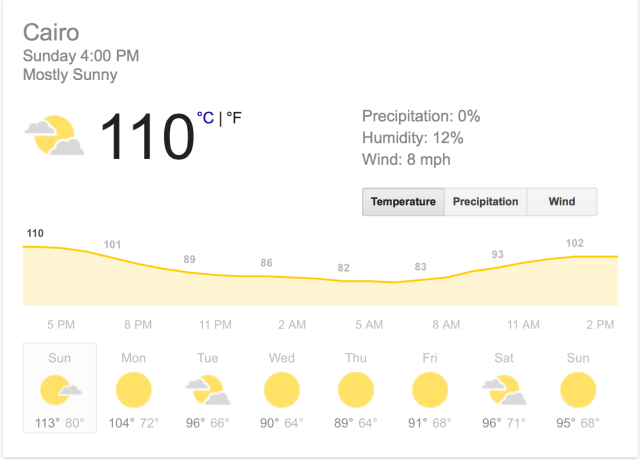
We’re having a heat wave.

Screen Shot 2016-05-15 at 16.42.20

Note the high for Sunday… 113F (that’s 45C)

No outdoor recess or lunch Sunday and Monday (here in Egypt the school week runs Sunday-Thursday), no outdoor sports after school. The library is full of sweaty kids. We’re praying the power doesn’t go off because without air conditioning we will all lose our cool. Meanwhile we attempt to hang onto our sense of humor.

A friend posted this on her Facebook page.

A friend posted this on her Facebook page.

Here’s a pleasant distraction from the weather.

Crazy, man.

Posted in Cairo, Egypt | Tagged , | 2 Comments

Introduction to Istanbul

Let’s start by laying down today’s soundtrack:

The few hours that we had here were only enough for a taste of this sparkling city.

We stashed the suitcase in an airport locker and boarded the metro. At Yusufpasha we transferred to a tram that took us directly to Sultanahmet plaza, where some of the city’s most famous attractions are located.

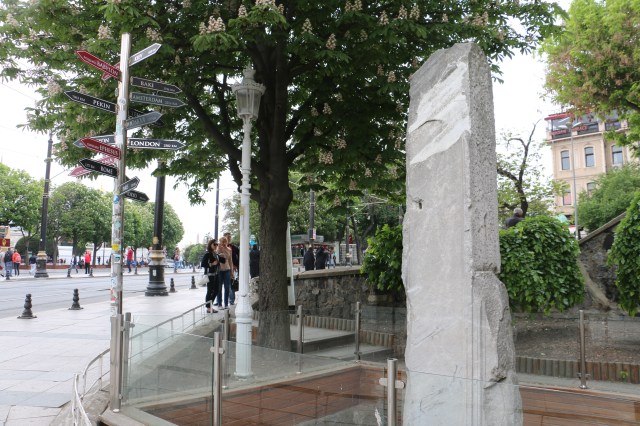
IMG_3376

The Milion Stone at Sultanahmet, part of a 4th C. building that was the Byzantine zero-mile marker from which distances to other places were calculated.

First on my list was the Hagia Sophia. Built in 537 (yes, that number is correct), it was the basilica for the  Greek Orthodox Patriarch of Constantinople until it was converted into an imperial mosque in 1453. It was secularized in 1931 and is now a museum. We couldn’t fully appreciate the vast interior space on this visit as there is currently a gigantic scaffolding structure in place for restoring the ceiling decoration, but that was pretty impressive in itself.

This slideshow requires JavaScript.

Next we walked out to a neighborhood near the Bosphorus

This slideshow requires JavaScript.

where we had a scrumptious döner kebab lunch.
Walking back toward Sultanahmet we passed many sweet shops,

This slideshow requires JavaScript.

which inspired us to stop for an ice cream.

Then we strolled through the fanciful Gülhane Park,

This slideshow requires JavaScript.

making it to the Blue Mosque (1616) just before closing time.

This slideshow requires JavaScript.

There was so much that we didn’t have time for on this trip – Topkapi Palace, the Grand Bazaar, and the Basilica Cistern, just for starters – but fortunately for us Istanbul is less than two hours away by air, so we will be able to return for another go.


Posted in Elsewhere, Food | Tagged , , , | Leave a comment

Cappadocia

Another four-day weekend, another travel adventure. Andreas and I just returned from Turkey after three days in Cappadocia and a few hours in Istanbul.

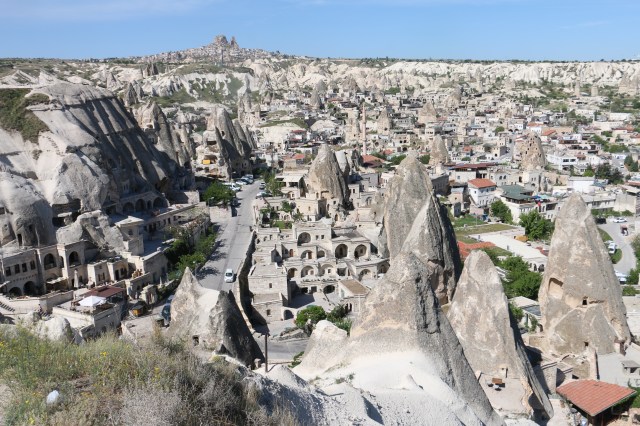
Cappadocia wasn’t even on my radar until a few weeks ago when I was thumbing through the new Lonely Planet Turkey guidebook. The pictures were amazing. The area encompasses layer upon layer of history – Hittites, Persians, Greeks, Armenians, Romans, Byzantines, Turks – superimposed onto a bizarre, other-worldly landscape of “fairy chimneys” and man-made cave cities.

IMG_2685

On a friend’s recommendation, we booked a room in the town of Goreme

This slideshow requires JavaScript.

in a charming cave hotel.

We visited a monastery carved into a hill

This slideshow requires JavaScript.

went on a walk through a pretty valley of ancient cave churches

This slideshow requires JavaScript.

toured an eight-level underground city where 20,000 Christians could (and did) hide from Arab invaders beginning in the 8th century

ate delicious food

This slideshow requires JavaScript.

including the famous clay pot stew

This slideshow requires JavaScript.

went to the outdoor museum to see another thousand-year-old monastery complex

This slideshow requires JavaScript.

and explored in the hills surrounding the town.

This slideshow requires JavaScript.

Sunday morning was Orthodox Easter. The 1000-year-old churches here were built by Orthodox Greeks, but their descendants were expelled from Cappadocia in 1923 and so there are no Easter services here anymore. We celebrated the holiday with a sunrise balloon ride instead.

This slideshow requires JavaScript.

On our last day in Turkey we had a 12-hour layover in Istanbul – enough time to take the Metro from the airport downtown to see a few things (to be posted tomorrow).

It was a great trip. I am sure we’ll be back.


SaveSave

Posted in Elsewhere, Food | Tagged , , , , , , , , , , | Leave a comment

Siwa Oasis

On Sunday we saw the Siwa sights.

We were up early with the Sahara sun.

We ate breakfast in camp, then drove back over the dunes to Siwa. There was a sandstorm beginning to blow in from Libya which made us all glad we weren’t doing the desert part of our tour today.

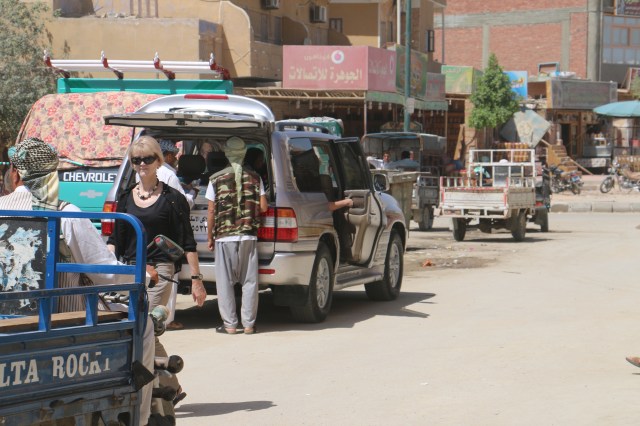
We returned to the hotel for a short rest, then struck out again to see what the city had to offer. You can feel the specialness of the oasis town, so different from Cairo. Some in our group likened it to the Wild West, with its dusty roads, horses and donkey carts, and bustling main street.

IMG_2286

It is an ancient place – inhabited since mesolithic times – and its isolation has produced a unique culture among the Berber who live there now. I won’t get into all the history here but the Wikipedia article makes a good introduction if you’re interested.

First stop was the Alexander Temple at Aghumi Village. The original pharaonic temple was dedicated to the god Amon. It gets its more modern name from the time that Alexander the Great went there to consult the oracle.

This slideshow requires JavaScript.

From there we walked to the ruins of the Amun Ra temple at Um Ubeyda.

Then on to the Cleopatra Spring.  This swimming pool has been in use since before Herodotus, who wrote about it in the 5th C BCE. It was also mentioned by Aristotle, Ovid, and St. Augustine. In those days it was called Spring of the Sun, or Well of Jupiter. The Cleopatra name is a more recent marketing ploy, but no matter, it’s the same place. We didn’t join the swimmers there but we did call in at a rooftop cafe for a hot mint tea followed by a very refreshing cold mint lemonade.

This slideshow requires JavaScript.


Next stop was the Mountain of the Dead, a cemetery for the pharaonic Siwans, then later for the Greeks and Romans. One tomb had lovely painted walls and ceilings similar to those in the Valley of the Kings but alas, no photos allowed inside.

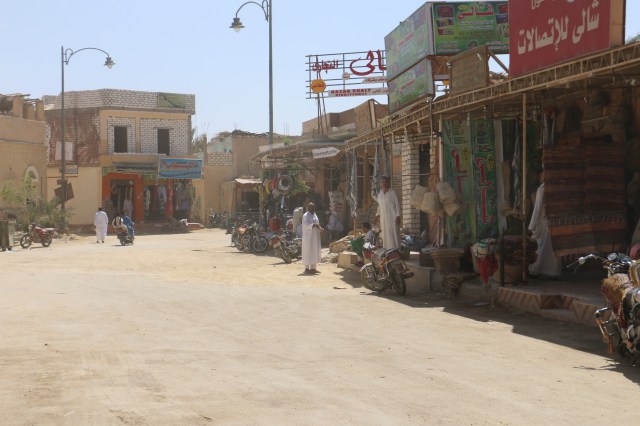
Back into town for lunch at Abdu, then a rest at the hotel. In the late afternoon we got back on our little bus and went to see the neighborhood of the ancient walled city. We climbed up the Fortress of Shali – from the top we had a good view of the original mud-brick town.

IMG_2630

I had to include this picture

I had to include this picture

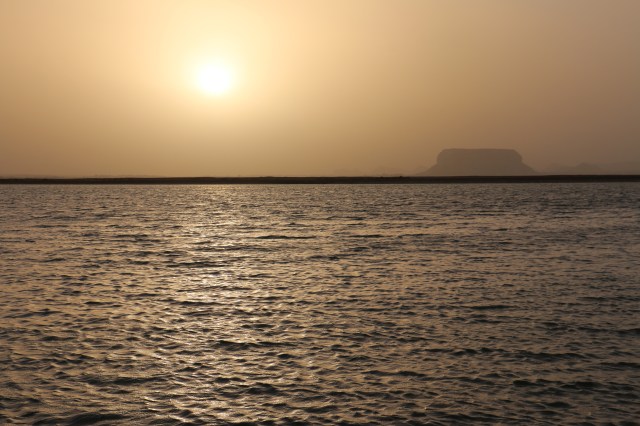
Finally we drove to the edge of the big lake, where we enjoyed our third mint tea of the day while watching the sun set. The sand storm clouded the sky and the breeze kept the birds away from the water, but it was pretty nonetheless.

IMG_2636

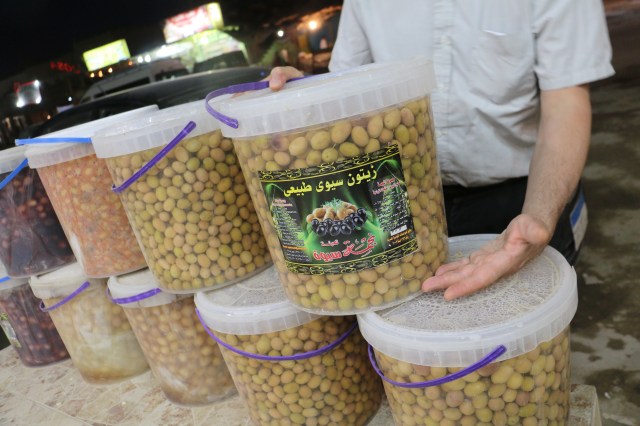
One last stop in town for shopping. Siwa is famous for its dates and olives. We stocked up on both, and some excellent olive oil too.

IMG_2640

Back to the hotel for dinner, then off to bed because we had to be up early for the long drive back to Cairo.

Unfortunately the drive was made even longer by the pokey police escort we were required to follow for most of the way. We stopped at a gas station mini market for ice cream and what do you know, there was a brigadier general (who must have been alerted to our route) welcoming us to Egypt. He handed out Egyptian flags and artificial roses in honor of the national holiday, then took a picture with us. I took one too.

IMG_1534

Posted in Around Egypt, Egypt | Tagged , , , | 2 Comments

Near Siwa

This year’s school calendar afforded a welcome respite for weary teachers and students at the end of April: two four-day weekends in a row.  For the first of these, Andreas and I booked an oasis tour with our friend and desert guide extraordinaire Ahmed of Safari Oasis Western Desert Tours. Ahmed had organized the excellent Black and White Deserts camping weekend last month so we were confident this would be another great trip. Six of our colleagues signed up to come with us.

Ahmed and our driver, Walid, picked us up after work on Thursday. Our ultimate destination was Siwa, a remote oasis 350 miles west of Cairo, almost at the Libyan border.

Egypt-region-map-cities-2

Siwa is in the northwest, just this side of the border from the Libya label.

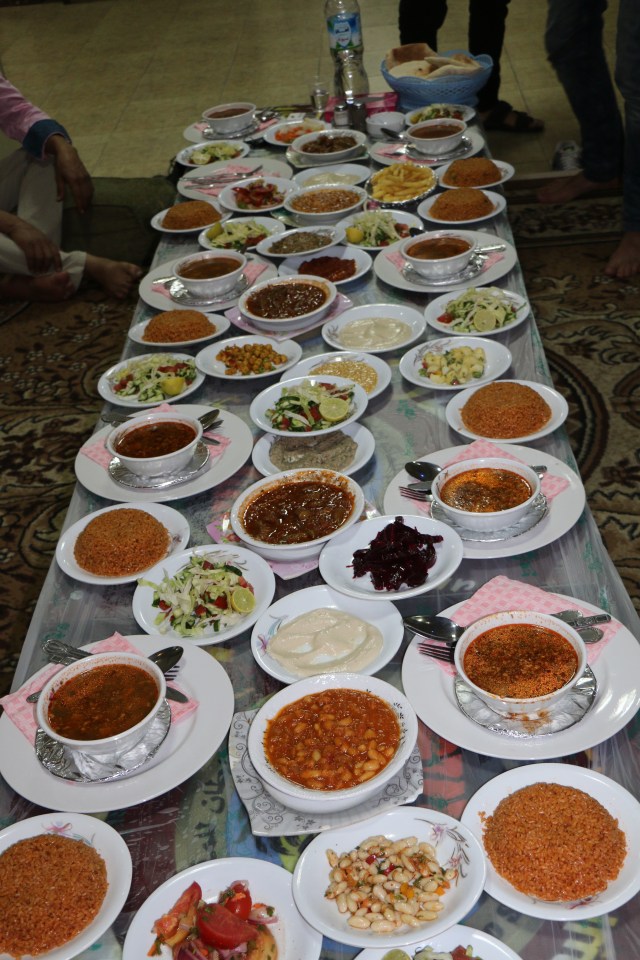
We broke up the long drive with a night at the seaside town of Marsa Matruh, where we feasted on a late dinner at the Bedouin restaurant Abou Sultan. If you leave there hungry, you are doing something wrong.

IMG_2130

And this was before they brought out our main courses.

On the way out of town the next morning we stopped at Cleopatra’s Bath, a gorgeous white sand beach with impossibly turquoise blue water. The waves are too dynamic for swimming but it is really something to behold. Many photos were taken.

This slideshow requires JavaScript.

Three more hours on a desert road.

We lunched in Siwa at a small cafe, then whiled away the afternoon walking through the date palm farm next door and relaxing in the hotel’s natural spring-fed swimming pool.

This slideshow requires JavaScript.

On Friday morning we switched out the van for two 4WD Landcruisers, picked up some supplies, and headed out to the desert.

IMG_2298

On the way we stopped at a salt lake for a very buoyant swim. A non-swimmer in our party was thrilled to find herself unsinkable.

This slideshow requires JavaScript.

Then onward to the Great Sand Sea of the Sahara. Our drivers stopped to let some air out of the tires, then took us on a thrilling roller-coaster of a ride up and over and around the mountains of sand (they obviously enjoyed making us scream).

This slideshow requires JavaScript.

We stopped briefly at a campsite where we borrowed a table and tied it on top of one of the cars.

IMG_2376

We spent the hottest part of the day at “Cold Water Lake,” where the morning’s swimmers were happy to dissolve their salt crust in the fresh water. Ahmed and Wahid cooked up a fine lunch and served it on the borrowed table.

This slideshow requires JavaScript.

We stopped next at “Bir Wahed” (it means spring number one) – a slightly sulfuric-smelling natural hot spring where Ahmed and company washed the lunch dishes while we goofed around unhelpfully.

This slideshow requires JavaScript.

Next on our itinerary was a place where we could see thousands of tiny sea fossils from the Cambrian period. We had a bit of a delay getting there when the other car, which was ahead of us, didn’t quite make it over the crest of steep dune. We all got out and watched while the drivers and Ahmed attached a cable to try to pull it back down; when that didn’t work, our driver drove over to the other side of the dune and pulled the car down that way. Some of us sandboarded our way to the bottom.

This slideshow requires JavaScript.

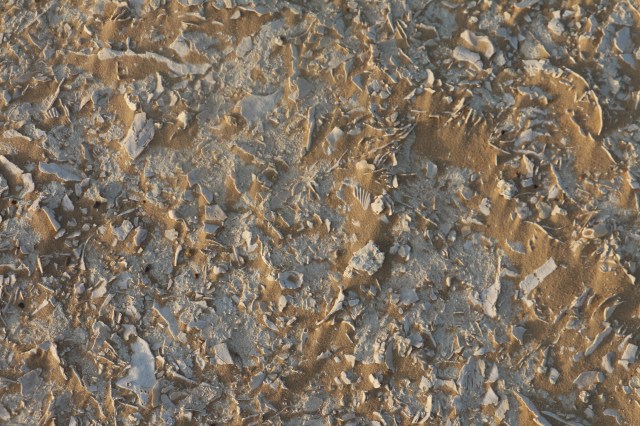
Quick stop at the fossil area. It’s hard to imagine this hot dry sea of sand underneath the actual ocean, but the evidence is clear.

IMG_2469

Then back to the cars and over the dunes to a place where we enjoyed more sandboarding and little cups of mint tea while watching the sun go down.

This slideshow requires JavaScript.

More dune driving – in the dark this time – back to the camp to return the table and spend the night.

IMG_2538

Camp was lit with lots of little fires to welcome us

Some of us lay out on the silent sand before dinner, naming the constellations and looking out for shooting stars. Then we watched the just-past-full moon rise. It cast so much light reflected on the sand that it was almost like daytime for the rest of the night.

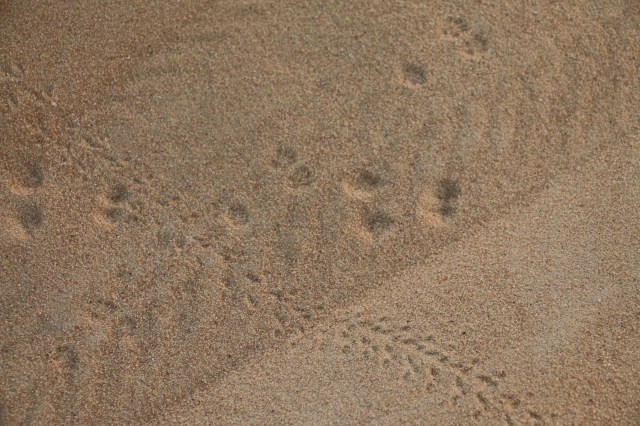
Andreas and I slept out under the night sky. We didn’t see any fennec foxes but in the morning we saw their little tracks trailing through the desert to our sleeping mats. They must have walked right up to us… as did the dung beetle who left the cross-hatched track intersecting with the footprints.

IMG_2552

Tomorrow: Siwa Oasis

Posted in Around Egypt, Egypt | Tagged , , , , , , | 1 Comment

Garbage City

Early each morning, we open the front door and place a plastic bag containing the previous day’s trash next to the welcome mat of our 5th floor apartment. And every morning it is gone by the time I leave for work at 7:10. Where does it go?

Cairo has an unusual but effective system for household waste management. Men called “zabbaleen” – literally, “garbage people” –  collect garbage door to door every morning within established, often inherited, territories. They bring the haul (over 10,000 tons of it every day) back to their homes in Monshiyat Naser (“Garbage City”) at the foothills of the Muqattam mountains on the edge of Cairo.

IMG_9969

Family members sort the garbage into 16 different types. A whopping 85% of it is reused or recycled: plastic is sorted and reformed into flower pots and coat hangers, paper is sold to a recycling plants, organics are fed to livestock. The zabbaleen make their living from tips given by residents in their territories combined with income from the sale of the trash they collect.

Although the zabbaleen perform an essential service for this city of 18 million people, historically they have been poorly regarded and ill treated. The people who became the zabbaleen were originally farmers from Upper Egypt who migrated to Cairo during a drought in the 1940s. Almost all of them are Coptic Christians who built their their livelihood around the business of collecting organic garbage to feed to the pigs that they raised. The zabbaleen have always been outsiders in the city. A few years ago the government sought to do away with the traditional system by bringing in foreign companies to take over and modernize trash collection. The plan was a massive failure, and the government asked the zabbaleen to return to the job they have done so well for the past 70 years.

Last weekend Andreas and I visited Garbage City for the second time (the first time was with Alekka, Nik, and Kosta in December; this time we went with a group of AISWest teachers). Both times we started our visit with a tour of the Association for the Protection of the Environment, a non-profit that teaches crafting skills to women, who earn income through the sale of their rugs, stationery, and jewelry.

This slideshow requires JavaScript.

We also visited the Children’s Club preschool, which has a special relationship with AIS West. The kids are adorable and all want their picture taken.

This slideshow requires JavaScript.

Notice the small cross tattoos on the wrists of these little guys. Christians in Egypt typically wear these tattoos as a mark of their faith.

IMG_1975

Then we take a walk through the streets. This part is most fascinating to me as we get to see the garbage recycling systems in action.  We try hard not to get in the way of people doing their jobs in the narrow streets, but there is no hope of us blending in.

This slideshow requires JavaScript.

The buildings are tall and the streets are narrow. The ground floors are occupied by sorting stations and workspaces, while the residents (some 50,000 or more) live above. The people we meet are friendly and welcoming – it helps that our guide is a resident – if a bit bemused by their status as tourist attraction. Homes, streets, and businesses are decorated with Christian symbols and interesting items that Cairenes have thrown away.

This slideshow requires JavaScript.

We finish our tour with a visit to the Coptic cave churches just outside the city gates.

This slideshow requires JavaScript.

On our outing two weeks ago we enjoyed a special treat: a view of the new mural created by the artist eL Seed. It is painted in parts onto the the walls of more than 50 buildings. The government does not get involved with the doings in this part of the city, and when eL Seed obtained the blessing of the local priest, the residents were happy to participate. We climbed up into the unfinished top floor of a building across from the amphitheater to get the correct angle.

IMG_2068

The title of the work is “Perception,” and the artist calls it a “calligrafitti”. The Arabic lettering quotes a Coptic bishop who said, “if one wants to see the light of the sun, he must wipe his eyes.”

For a description of the life of a Cairo trash collector, I recommend this article by Peter Hessler in the New Yorker. The subject of this piece is Muslim, though, which is atypical; an estimated 95% of zabbaleen are Copts.

Posted in Cairo, Egypt, Home life | Tagged , , | 1 Comment