Home away from home

Our school begins earlier than most. I was back at work August 5. Students started classes on the 12th.

The first weeks of the term are always busy with gatherings: teacher meetings, assemblies, parent nights. This year those meetings more often than not included a sing-along of ICS’s new school song.

Last spring ICS brought in a resident artist, Thomas Tafejian, to work with our music students. Tom is a young musician who launched a successful $10,000 Kickstarter campaign to help kids around the world express themselves through songwriting.

This being ICS’s 50th anniversary year, one of the projects Tom did with our kids was to write a school song.

Click here to hear our song (as performed by a couple of ICS music teachers).

Gotta admit, it’s catchy. And I’m sure happy to be able to replace the theme from Gilligan’s Island that’s been playing in my head for a month.

Posted in Addis Ababa, International Community School | Tagged , , | Leave a comment

Tortuguero

After extending our stay on beautiful Ometepe, we were inclined to do the practical thing and head straight back to San José for the final days of our vacation. But I still really wanted to see Tortuguero National Park. The problem was that Tortuguero is situated WAYYY far away from anything, up in the northeastern corner of Costa Rica in an area accessible only by small plane or river boat. Plus we’d read in the Nicaraguan papers that the region was experiencing heavy flooding and an epidemic of dengue fever. And we only had a couple of days left. Oh, what the hey, we said. When are we ever going to be back here again? Let’s go. It’s probably just Nicaraguan propaganda.

I don’t know about the dengue fever (we used a lot of mosquito repellent) but the flooding part was quite true, adding another dimension to the already complicated getting-there experience. But that’s half the fun, right?

Our route from Omotepe to Tortuguero: take the ferry from Omotepe to San Jorge; taxi to the border; walk across the border to Costa Rica; bus south toward San José (some backtracking necessary when we got kicked off the bus by border police because we’d missed one of the bureaucratic steps at the crossing – oops); bus back north to the border; get the stamp; bus all the way to San José terminal (hurray); cross-town taxi to a different bus station; bus to Cariari; bus through the United Fruit banana towns on flooded roads to La Pavona. There the road officially ends so you get a boat for the last leg of the journey on the Rio Suerte and Tortuguero Rivers to the village of Tortuguero.

This slideshow requires JavaScript.

The area is called Tortuguero because it is the turtle place. Leatherback and green sea turtles lay their eggs here at different times of the year. Right now is green turtle nesting season. Tourist access to the turtles is tightly controlled.
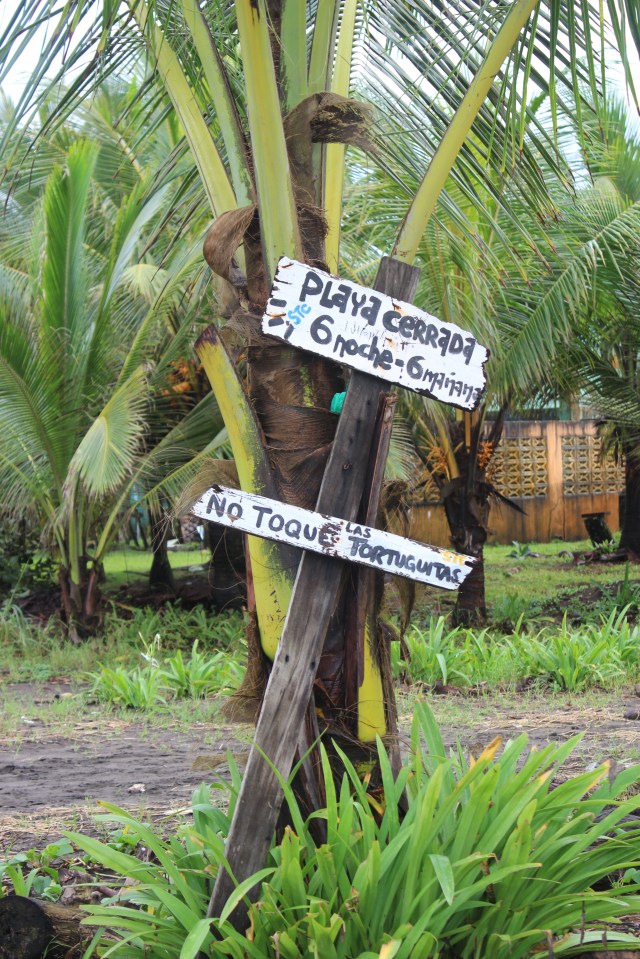
IMG_0209The beach is closed after dark when the sea turtles come up to lay their eggs. You can go out to watch them only in a small group led by a licensed local guide.

We had two nights before we needed to be back in San José. We hired a turtle guide to take us out the first night. Our time slot was 8-10 pm (you get to choose 8-10 or 10-12). We sat on the airstrip just inland from the beach waiting for a “spotter” to give our guide the OK to take us onto the beach. Sadly, the sea had been rough that day and no turtles came up onto the beach. Bummer. But we did get to enjoy one of the nicest dinners we’ve had all summer at the Wild Ginger restaurant.

IMG_0204

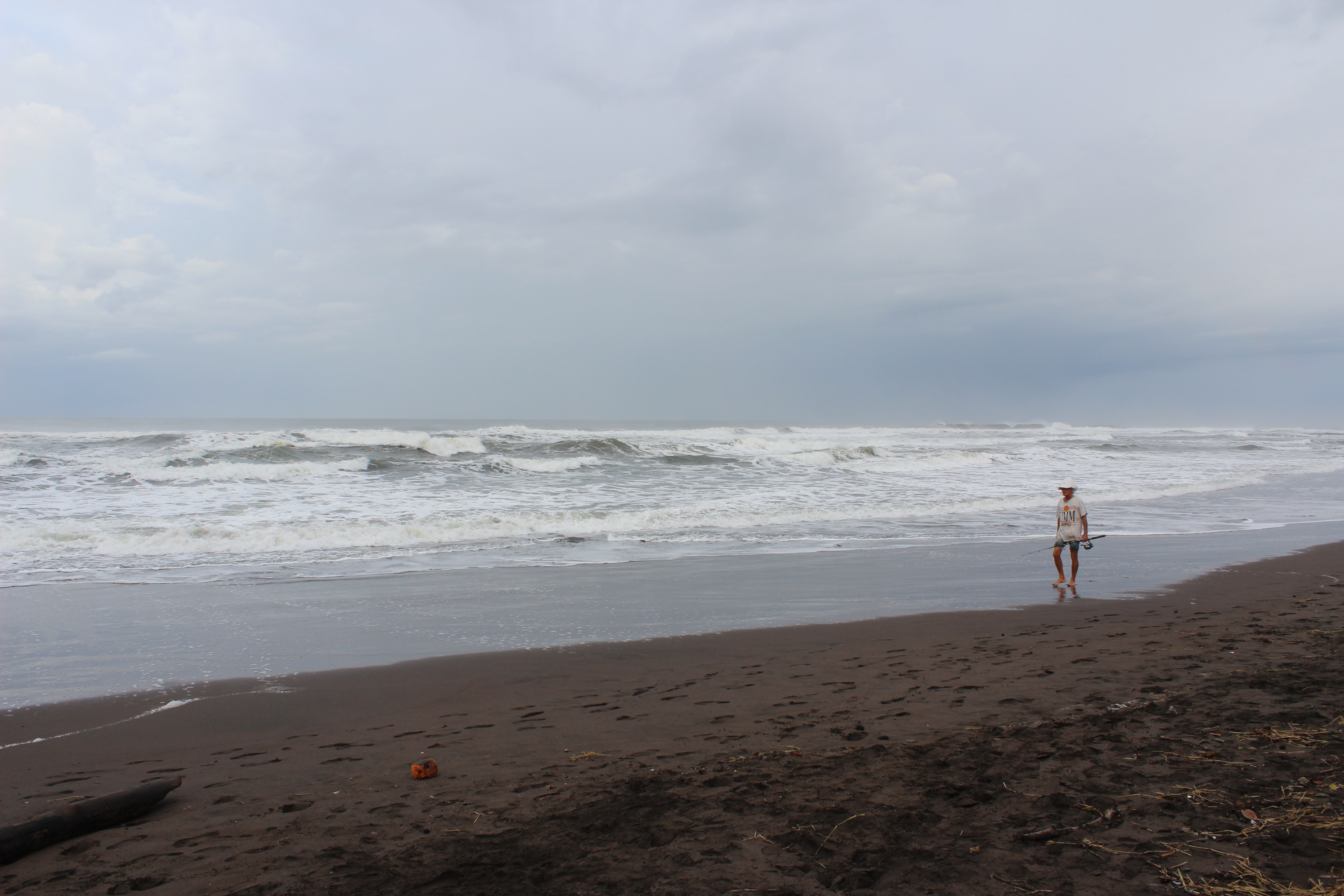
The beach in the daytime. The turtles don’t like these big waves.

The next morning Alekka stayed at the hostel to study while Andreas and I went out in a canoe to explore the canals. You can say that Alekka misses a lot of the fun, but actually she hates boats and is happier practicing her physics problems than paddling on the river. We’d booked a guide for 6 am when birds and animals are most active, but it was pouring then so we rescheduled for a little later in the morning. The sun came out and we were fortunate to see all kinds of rainforest creatures.

This slideshow requires JavaScript.

That last night we decided to try again to see the turtles. We hired another guide, this time for 10-midnight. We had another great dinner at Wild Ginger (as the practical proprietor said, better to celebrate before you go out, because if you don’t see turtles, at least you enjoyed your meal).

This time we were met with success. It was raining fairly hard on us at about 11:00 when the spotter gave the signal to our guide. We followed him down the dark beach trail for about 20 minutes to a place on the sand where a huge turtle, probably more than a yard long, had dug a deep pit. She was poised half-in, half-out of the hole. We watched her lay the last 30 or so of her hundred eggs, then stayed while she used her flippers to begin filling in the pit with sand. No photos at all are allowed, either with or without flash (I suppose to avoid the “oops” factor). So, sorry, no photos of the mama turtles.

Mission accomplished. Now for the journey back to San José, Los Angeles, and finally home to Addis Ababa.

IMG_0318

It’s going to be a long trip.

Posted in Elsewhere | Tagged , , | Leave a comment

Ometepe

Tonight is our fifth and last night on Ometepe, a volcanic island in Lake Nicaragua.

The name comes from the Nahuatl words ome (two) and tepetl (mountain). The island consists of two volcanoes, Concepción and Maderas, joined by an isthmus [I think this is the first time I have ever actually used that grade 6 geography vocab word] to form one island shaped kind of like this:

IMG_9970

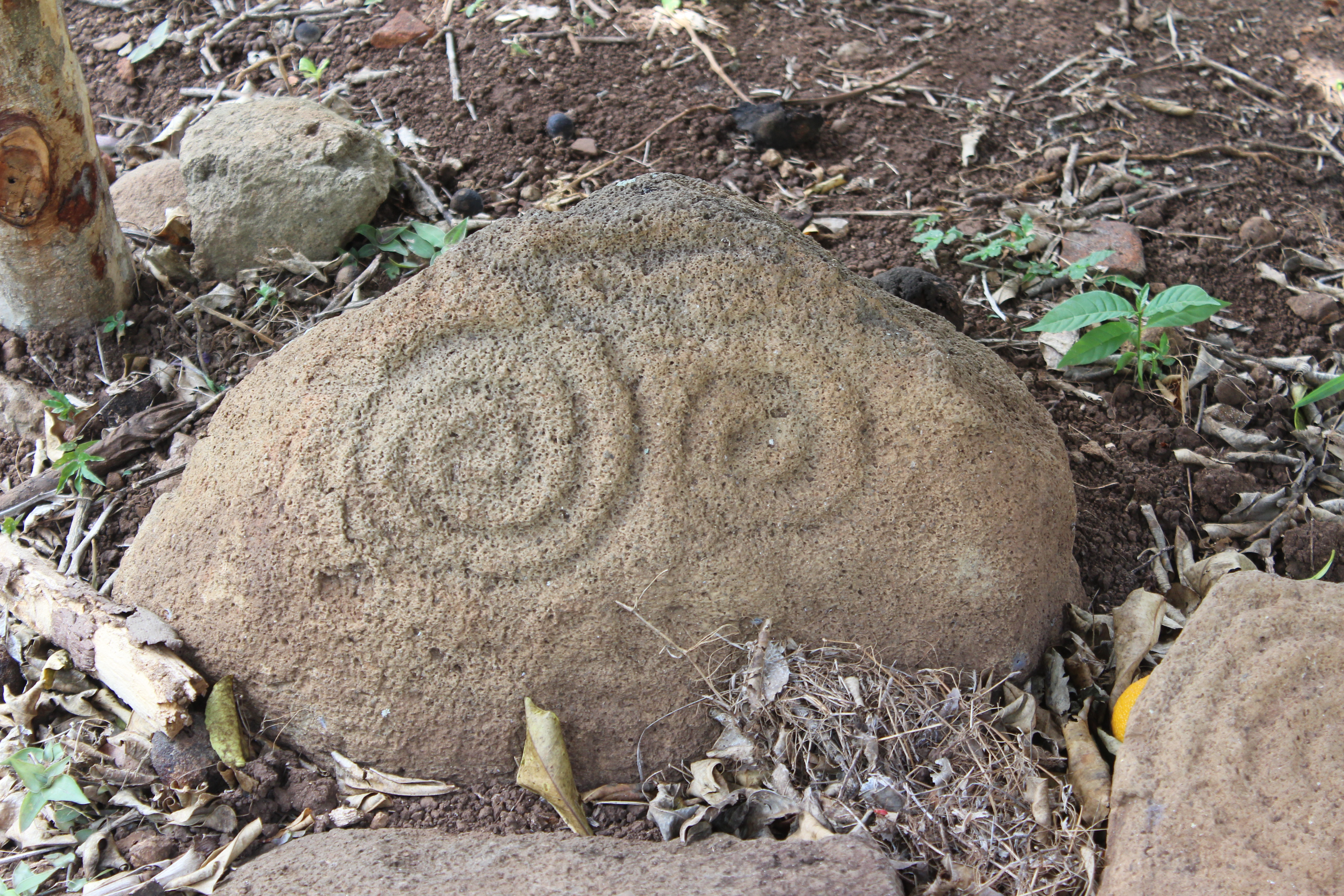
Twin spirals are a common petroglyph motif on Omotepe.

What could we possibly find to do for six days on a dinky double island in a lake? Well, first we had to get here.

This slideshow requires JavaScript.

And then we had to get to our lodgings, in our case a working finca (family farm) with a comfortable guest house attached, right next to the water.

IMG_0030

At the lodge we enjoyed the beach, swam in the lake, ate good food, and watched people who were working a lot harder than we were but still seemed to be having a pretty good time.

This slideshow requires JavaScript.

The lodge was great, but there is much more to see on Ometepe. We took a long walk along the lakeshore.

This slideshow requires JavaScript.

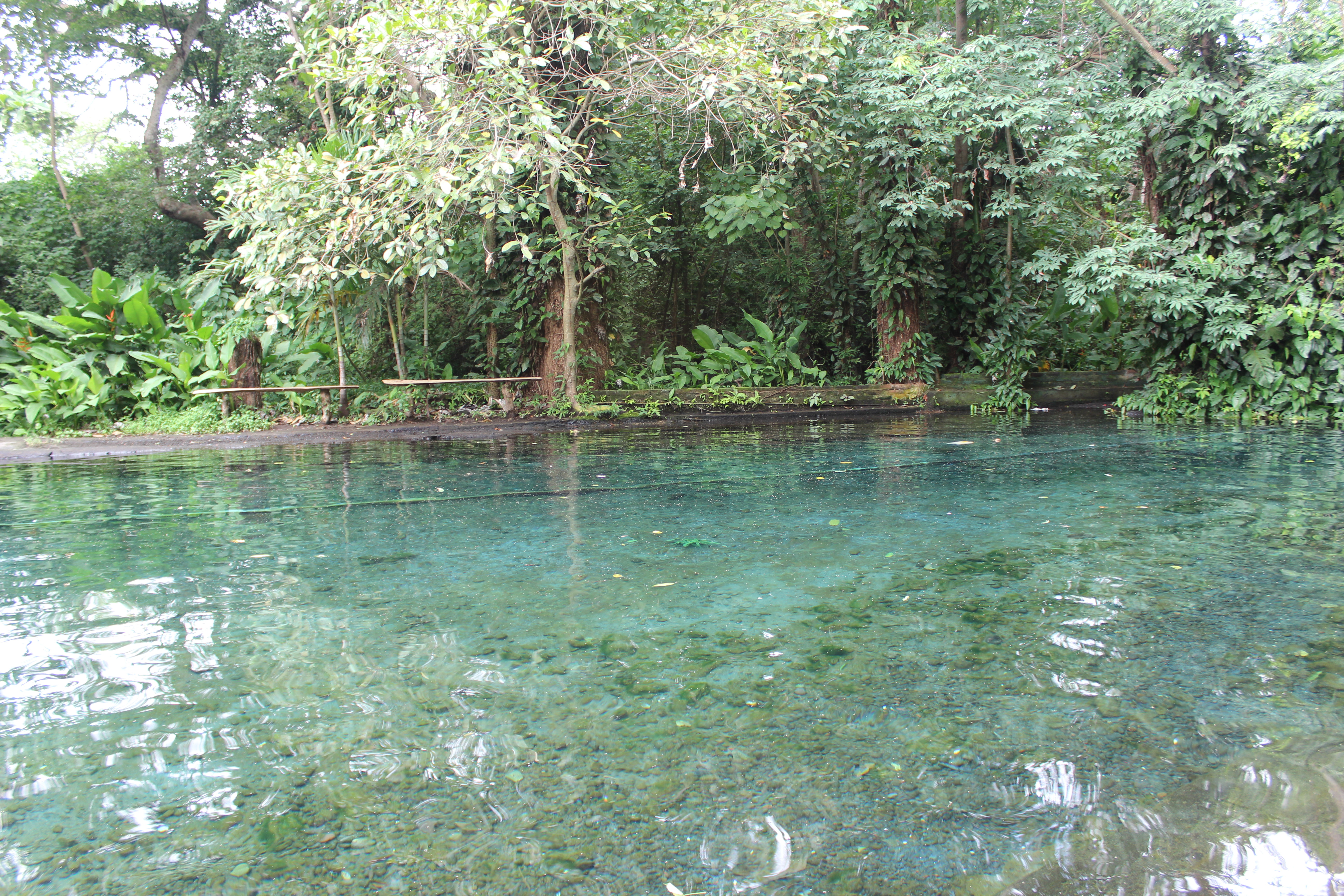
Inland, we swam in a clear pool fed by a natural volcanic hot spring.

IMG_9909

We hiked a trail through the rainforest.

IMG_9920

We took a bus up to a coffee plantation where we toured the grounds and looked for ancient petroglyphs.

This slideshow requires JavaScript.

We hiked to another finca with beautiful grounds, more petroglyphs, and lots of butterflies.

This slideshow requires JavaScript.

We went to a museum to see stuff left behind by a long series of indigenous cultures.

This slideshow requires JavaScript.

And the rest of the time we just wandered around, soaking up the slow-paced friendly atmosphere.

This slideshow requires JavaScript.


Posted in Elsewhere, Islands | Tagged , , | Leave a comment

San Juan del Sur

This southwestern beach town forms one corner – along with Granada, where we just were, and Ometepe Island, where we’re going next – of the Nicaraguan tourist triangle. SJDS’s main draws are surfing and nightlife. We understand it’s become a destination for actors and whatnot, and they say you often run across a celebrity or two on the beach or in the bars. Mathew McConaughy rather famously lost his flip-flop in the sewer here a while back. Not being much into surfing, clubbing, or sewer-celebrity-spotting, we decided to stay outside of town, where Lonely Planet assures us the beaches are cleaner and life is quieter.

We stayed in a family-run place a little north of the town called Enpalme a las playes. Its name means between the beaches, because it’s a short walk to either Playa Maderas or Playa Marsella. Our host gave us a little tour of the area when we first arrived. We liked Playa Marsella better than Playa Maderas. Not as good for surfing, so it was quieter. Also we are less likely to get hit by a surfboard when we’re out playing in the waves.

This slideshow requires JavaScript.


Posted in Elsewhere | Tagged , , | Leave a comment

Hasta la vista, León

To illustrate yesterday’s Lonely Planet quote about León, here are the rest of my photos of this “city of awe-inspiring churches,

This slideshow requires JavaScript.

fabulous art collections,

This slideshow requires JavaScript.

stunning streetscapes,

This slideshow requires JavaScript.

cosmopolitan eateries [for us, that means street food and the Central Market],

This slideshow requires JavaScript.

fiery intellectualism, [I think I covered that one already in yesterday’s post],

and all-week, walk-everywhere, happening nightlife.”

IMG_9743

Nice to know the night life’s out there, but give us a couple of cuba libres and some rocking chairs and we’re all set.


Posted in Elsewhere | Tagged , | Leave a comment

Poets and revolutionaries

Tomorrow is our last day in León, Nicaragua.

We almost didn’t come here. We figured we’d covered the colonial city thing well enough in Granada. But the description of León in our Lonely Planet guidebook as “a city of awe-inspiring churches, fabulous art collections, stunning streetscapes, cosmopolitan eateries, fiery intellectualism, and all-week, walk-everywhere, happening nightlife” convinced us to change our route to take in this fascinating place.

León is the most politically progressive Nicaraguan city and the traditional rival of conservative Granada. It’s the Sandinista heartland, and reminders of its role in the 1979 revolution are everywhere you look.

This slideshow requires JavaScript.

The city is also proud of its literary heritage. León is the home of Nicaragua’s most famous poet, Rubén Darío. I’ll admit to being not well versed (haha) in Latin American poetry and hadn’t heard of any of these guys before coming here, but there’s no way you can leave this city without at least learning their names. They are everywhere… especially Rubén Darío.

This slideshow requires JavaScript.

Posted in Elsewhere | Tagged , , | Leave a comment

DNA

This post is somewhat afield of my usual themes, though if you’re a regular reader you’ve probably caught on that genealogy is one of my hobbies. This summer I decided to pony up $100 to get my DNA analyzed.

There are a couple of companies that do this. A popular one is 23andMe, which started out offering a range of health-related genetic information. In 2013 the FDA shut down most of that area of their business until further notice but you can still get an ethnic breakdown and some limited health information from them. Since my interest was only family history, I decided to go with genealogy giant Ancestry.com, where I’ve housed my family tree (15,361 members and growing!) lo these many years.

The way it works is this. You send them the money with a credit card and they send you a kit in the mail. The kit contains a test tube which you spit into and then send back in a prepaid envelope. I couldn’t really do this from Ethiopia so I had them send the kit to my brother-in-law in LA and I mailed it back to the company when we stopped there on our way to Costa Rica.

Unknown-1

The kit comes with an access code number which you enter onto the Ancestry website to activate your account. Then you can log in to check the progress of your results.  After a few weeks they will have finished the analysis and you will see your results, just like I did this morning here in Leon. Your results are anonymous unless you choose to make them public. The results page links to a lot of explanatory material that tells you how the results are calculated, how reliable they are, and other pertinent information. But the most interesting part looks something like this (this is me):

Screen Shot 2016-05-21 at 15.05.07

There is also a map (this one is not me; this is someone I don’t know who posted their map on the internet and I am just putting it here as an example):

images-1

It would be fun if that were me…  I’d have many new genealogical avenues to explore, for sure. But the nice thing about my results is that (other than the Polynesia and Caucasus bits) they line up pretty much exactly with my historical research. So while the test can’t provide me with names, at least the ethnic breakdown doesn’t point to any huge errors in my work.

You don’t have to have an Ancestry subscription to do the test, but if you do have a tree on Ancestry, there are a few interesting additional features. Ancestry produces a list of other people who have taken the test with approximate degrees of relationship. By getting in contact with those people you can explore your common ancestry. There are obvious benefits if there is a question of parentage in your direct line, and these contacts might help you find the answers. Ancestry also produces a list of “new ancestor discoveries”: people who do not appear in your Ancestry family tree, but who are direct ancestors of at least two other otherwise unrelated people who share your DNA. In other words, dead relatives who probably ought to be on my tree but aren’t. I have 17 of those right now that I am trying to place. If you like genealogy, this passes for fun.

Here are two of my mystery relatives. If you know these guys, drop me a line.

Update 6 June 2016: cool little video of a group of young people getting their DNA results:

Posted in Family | Tagged , , | 2 Comments

So this is the tale of our castaways

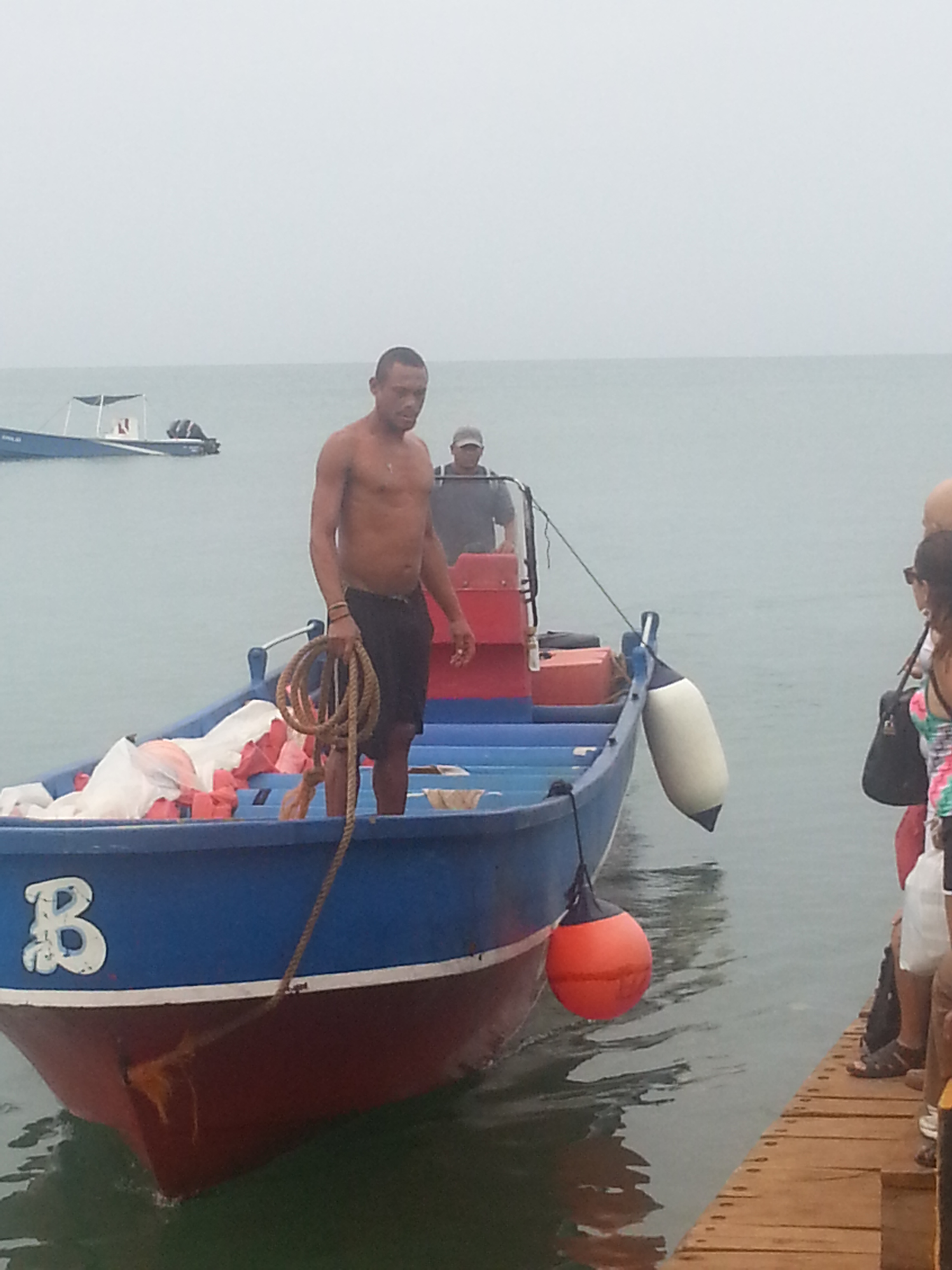
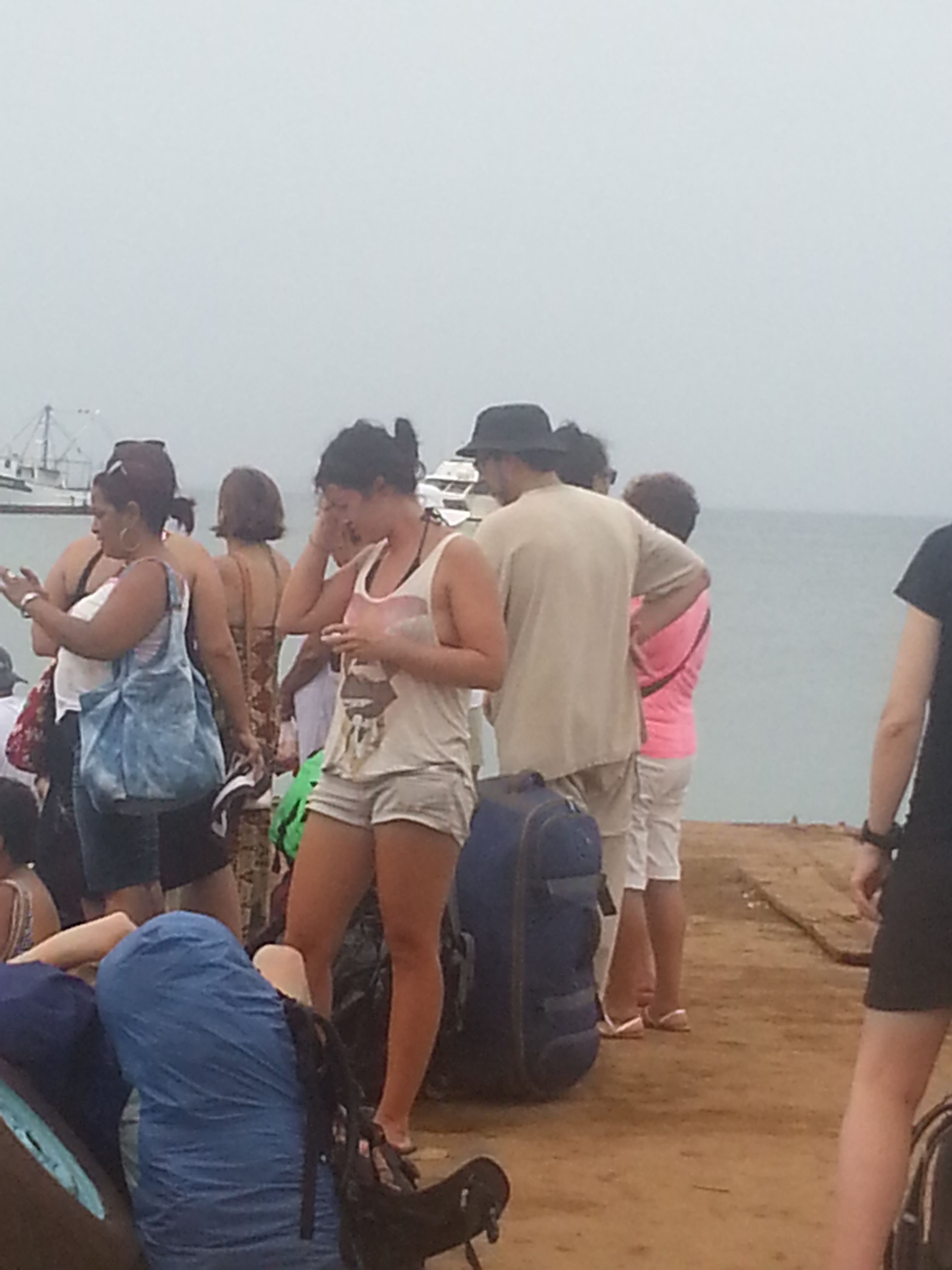
The next morning we were in luck. Our taxi driver from the day before came to pick us up at the Big Fish. He informed us that the water was rough, but the panga was running. Hurray!

"Just sit right back And you'll hear a tale A tale of a fateful trip, That started from this tropic port, Aboard this tiny ship."

“Just sit right back
And you’ll hear a tale
A tale of a fateful trip,
That started from this tropic port,
Aboard this tiny ship.”

20140712_133408

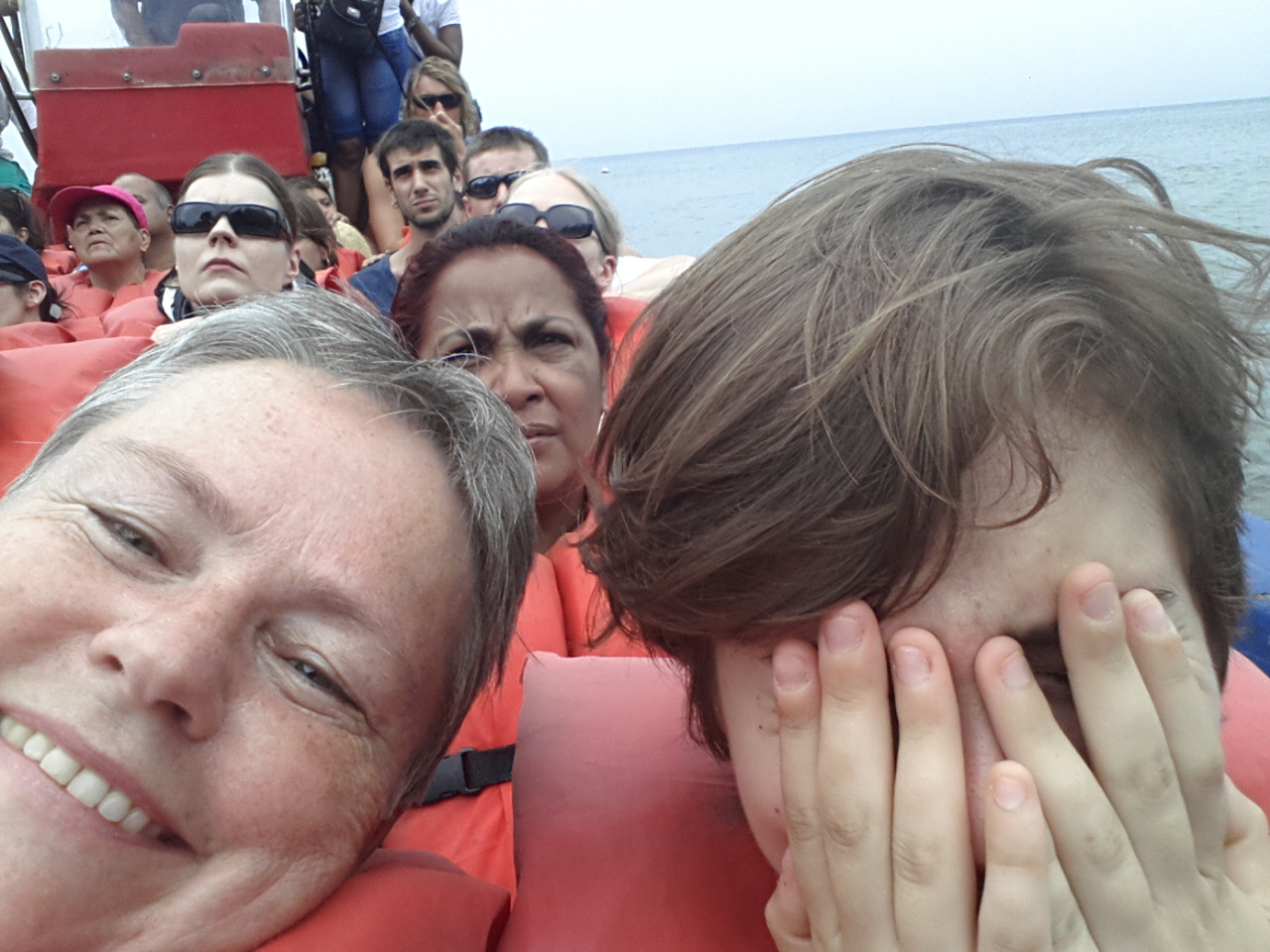
“The weather started getting rough, The tiny ship was tossed. If not for the courage of the fearless crew The Minnow would be lost.” “MOM! Stop singing that!”

IMG_9551

“The ship set ground on the shore of This uncharted desert isle”

20140712_131343

There’s my little buddy Gilligan with our stuff.

We arrived in the harbor near “The Village,” the only place that is like a town on the island.  When the panga landed, a man was there from our hotel with a wheelbarrow to transport our bags to the opposite side of the island. We chatted about his hunting dogs. What is there to hunt here? Iguana. Tastes like chicken.

IMG_9468

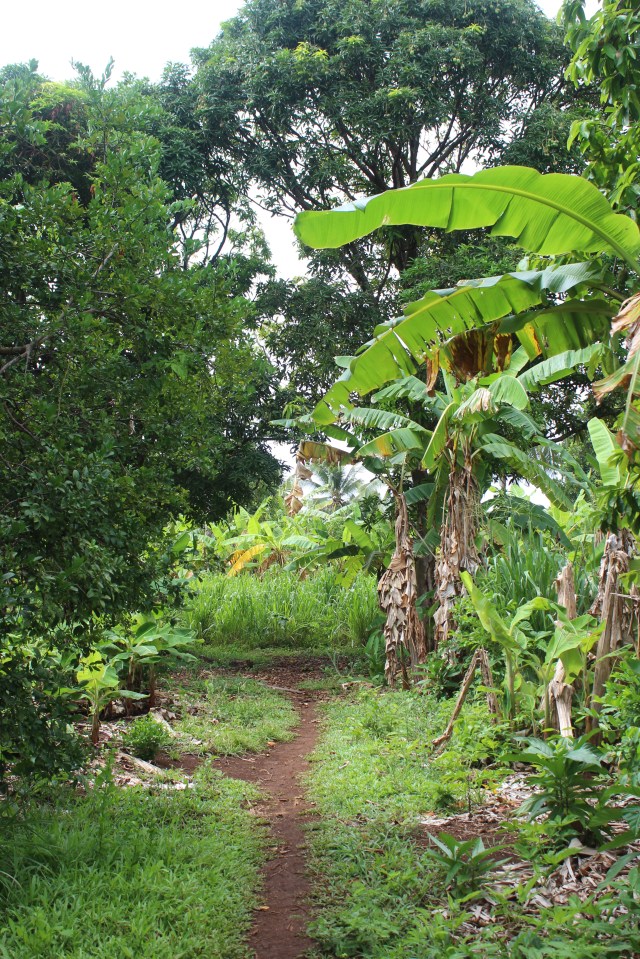
The cross-island trail

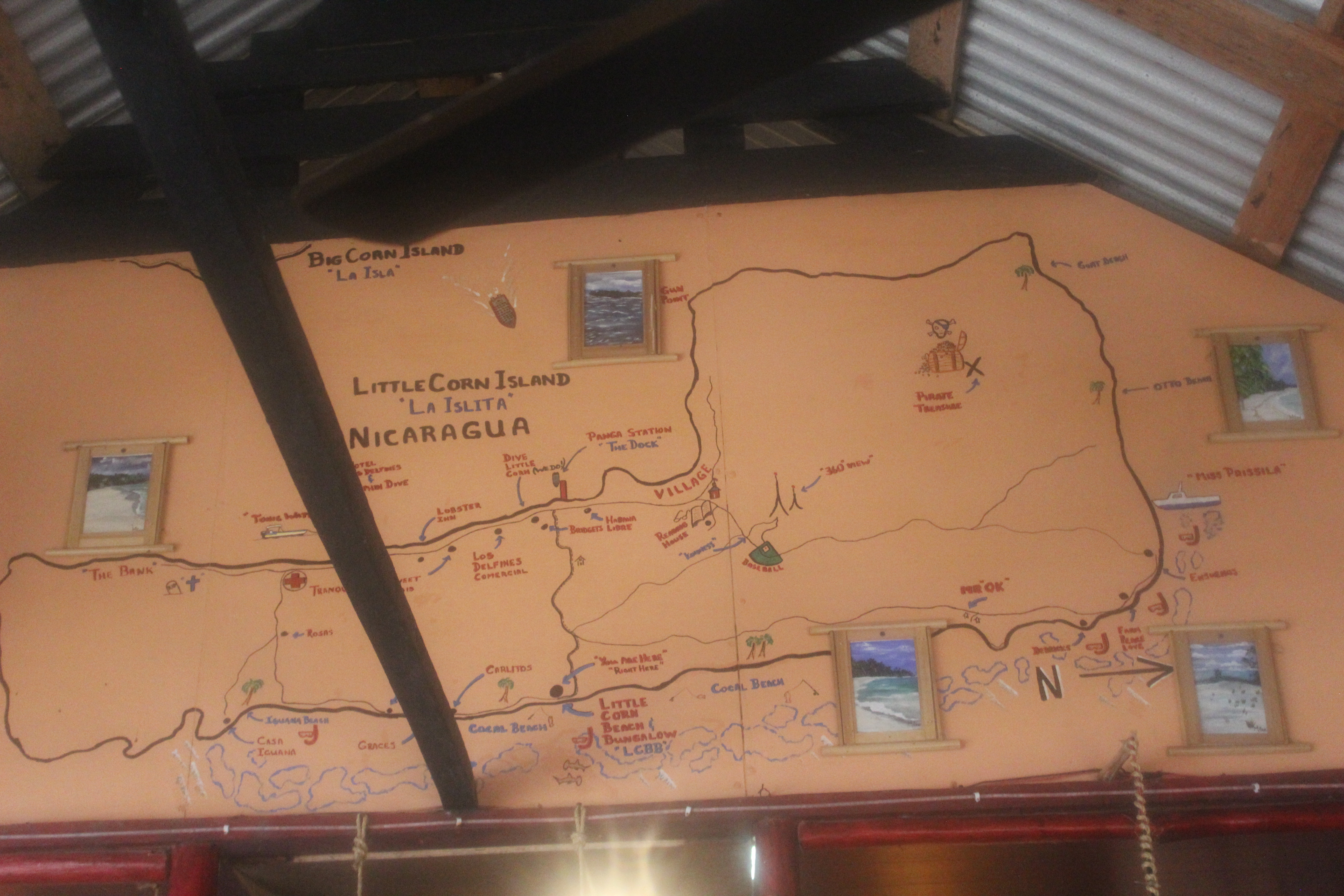
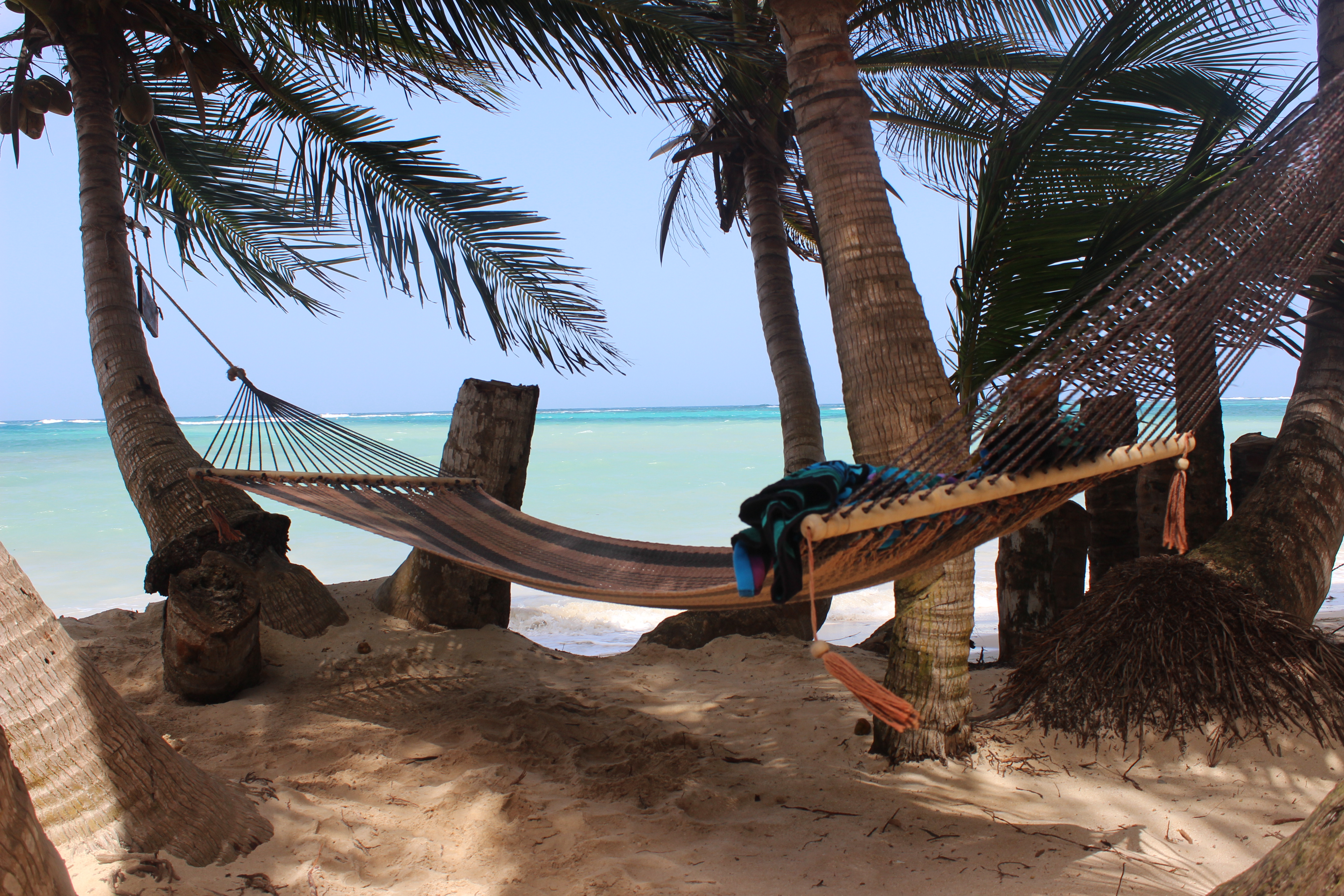
Little Corn Island is magical. It is 1.1 square miles of beach, swamp, and jungle, with no paved roads and no motorized vehicles other than one electric wheelchair. Municipal electricity from a large generator is on from 2 pm until 5 am, unless it isn’t.  There is no mail service.

IMG_9433

“No phone, no lights, no motor car, Not a single luxury Like Robinson Crusoe It’s primitive as can be.” Well actually we do have Internet sometimes.

I think the Professor has been at work here

This slideshow requires JavaScript.


In 2005 the census counted 495 permanent residents. Although that number has probably at least doubled by now, you can still walk along the coastline for a couple of hours without encountering another human.

IMG_9440

Civilization up ahead, on the east coast

 “The first mate and his Skipper too
Will do their very best,
To make the others comfortable
In their tropic island nest.”
 

Yep, everybody’s pretty comfortable.


This slideshow requires JavaScript.


If you should happen to find our message in a bottle, never mind, we don’t really want rescuing. But if you know how to get rid of an earworm, I could live without the Gilligan’s Island theme song in my head anymore.


This slideshow requires JavaScript.


Posted in Elsewhere, Islands | Tagged , | 1 Comment

Big Corn

At the airport in Managua we boarded a small plane bound for the tiny Corn Islands, 45 miles off the Caribbean coast of Nicaragua.

20140712_164520

La Costena, the only way to fly (unfortunately)

There are two islands here: Big Corn Island and (predictably) Little Corn Island. Those are their legal and legitimate names, not Islas del Maiz: English was instilled here when the islands were part of the British Mosquito Coast protectorate from 1655 to 1894, at which point Nicaragua claimed them. In 1914 Nicaragua leased them to the United States. The USA retained the right to use them until 1971, though it seems we were never very interested in the place. Good thing, too, because we probably would have used it for bomb practice or something. In any case, the principle language here is Creole English.

Our intended destination was Little Corn, but our flight arrived at Brig Bay on Big Corn after the second and last boat of the day. The taxi driver we hired to take us to our lodgings at the Big Fish Cafe warned us there was a storm brewing, and that “the pangas may be not go” in the morning. This happens sometimes, when the waves are too big for the little open boats (I guess this is why the hotel on Little Corn recommended travel insurance… oh well).

We walked along the Big Corn Island’s one paved road to look at the harbor and try to get a more detailed weather report (we didn’t)

This slideshow requires JavaScript.

then enjoyed a dinner of grilled lobster and pork at the outdoor restaurant across the street from our hotel as the storm came in (luckily the thatched covering held).

This slideshow requires JavaScript.

To be continued…


Posted in Elsewhere, Islands | Tagged , , | Leave a comment

Granada

Costa Rica is beautiful, no doubt about it. But the tourist industry there is such a well-oiled machine, we were starting to feel like we were in Disneyland. When it comes to travel, we find we’re drawn to places that are a bit little gritty.

Also, while not quite as expensive as the UK and Scandinavia (where we spent our last summer holiday), Costa Rica is not the budget destination that we thought we’d find in Central America. So we decided to head up to Nicaragua in search of a more down-to-earth, and cheaper, experience.

We bought tickets to Granada on the Tica Bus, a long-distance line that rumbles up the Pan-American Highway all the way from Panama to Mexico. We caught the bus a few miles outside of Bijagua, in Cañas, where it stops once a day. The local “chicken bus” would have saved us quite a few colones, but I had read that the border crossing is complicated enough that it’s worth the money to have the Tica bus driver handle the paperwork.

The Tica bus was pretty comfortable, but it was a long journey, and the border process took almost two hours. We got in late to Granada, but fortunately the hotel I’d booked was an easy walk from the bus stop. It’s a sweet hotel, with an inner courtyard and rocking chairs in a big front room that’s open to the street through a grilled gate, just like all the houses here.

This slideshow requires JavaScript.

Funny thing, though – our room is at the front of the building, where all night we’re treated to the sound of a guard on a bicycle riding up and down the street blowing his whistle. The first morning we mentioned this to the desk clerk, who laughed and said that private night guards get in trouble for sleeping on the job, and so this guy blows the whistle all night so the street’s business owners (who employ him) will know he’s awake.

Granada is  a charming old colonial city

This slideshow requires JavaScript.

with many old churches in various stages of restoration,

This slideshow requires JavaScript.

a park along the edge of gigantic Lake Nicaragua, where you can hire a boat to take you out around the 365 islets,

This slideshow requires JavaScript.

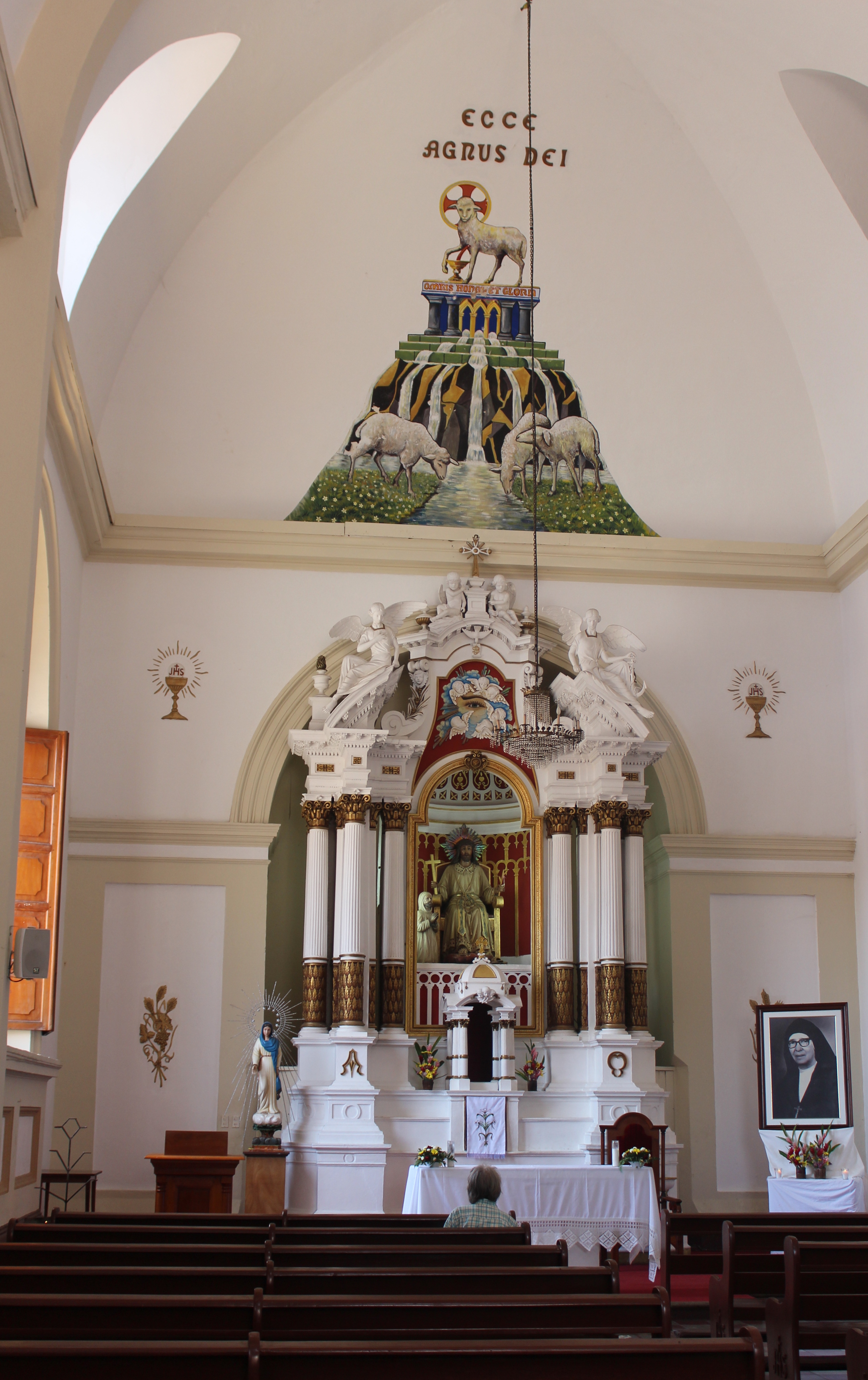
and its own saint, Sister Maria Romero Meneses.

IMG_9118

A chapel in the cathedral; that’s Sister Maria Romero’s picture on the right.

We were there for her saint’s day celebration today

This slideshow requires JavaScript.


Posted in Elsewhere | Tagged , | Leave a comment